


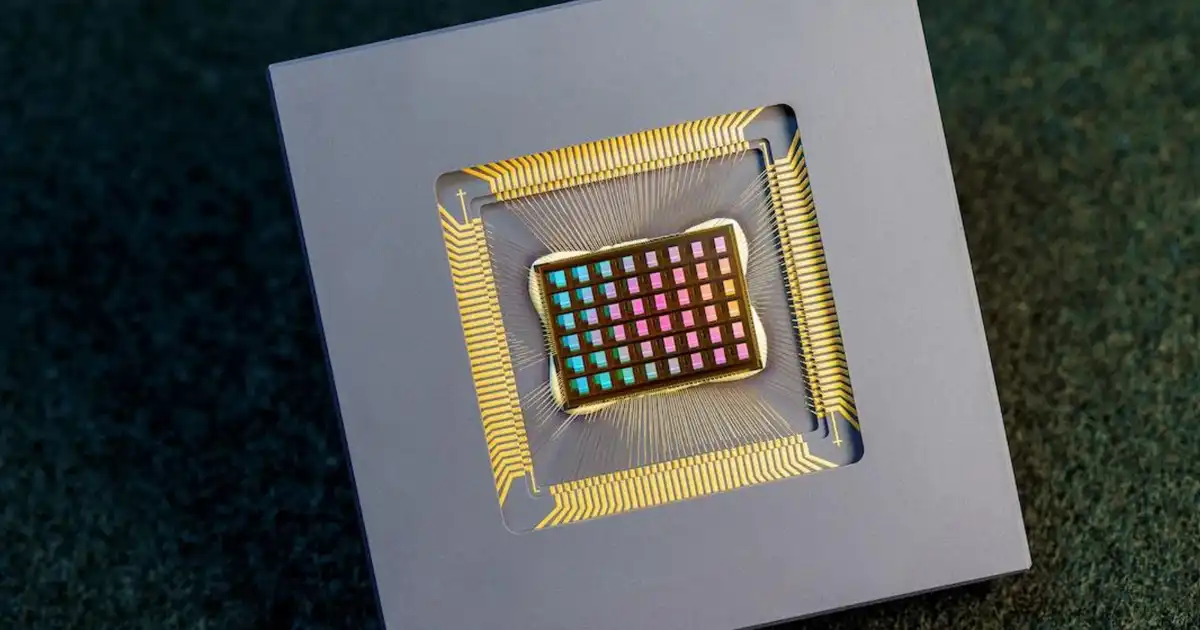
The short answer is this: AI chip memory stores, moves, and feeds the enormous amounts of data that AI models need to function. Without memory, even the most powerful AI processor becomes surprisingly ineffective.
Most people focus on AI chips themselves. They hear about GPUs, TPUs, AI accelerators, and massive computing clusters. What often gets overlooked is that memory is frequently the real bottleneck.
In practice, I’ve seen situations where adding more computing power delivered only modest improvements because the system couldn’t move data fast enough. The processors were ready to work, but they were waiting on memory.
Think of it like a professional kitchen. The chefs represent the processors. The ingredients represent data. If ingredients arrive slowly, the chefs spend their time standing around instead of cooking. AI hardware works in much the same way.
Modern AI systems process billions or even trillions of parameters. They analyze huge datasets, generate text, recognize images, and make predictions in real time. None of that happens efficiently without specialized AI chip memory.
In this article, we’ll explore what AI chip memory is, what it does, why High Bandwidth Memory (HBM) has become so important, and why memory architecture is increasingly determining the future of AI hardware.
What Is AI Chip Memory?
Definition of AI Chip Memory
AI chip memory refers to the various memory systems used inside and around AI processors to store data, model parameters, instructions, and intermediate calculations.
Its primary job is simple:
Store data and deliver it to processing units as quickly as possible.
When an AI model generates a response, recognizes an image, or predicts a result, memory constantly supplies the information required for those calculations.
Unlike traditional computing workloads, AI models operate on enormous amounts of data simultaneously. That creates unique memory requirements that conventional memory architectures were never designed to handle.
How AI Chip Memory Differs From Traditional Computer Memory
Traditional computer workloads tend to be sequential.
A web browser loads a page. A spreadsheet performs calculations. A video player decodes frames.
AI workloads are different.
Large neural networks may require billions of parameters to be accessed repeatedly during a single operation. Thousands of processor cores often need data at exactly the same moment.
This creates two major requirements:
- Extremely high memory bandwidth
- Very large memory capacity
Traditional memory systems focus heavily on capacity.
AI memory systems prioritize both capacity and speed.
In many AI workloads, moving data becomes harder than computing on it.
What Is AI Chip Memory Used For?
Storing AI Model Parameters
Every AI model contains parameters.
These parameters are the learned values that allow the model to make predictions, generate text, classify images, or understand language.
For example:
- A small language model may contain billions of parameters.
- A large frontier model may contain hundreds of billions or even trillions.
Those parameters must reside somewhere.
AI chip memory stores them so processors can access them during computation.
A useful analogy is a cookbook.
The processor is the chef.
The parameters are the recipes.
Without access to recipes, the chef cannot prepare anything.
Processing Massive Datasets
AI training involves enormous datasets.
These datasets can include:
- Text
- Images
- Videos
- Audio
- Sensor information
During training, data constantly moves from storage into memory and then into compute units.
I’ve watched training systems spend more time waiting for data movement than performing calculations.
This surprises many people because they assume processors are always the limiting factor.
Very often they are not.
Memory bandwidth determines how quickly data can reach the processors.
Supporting AI Model Training
AI training is among the most memory-intensive tasks in computing.
Training requires memory for:
- Model parameters
- Training data
- Activations
- Gradients
- Optimizer states
Many people underestimate how much memory training actually consumes.
A model might require hundreds of gigabytes or even multiple terabytes of memory once all training-related data structures are included.
This is one reason large AI clusters contain many interconnected accelerators.
Memory requirements often exceed the capacity of a single chip.
Running AI Inference
Inference is what happens after training.
This is the stage where the model actually performs useful work.
Examples include:
- Chatbots generating responses
- Image recognition systems
- Recommendation engines
- Voice assistants
During inference, memory stores:
- Model weights
- User inputs
- Intermediate results
- Output data
Inference usually requires less memory than training, but speed becomes critical.
Users expect responses almost instantly.
Memory performance directly affects response time.
Managing Context Windows in Large Language Models
One of the most important jobs of AI memory today involves managing context windows.
When you interact with a language model, the system must keep track of:
- Previous messages
- Instructions
- Documents
- Retrieved information
All of this consumes memory.
The larger the context window, the more memory the system requires.
This is one reason memory demand has exploded alongside advances in large language models.
People often assume larger context windows are primarily a software challenge.
In reality, they’re also a hardware memory challenge.
Enabling Real-Time AI Applications
Real-time AI applications place enormous pressure on memory systems.
Examples include:
- Autonomous vehicles
- Industrial robotics
- Medical imaging
- Financial trading systems
- Smart cameras
These systems cannot afford delays.
Imagine a self-driving vehicle waiting several hundred milliseconds because memory access is too slow.
That delay could matter.
In real-world AI deployments, memory latency and bandwidth often determine whether a system feels intelligent or sluggish.
The processor may be capable of billions of operations per second, but if data cannot reach it quickly enough, performance collapses.
This is why modern AI accelerator memory designs focus so heavily on keeping data physically close to compute units.
Reducing distance means reducing delay.
At AI scale, even tiny delays become significant.
Types of Memory Used in AI Chips
SRAM
SRAM stands for Static Random Access Memory.
It is extremely fast and typically located directly on the chip.
Uses:
- Caches
- Temporary data storage
- Frequently accessed information
Advantages:
- Very low latency
- Extremely fast access
Limitations:
- Expensive
- Consumes significant chip area
- Limited capacity
SRAM is like having tools directly in your hand.
Fast access, but limited space.
DRAM
Dynamic Random Access Memory provides larger capacity at lower cost.
Uses:
- Main system memory
- Large datasets
- General-purpose computing
Advantages:
- Affordable
- High capacity
Limitations:
- Slower than SRAM
- Higher latency
DRAM serves as the workhorse memory layer in many computing systems.
High-Bandwidth Memory
HBM memory has become the star of modern AI hardware.
Uses:
- High-performance AI accelerators
- Training clusters
- Advanced GPUs
Advantages:
- Extremely high bandwidth
- Improved energy efficiency
- Compact design
Limitations:
- Expensive
- Complex manufacturing
HBM exists because traditional memory systems simply could not keep pace with AI’s appetite for data.
GDDR Memory
GDDR memory was originally developed for graphics processing.
Uses:
- Consumer GPUs
- AI workstations
- Mid-range AI systems
Advantages:
- High bandwidth
- Lower cost than HBM
Limitations:
- Lower bandwidth than HBM
- Higher power consumption
Many AI workloads still run effectively on GDDR-equipped GPUs.
Emerging AI Memory Technologies
Researchers continue exploring new memory technologies.
Examples include:
- MRAM
- ReRAM
- Compute-in-memory architectures
- Photonic memory concepts
Most remain in early stages compared to HBM and DRAM.
However, future AI systems may rely heavily on these alternatives as memory bottlenecks become more severe.
Understanding the AI Memory Hierarchy
AI systems use a hierarchy of memory layers.
Think of it as a series of storage locations arranged by speed and size.
Registers
Registers sit inside processing cores.
They are the fastest memory available.
Capacity is tiny.
Speed is unmatched.
Cache
Cache stores frequently accessed information close to processors.
It reduces the need to fetch data repeatedly from slower memory layers.
SRAM
SRAM typically powers large on-chip caches and buffers.
It acts as a fast staging area for data.
HBM
HBM serves as the primary working memory for modern AI accelerators.
This is where many model parameters and activations reside.
System Memory
System memory stores larger datasets and supports host processors.
It provides greater capacity but lower bandwidth.
SSD Storage
SSDs hold training datasets, checkpoints, and model files.
They offer huge capacity but much slower access speeds.
Data constantly flows through this hierarchy:
SSD → System Memory → HBM → SRAM → Registers
Every movement introduces delay.
Modern AI hardware is largely about minimizing those delays.
Why High-Bandwidth Memory (HBM) Matters So Much for AI
What HBM Is
HBM stands for High Bandwidth Memory.
It is a specialized memory technology designed to provide massive data throughput.
Instead of focusing only on capacity, HBM focuses on feeding processors as quickly as possible.
How HBM Works
HBM uses vertically stacked memory dies connected through microscopic vertical pathways called Through-Silicon Vias (TSVs).
Rather than spreading memory chips across a circuit board, manufacturers stack them on top of one another.
This shortens communication distances dramatically.
The result is far greater bandwidth and improved efficiency.
Why Modern AI Chips Depend on It
Large AI models continuously move huge volumes of data.
Without HBM, processors would spend much of their time idle.
I’ve seen benchmark results where memory limitations prevented accelerators from reaching their theoretical compute performance.
Adding more compute units did not help.
Adding bandwidth did.
That’s why HBM has become one of the most valuable components inside AI accelerators.
HBM vs DDR vs GDDR
DDR memory prioritizes affordability and capacity.
GDDR emphasizes graphics workloads and moderate bandwidth.
HBM focuses on maximum bandwidth and efficiency.
For AI training, HBM is often the preferred solution because bandwidth becomes the limiting factor long before raw compute power.
AI Training vs AI Inference Memory Requirements
Training and inference stress memory differently.
Capacity Needs
Training requires far more memory.
Models, gradients, optimizer states, and activations all consume space.
Inference primarily needs model weights and runtime data.
Bandwidth Needs
Both require bandwidth.
Training generally demands the highest levels because data movement occurs continuously across huge datasets.
Latency Sensitivity
Inference is often more latency-sensitive.
Users notice delays immediately.
Training jobs can tolerate slightly higher latency.
Cost Considerations
Training infrastructure prioritizes performance.
Inference deployments often prioritize cost efficiency.
This explains why different AI systems may use different memory architectures despite running similar models.
Challenges Facing AI Chip Memory
Memory Bottlenecks
Memory bandwidth remains one of AI’s biggest limitations.
Processors continue improving rapidly.
Memory improvements arrive more slowly.
Power Consumption
Moving data consumes significant energy.
In some AI systems, memory operations consume as much energy as computation itself.
Heat Generation
High-speed memory generates heat.
Cooling has become a major engineering challenge in large AI clusters.
Capacity Limitations
Even advanced HBM has finite capacity.
Large models frequently exceed what a single accelerator can hold.
Rising HBM Costs
HBM manufacturing is difficult.
Demand has exploded.
This has increased costs throughout the AI hardware supply chain.
In many modern accelerators, memory contributes substantially to total system cost.
The Future of AI Chip Memory
HBM4
HBM4 promises even greater bandwidth and capacity.
This will help support larger models and more demanding workloads.
3D-Stacked Memory
Stacking technologies will continue evolving.
Future memory systems will likely become even more tightly integrated with processors.
Compute-in-Memory
One fascinating idea involves performing calculations directly within memory.
Instead of moving data to processors, computation happens where data already resides.
Near-Memory Processing
Near-memory processing follows a similar principle.
Small compute units operate adjacent to memory arrays.
This reduces data movement.
Future AI Hardware Trends
In my view, future AI hardware development will focus increasingly on memory rather than pure compute.
Compute performance remains important.
But memory is becoming the harder problem.
The industry is learning that building faster processors is not enough if data cannot reach them efficiently.
You Might Be Interested In
- What are ALU Elements?
- How Is Ai Changing The Way People Learn New Skills?
- What Is Ai Chip Architecture?
- How Does An Application Development Framework Help Developers?
- How Ai In Judicial Case Prediction Helps?
Conclusion
When people ask, “What Is AI Chip Memory Used For?”, they’re really asking what allows modern AI systems to function at all.
AI chip memory stores model parameters, feeds processors with data, supports training, enables inference, manages context windows, and keeps real-time applications responsive. Without it, even the fastest AI accelerator would spend much of its time waiting.
The deeper lesson is that AI performance is no longer determined solely by processing power. Memory bandwidth, memory capacity, energy efficiency, and data movement have become equally important. In many real-world systems, they are the primary constraints.
That is why technologies like HBM memory have become so valuable. The AI industry is discovering that building bigger models is often easier than feeding those models with data efficiently.
Over the next decade, memory architecture will likely shape AI hardware as much as processor design itself. The companies that solve the memory problem may end up defining the next generation of artificial intelligence.
FAQs
What is AI chip memory?
AI chip memory refers to the specialized memory systems that store and deliver the data needed by AI processors. This includes model parameters, training data, user inputs, intermediate calculations, and generated outputs. Its primary role is to ensure that AI accelerators, GPUs, and other processing units have immediate access to the information they need to perform calculations.
In practical terms, AI chip memory acts as the working space for artificial intelligence. Just as a mechanic needs tools within reach while repairing an engine, AI processors need fast access to data while performing billions of operations. Without sufficient memory capacity and bandwidth, even the most powerful AI chip can spend much of its time waiting for data instead of processing it.
Why do AI chips need so much memory?
AI chips require large amounts of memory because modern AI models are enormous. Large language models, image generation systems, and recommendation engines often contain billions of parameters that must be stored and accessed continuously. During training, memory is also needed for datasets, activations, gradients, and optimization information, which can multiply total memory requirements several times over.
Another reason is that AI workloads are highly parallel. Thousands of processing cores may request data simultaneously. Unlike traditional software, where tasks often run sequentially, AI systems constantly move massive amounts of information through the hardware. This combination of model size and data movement creates memory demands that are far greater than those of most conventional computing applications.
What type of memory do AI chips use?
AI chips use several different types of memory, each serving a specific purpose within the system. Fast on-chip memory such as registers and SRAM stores frequently accessed data close to processing units. High-Bandwidth Memory (HBM) is commonly used in advanced AI accelerators because it can move data extremely quickly. System-level DRAM provides additional capacity, while SSD storage holds datasets and model files.
The reason multiple memory types exist is that no single technology can optimize for speed, capacity, power efficiency, and cost at the same time. Fast memory tends to be expensive and limited in size, while large-capacity memory is generally slower. AI hardware therefore uses a memory hierarchy that balances these trade-offs to maximize overall performance.
What is HBM in AI?
HBM, or High Bandwidth Memory, is a specialized memory technology designed to provide extremely fast data transfer rates between memory and AI processors. Unlike traditional memory modules that sit farther away from the chip, HBM stacks memory layers vertically and places them very close to the processor. This design dramatically increases bandwidth while reducing power consumption.
HBM has become one of the most important technologies in modern AI hardware because many AI workloads are limited by data movement rather than raw computing power. Training a large neural network requires processors to access enormous amounts of information every second. HBM helps remove that bottleneck by feeding data to the chip much faster than conventional memory technologies can.
Is memory more important than processing power in AI?
Memory and processing power are both essential, but many modern AI systems are increasingly constrained by memory rather than compute capability. A processor can only work as fast as data arrives. If memory cannot supply information quickly enough, expensive compute units sit idle waiting for data. In those situations, adding more processing power delivers little real-world benefit.
In my experience, this is one of the biggest misconceptions people have about AI hardware. They assume faster processors automatically mean better performance. In reality, memory bandwidth, memory capacity, and data movement often determine how efficiently an AI system operates. That is why companies building advanced AI accelerators invest heavily in memory technologies such as HBM alongside improvements in raw compute performance.
