


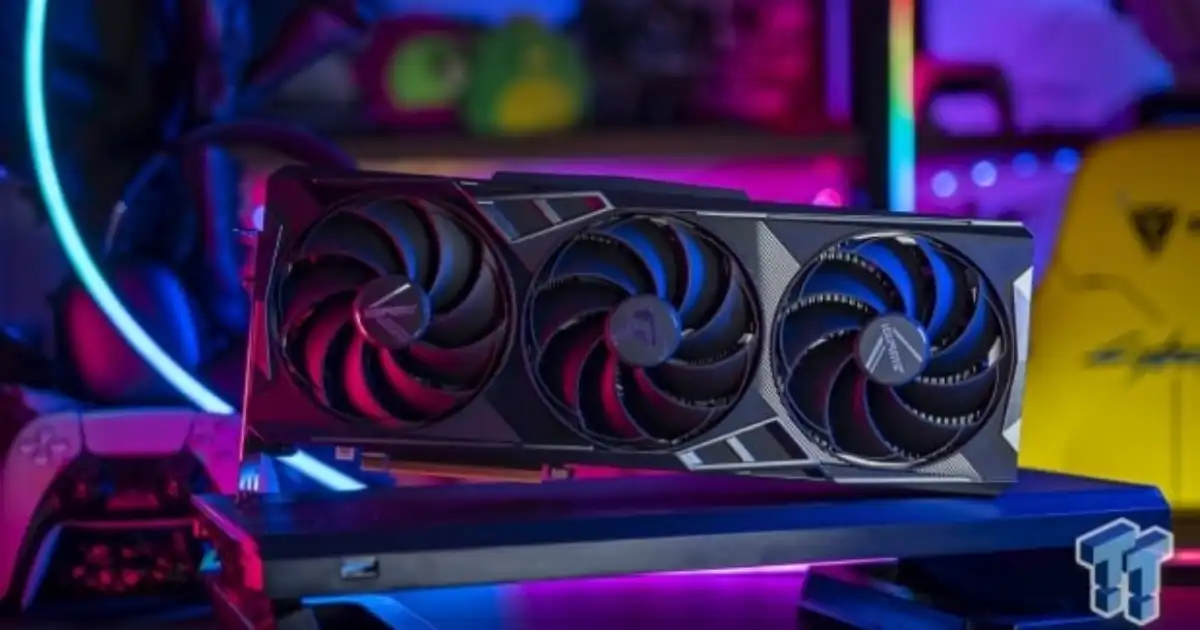
If you’ve ever wondered why games run smoothly, why AI tools like ChatGPT can generate responses so fast, or how video editors render 4K footage in real time, the answer almost always comes back to one thing: GPU cores. What Are Gpu Cores And How Do They Function In Computing?
In modern computing, performance is no longer just about having a fast processor. It’s about how many tasks can be handled at the same time. That’s exactly where GPUs step in.
Unlike traditional CPUs that focus on doing a few things very quickly in sequence, GPUs are built to do thousands of smaller tasks at once. And the real engine behind that capability is the GPU core.
In real systems, GPU cores are constantly crunching numbers for graphics rendering, AI models, physics simulations, and data-heavy workloads. They are not just “faster CPU cores” as many people assume. They are fundamentally different in design and behavior.
To really understand modern computing, especially AI and high-performance workloads, you need to understand how GPU cores actually work in practice, not just in theory.
What Is a Graphics Processing Unit ?
A GPU, or Graphics Processing Unit, was originally designed to handle one job extremely well: rendering graphics. Early computers relied on the CPU to draw everything on the screen, but as games and visual applications became more complex, CPUs started to struggle.
That’s where GPUs came in. A GPU is a specialized processor designed to handle massive amounts of parallel work, especially tasks involving math on pixels, vertices, and textures.
In real systems, a GPU sits alongside the CPU. The CPU handles logic, system tasks, and decision-making, while the GPU handles bulk computation. Think of it like this: the CPU is the planner and coordinator, while the GPU is the factory floor doing repetitive work at scale.
Over time, GPUs evolved far beyond graphics. Today, they are used for AI training, machine learning inference, scientific simulations, cryptocurrency mining, and data processing.
The reason for this evolution is simple. Many modern problems are not sequential anymore. They are parallel by nature. And GPUs are built exactly for that kind of workload.
So while the name still says “Graphics Processing Unit,” in practice, GPUs are now general-purpose parallel computing engines.
What Are GPU Cores?
GPU cores are the individual execution units inside a GPU that perform calculations. But unlike CPU cores, they are not designed to work independently on complex tasks. Instead, they work together in large groups to process many small operations at the same time.
A good way to think about GPU cores is like a massive team of workers in a factory assembly line. Each worker (core) does a small, repetitive job, but thousands of them working together produce huge output.
In NVIDIA GPUs, these are called CUDA cores. In AMD GPUs, they are often referred to as stream processors. While the naming is different, the concept is similar: small arithmetic units optimized for parallel execution.
A single GPU core is not powerful in the same way a CPU core is. In fact, one GPU core is relatively simple. Its strength comes from scale. A modern GPU might have thousands of these cores working in parallel.
This design is intentional. Instead of making one extremely complex core (like a CPU core), GPU designers built many simpler cores that can execute the same instruction across many data points simultaneously.
This is why GPU cores are so effective for workloads like image processing, matrix multiplication, and AI model training. These tasks involve repeating the same operation across huge datasets, which is exactly what GPU cores are optimized for.
How GPU Cores Work in Real Life
Parallel vs Sequential Workloads
To understand GPU cores properly, you have to understand the difference between sequential and parallel thinking.
A CPU is optimized for sequential workloads. It handles tasks step by step, switching between them quickly. This is perfect for things like running an operating system, handling user input, or executing complex logic with many branches.
A GPU, on the other hand, is built for parallel workloads. That means doing the same type of operation across thousands or millions of data points at once.
For example, if you want to adjust brightness in an image, a CPU might process pixels one group at a time. A GPU processes thousands of pixels simultaneously using its cores.
SIMT Model in Simple Terms
Most modern GPUs use something called SIMT, or Single Instruction, Multiple Threads.
In practice, this means one instruction is executed across many GPU cores at the same time, but on different pieces of data.
Imagine telling 1,000 workers to “multiply their assigned number by 2.” Everyone does the same operation, but on different numbers. That’s SIMT in action.
This model is why GPU cores are so efficient for repetitive mathematical operations. They do not need to think independently. They just follow the same instruction stream and apply it to different data.
What Actually Happens During Execution
In real workloads, tasks are broken into thousands of small threads. These threads are grouped and assigned to GPU cores.
The GPU scheduler distributes these threads across available cores. Each core processes its assigned thread, often executing the same instruction as its neighbors.
Memory plays a big role here too. Data is loaded into VRAM, and GPU cores access it in highly optimized patterns to avoid delays.
For example, in AI training, each GPU core might handle a small portion of a matrix multiplication. All cores work together, and the result is combined at the end.
This is why GPUs feel extremely fast in workloads that are designed for them, but not necessarily faster for everything.
Types of GPU Cores You’ll Actually Hear About
When people talk about GPU cores, they often mix different types of specialized cores. In modern GPUs, not all cores do the same job.
CUDA Cores
CUDA cores are the general-purpose compute units in NVIDIA GPUs. These are the main GPU cores responsible for arithmetic operations like addition, multiplication, and basic logic.
In practice, CUDA cores handle most of the workload in gaming, AI inference, and general computation. They are flexible but not specialized.
Stream Processors
AMD uses the term stream processors, which serve a similar role to CUDA cores. They handle parallel execution of arithmetic tasks.
While architecture differs between NVIDIA and AMD, the idea is the same: many small cores working together on parallel data.
Tensor Cores
Tensor cores are specialized units designed for matrix math, which is the backbone of deep learning.
In real-world AI training, tensor cores dramatically speed up operations like matrix multiplication and convolution. Instead of processing one number at a time, they handle blocks of data in optimized formats.
This is why modern AI workloads depend heavily on GPUs with strong tensor core support.
Ray Tracing Cores
Ray tracing cores are specialized for simulating light behavior in real time. They calculate how light rays interact with surfaces, reflections, and shadows.
In gaming, these cores allow realistic lighting effects that were previously too expensive to compute in real time.
Each of these core types works alongside general GPU cores, forming a hybrid system optimized for different workloads.
GPU Architecture
A GPU is not just a flat collection of cores. It is structured in clusters.
At a higher level, GPU cores are grouped into units like Streaming Multiprocessors (NVIDIA) or Compute Units (AMD). These groups manage scheduling, execution, and shared memory.
Think of it like departments in a company. Each department has workers (GPU cores), and a manager coordinating tasks.
Memory is another critical part. GPUs use VRAM, which is high-speed memory dedicated to feeding data to GPU cores. If data is not available fast enough, even thousands of GPU cores can sit idle.
Data flows from system memory (RAM) to VRAM, then into processing units where GPU cores execute instructions. After processing, results are sent back to memory or display output.
This flow is what makes GPU performance highly dependent not just on core count, but also memory bandwidth and architecture efficiency.
GPU Cores vs CPU Cores
The biggest misunderstanding in computing is thinking GPU cores and CPU cores are interchangeable. They are not.
CPU cores are powerful, complex, and optimized for flexibility. They handle branching logic, operating systems, and unpredictable tasks. A single CPU core can handle a wide variety of instructions efficiently.
GPU cores are simpler but massively parallel. They are designed to do one type of operation across huge datasets.
In real workloads, CPUs win when tasks are sequential or unpredictable. For example, running an application, handling APIs, or managing system processes.
GPUs dominate when the same operation needs to be repeated across large datasets, such as rendering frames, training AI models, or processing images.
The mistake many people make is assuming more GPU cores automatically means better performance. That only holds true if the workload is parallelizable.
In practice, I’ve seen systems with fewer but newer GPU cores outperform older GPUs with more cores simply because architecture and memory bandwidth matter more.
So it’s not a battle of core count. It’s about workload design.
Where GPU Cores Are Used in the Real World
In gaming, GPU cores handle everything from rendering textures to calculating physics and lighting. Each frame is broken into millions of small tasks distributed across GPU cores.
In AI training, GPU cores perform matrix operations that adjust model weights. Tensor cores make this even faster by accelerating deep learning math.
In video editing, GPU cores speed up rendering, encoding, and effects processing. This is why scrubbing through 4K or 8K timelines feels smooth on a good GPU.
In scientific computing, GPU cores simulate complex systems like weather patterns, molecular interactions, and astrophysics models. These simulations rely heavily on parallel processing.
Across all these areas, the role of GPU cores is the same: break big problems into thousands of small identical operations and process them simultaneously.
Why GPU Cores Matter Today
Modern computing is shifting toward parallel workloads. AI, graphics, and data processing all rely heavily on doing many operations at once rather than one at a time.
This is why GPU cores have become central to everything from data centers to personal laptops. Cloud computing platforms now rely heavily on GPUs for AI services and large-scale processing.
As models and datasets grow, CPU-only systems simply cannot keep up. GPU cores provide the scalable compute power needed for today’s workloads.
Common Misconceptions
One common misconception is that more GPU cores always mean better performance. In reality, architecture, memory bandwidth, and software optimization matter just as much.
Another misunderstanding is thinking GPU cores are like CPU cores. They are fundamentally different in design and purpose.
People also assume GPUs are only for gaming, but in practice, AI and scientific computing now consume more GPU power than gaming in many data centers.
You Might Be Interested In
- How Do Ai Cybersecurity Threats Impact Digital Systems?
- How To Summarize Podcasts With Ai?
- What Is Zero Trust Ai Security Model Explained Simply?
- Is The Paid Version Of Chat Gpt Worth It?
- What Is Ai In Digital Identity Verification?
Conclusion
GPU cores are not just small pieces of hardware inside a graphics card. They are the foundation of modern parallel computing. They work by processing thousands of simple tasks at the same time, making them ideal for workloads like AI, rendering, and simulation.
Understanding GPU cores helps you understand how modern computing actually scales. It explains why AI is growing so fast, why games look more realistic than ever, and why cloud computing relies heavily on GPUs.
As workloads continue to shift toward parallel processing, GPU cores will become even more important in shaping the future of computing.
FAQs about What Are Gpu Cores And How Do They Function In Computing?
What are GPU cores?
GPU cores are the small processing units inside a graphics processing unit that handle thousands of simple calculations at the same time. Unlike CPU cores, which are built for complex and sequential tasks, GPU cores are designed for repetitive mathematical operations that can be executed in parallel.
In real-world usage, GPU cores work together to process data like pixels in images, frames in games, or matrices in AI models. Their strength comes from quantity and coordination rather than individual complexity, which is why they are so effective in modern computing workloads.
GPU cores vs CPU cores
GPU cores and CPU cores are fundamentally different in both design and purpose. CPU cores are powerful, flexible, and optimized for handling a wide variety of tasks one after another, while GPU cores are simpler and optimized for handling many similar tasks at the same time.
In practical systems, CPUs handle operating systems, logic, and decision-making processes, while GPUs take over large-scale parallel workloads like rendering, simulation, and AI computation. This difference is why GPUs outperform CPUs in tasks like deep learning and graphics rendering but are not suitable replacements for general-purpose processing.
Are more GPU cores better?
More GPU cores can improve performance, but only if the workload is designed to use parallel processing effectively. If an application cannot be split into many small tasks, additional GPU cores will not provide significant benefits.
In real-world scenarios, performance depends not only on core count but also on architecture, memory bandwidth, and how well the software is optimized. A well-designed GPU with fewer but newer and more efficient cores can often outperform an older GPU with more cores.
What are tensor cores?
Tensor cores are specialized processing units inside modern GPUs designed specifically for deep learning and matrix-heavy computations. They accelerate operations like matrix multiplication, which is the backbone of neural network training and inference.
In practice, tensor cores allow AI models to train faster and process large datasets more efficiently by handling multiple calculations in a single operation. This makes them critical for modern AI workloads, especially in data centers and high-performance machine learning systems.
Why are GPUs used in AI and machine learning?
GPUs are widely used in AI because machine learning relies heavily on parallel mathematical operations, especially matrix and vector calculations. These tasks can be split across thousands of GPU cores, making processing significantly faster than on CPUs.
In real applications, GPUs reduce training time from weeks to days or even hours depending on model size. This speed advantage is why almost all modern AI training and inference systems are built around GPU acceleration rather than CPU-only processing.
