


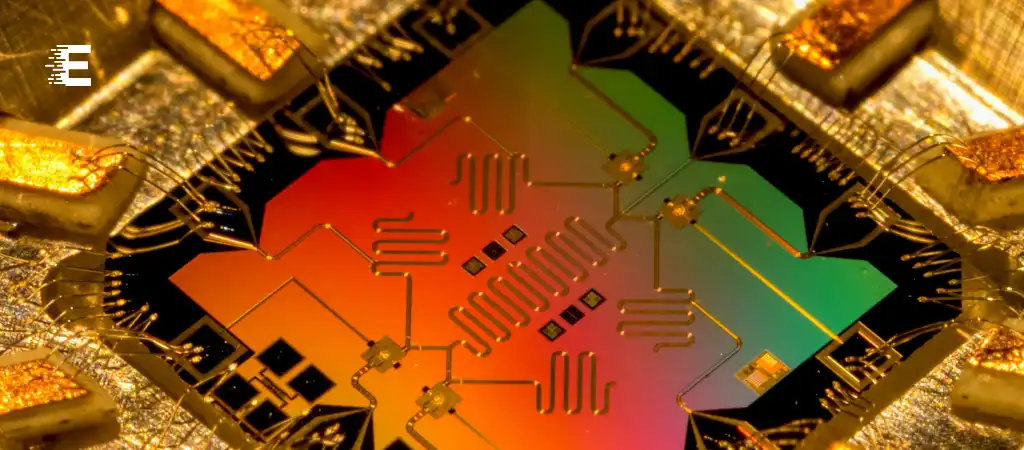
Quantum computing is a rapidly evolving field that has the potential to revolutionize various industries, from cryptography to material science. To understand how quantum computing works, one must delve into the fundamental principles of quantum mechanics and explore how these principles are harnessed to perform computations that are infeasible for classical computers.
This comprehensive guide will elucidate the core concepts of quantum computing, its working mechanisms, and its implications.
Quantum Computing
Quantum computing represents a paradigm shift from classical computing, leveraging the peculiar principles of quantum mechanics. Unlike classical computers, which use bits as the smallest unit of data, quantum computers use quantum bits or qubits. These qubits can exist in multiple states simultaneously, enabling quantum computers to perform complex calculations at unprecedented speeds.
Quantum Mechanics: The Foundation
The Nature of Quantum Mechanics
Quantum mechanics is a branch of physics that describes the behavior of particles at the atomic and subatomic levels. Unlike classical mechanics, which deals with macroscopic objects, quantum mechanics is governed by principles such as superposition, entanglement, and wave-particle duality.
Superposition
Superposition is a fundamental concept in quantum mechanics where particles can exist in multiple states simultaneously. For qubits, this means they can be in a state of 0, 1, or any quantum superposition of these states.
Entanglement
Entanglement is a phenomenon where the quantum states of two or more particles become interconnected such that the state of one particle instantly influences the state of the other, regardless of the distance separating them. This interconnectedness is pivotal for quantum computing.
Quantum Bits (Qubits)
What is a Qubit?
A qubit is the basic unit of quantum information. Unlike a classical bit, which can be either 0 or 1, a qubit can be in a state of 0, 1, or both simultaneously due to superposition. This property exponentially increases the computational power of quantum computers.
Physical Realization of Qubits
Qubits can be realized using various physical systems, including:
- Superconducting Circuits: Utilize superconducting materials cooled to near absolute zero.
- Trapped Ions: Employ ions trapped in electromagnetic fields.
- Quantum Dots: Use semiconductor nanostructures to manipulate electron states.
- Photonic Qubits: Leverage properties of photons.
Manipulating Qubits
Manipulating qubits involves using quantum gates to perform operations. Quantum gates are analogous to classical logic gates but operate on the principles of quantum mechanics.
Quantum Gates and Circuits
Quantum Gates
Quantum gates are the building blocks of quantum circuits. They manipulate qubits through unitary transformations, which are reversible. Some common quantum gates include:
- Pauli-X Gate: Analogous to the NOT gate, it flips the state of a qubit.
- Hadamard Gate: Creates a superposition state from a basis state.
- CNOT Gate: A two-qubit gate that flips the second qubit if the first qubit is in the state 1.
Quantum Circuits
Quantum circuits are composed of multiple quantum gates arranged in a sequence. They perform complex computations by manipulating qubits in a controlled manner. A typical quantum circuit might involve initializing qubits, applying a series of quantum gates, and measuring the output state.
Quantum Algorithms
Shor’s Algorithm
Shor’s algorithm is a quantum algorithm for integer factorization, which can efficiently solve problems that are currently infeasible for classical computers. It has significant implications for cryptography, particularly for breaking RSA encryption.
Grover’s Algorithm
Grover’s algorithm provides a quadratic speedup for unstructured search problems. It can search an unsorted database of NN items in N\sqrt{N} time, which is exponentially faster than classical algorithms.
Quantum Fourier Transform
The Quantum Fourier Transform (QFT) is a key component of many quantum algorithms. It transforms quantum states into a frequency domain, enabling efficient solutions to problems such as phase estimation.
Quantum Computing Models
Gate-based Quantum Computing
Gate-based quantum computing is the most widely used model. It involves constructing quantum circuits using quantum gates to perform computations. This model is analogous to classical digital computing but leverages quantum principles.
Quantum Annealing
Quantum annealing is a model focused on solving optimization problems. It uses quantum fluctuations to explore the solution space and find the global minimum of a given function. D-Wave Systems is a notable company that builds quantum annealers.
Topological Quantum Computing
Topological quantum computing uses anyons, particles that follow non-Abelian statistics, to perform computations. This model is still in the experimental stage but promises to be robust against decoherence and other quantum noise.
Challenges and Limitations
Decoherence
Decoherence is the loss of quantum coherence, where qubits lose their quantum properties and behave classically. This phenomenon is caused by interactions with the environment and is a major challenge for maintaining qubit states.
Error Rates
Quantum gates and qubits are prone to errors due to imperfections in quantum operations. Developing error-correcting codes and fault-tolerant quantum computing methods is critical to overcoming this issue.
Scalability
Scaling up quantum computers to handle more qubits while maintaining coherence and low error rates is a significant challenge. Current quantum computers are in the noisy intermediate-scale quantum (NISQ) era, with limited qubit counts.
Applications of Quantum Computing
Cryptography
Quantum computing poses both threats and opportunities for cryptography. While it can break classical encryption methods like RSA, it also enables quantum cryptography, which offers theoretically unbreakable encryption based on quantum principles.
Drug Discovery
Quantum computing can simulate molecular interactions with high precision, accelerating drug discovery and development processes. It enables researchers to explore new compounds and understand complex biological systems more efficiently.
Material Science
Quantum computers can model the behavior of materials at the quantum level, leading to the discovery of new materials with unique properties. This has applications in fields like superconductivity and nanotechnology.
Optimization Problems
Quantum computing can solve complex optimization problems in logistics, finance, and engineering. It can optimize supply chains, portfolio management, and scheduling more effectively than classical methods.
Future of Quantum Computing
Quantum Supremacy
Quantum supremacy refers to the point at which quantum computers can perform tasks that are beyond the capabilities of classical computers. Google’s Sycamore processor achieved this milestone in 2019, solving a problem in 200 seconds that would take a classical supercomputer 10,000 years.
Hybrid Quantum-Classical Systems
Combining quantum and classical computing systems can leverage the strengths of both paradigms. Hybrid systems can perform quantum computations where they excel and delegate classical computations to traditional systems.
Advancements in Qubit Technologies
Research in new qubit technologies and error-correction methods is ongoing. Advances in these areas are crucial for building scalable and practical quantum computers.
You Might Be Interested In
- What Is The Difference Between Crypto and Cryptocurrency?
- What Are The 2 Main Types Of Biotechnology?
- Are Autonomous Vehicles Only Electric?
- Which Is Better Data Science Or Analytics?
- What Is The Difference Between a Coin and a Blockchain?
Conclusion
Quantum computing work is grounded in the principles of quantum mechanics, offering a new paradigm for computation. By leveraging superposition, entanglement, and other quantum phenomena, quantum computers can perform complex calculations far beyond the reach of classical computers. Despite the challenges of decoherence, error rates, and scalability, ongoing research and development are paving the way for practical quantum computers.
The potential applications in cryptography, drug discovery, material science, and optimization are vast, promising significant advancements across various fields. As we continue to explore and harness the power of quantum computing, it holds the potential to revolutionize technology and transform our understanding of the world.
FAQs on Quantum Computing Work
What is the fundamental difference between classical computing and quantum computing?
Classical computing relies on bits as the smallest unit of data, which can be either 0 or 1. Quantum computing, on the other hand, uses quantum bits (qubits) that can exist in a state of 0, 1, or any superposition of these states simultaneously. This ability to be in multiple states at once allows quantum computers to perform certain computations much faster than classical computers.
How do qubits maintain their quantum state, and what challenges are associated with this?
Qubits maintain their quantum state through isolation from external environmental interactions that can cause decoherence. However, maintaining this isolation is challenging because qubits are highly sensitive to noise and other external factors. Techniques such as error correction and fault-tolerant quantum computing are being developed to mitigate these challenges and ensure stable quantum computations.
What are some real-world applications of quantum computing?
Quantum computing has potential applications in various fields including:
- Cryptography: Breaking classical encryption methods and developing new, secure quantum cryptographic protocols.
- Drug Discovery: Simulating molecular interactions to accelerate the discovery and development of new drugs.
- Material Science: Modeling the properties of new materials at the quantum level to discover substances with unique characteristics.
- Optimization Problems: Solving complex optimization problems in logistics, finance, and engineering more efficiently than classical methods.
What is quantum supremacy, and has it been achieved?
Quantum supremacy is the milestone where a quantum computer performs a calculation that is infeasible for any classical computer. In 2019, Google announced that its quantum processor, Sycamore, achieved quantum supremacy by solving a specific problem in 200 seconds, which would take a classical supercomputer approximately 10,000 years. However, this claim is subject to ongoing debate and scrutiny within the scientific community.
What advancements are necessary for quantum computing to become widely practical?
For quantum computing to become widely practical, several advancements are necessary, including:
- Scalability: Developing methods to scale quantum computers to handle a larger number of qubits while maintaining coherence and low error rates.
- Error Correction: Creating effective quantum error-correcting codes to mitigate errors in quantum computations.
- Qubit Technologies: Advancing the physical realization of qubits to ensure stability and reliability.
- Hybrid Systems: Integrating quantum and classical computing systems to leverage the strengths of both for various applications.
