


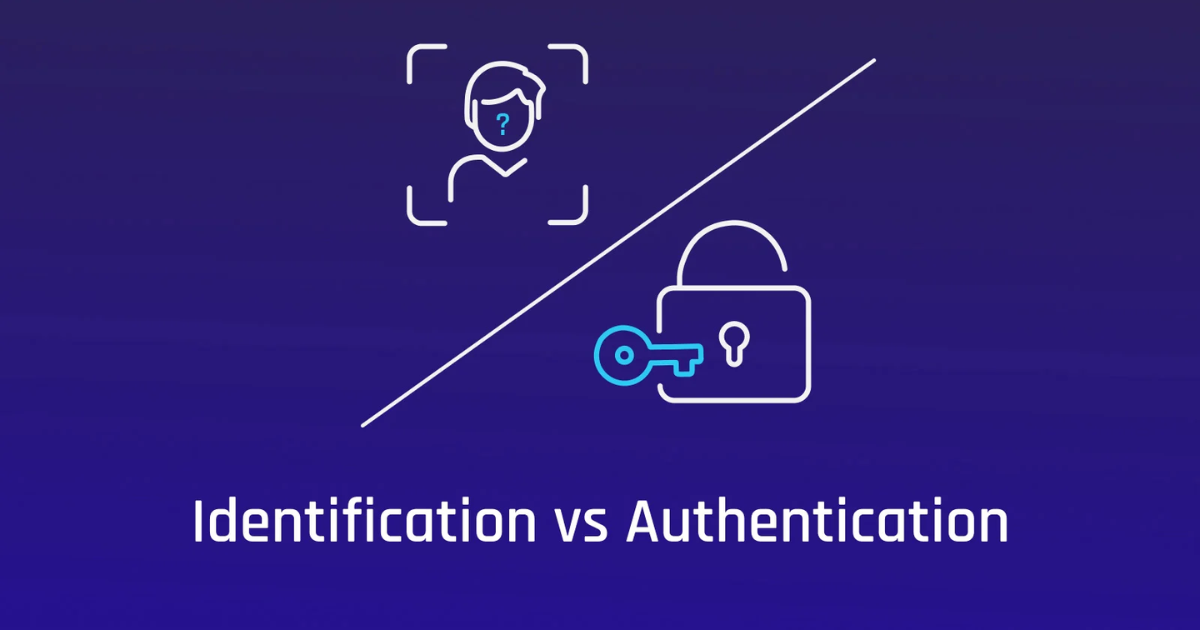
A few years ago, I sat in a post-incident meeting where everyone was confused, frustrated, and quietly defensive. A platform had been hit by a wave of account takeovers. Real users lost money. Trust took a hit. Regulators were asking questions. Identity Verification Vs Authentication: What Problem Are You Actually Solving?
Someone eventually said, “But we verify every user at signup.”
That sentence told me everything I needed to know.
This is one of the most common and expensive misunderstandings I see in real systems: teams mixing up identity verification and authentication, then being surprised when the wrong problem gets solved.
On paper, they sound related. In practice, they solve very different problems at very different times. Confusing them doesn’t just weaken security it creates blind spots, unnecessary friction, and false confidence.
So this article isn’t about definitions. It’s about reality.
It’s about asking a simple but uncomfortable question:
What problem are you actually trying to solve?
Identity Verification: What It Really Does in Practice
Identity verification is about establishing who someone is once.
Not forever. Not continuously. Just enough to answer a specific question at a specific moment:
Is this person who they claim to be, according to some external standard?
In the real world, identity verification usually shows up as:
-
Government ID checks
-
Document uploads
-
Liveness checks
-
Database or credit-bureau lookups
-
Manual review queues that everyone underestimates
What problem verification actually solves
Verification helps you:
-
Meet regulatory or compliance requirements
-
Reduce certain types of fraud at onboarding
-
Tie an account to a real-world identity
-
Create accountability and traceability
That’s it.
It does not:
-
Protect the account after onboarding
-
Stop credentials from being stolen
-
Prevent session hijacking
-
Detect malicious behavior weeks later
I’ve seen teams treat verification like a security shield. It’s not. It’s more like a gate receipt. Useful, necessary in many cases but once you’re inside, it doesn’t follow you around.
When verification really matters
Identity verification makes sense when:
-
Regulation demands it (finance, telecom, gambling)
-
Money, credit, or legal liability is involved
-
You need to limit anonymity
-
You need to slow down large-scale fake account creation
It’s about risk at entry, not risk forever.
Where teams overestimate it
The biggest mistake I see is assuming:
“We verified them once, so the account is safe.”
I’ve watched fully verified accounts:
-
Get taken over via phishing
-
Be sold on underground markets
-
Be used by entirely different people six months later
Verification doesn’t stop any of that.
Authentication: What It Actually Protects
Authentication answers a different question:
Is the person trying to access this account right now the legitimate account holder?
And it has to answer that question every single time access is requested.
This is where real security lives.
Authentication is not “just login”
Authentication is an ongoing control system:
-
Passwords (weak but still common)
-
MFA
-
Device trust
-
Re-authentication for sensitive actions
-
Behavioral signals
If identity verification is a snapshot, authentication is a video stream.
What authentication actually prevents
Strong authentication helps prevent:
-
Account takeovers
-
Unauthorized access
-
Privilege abuse
-
Lateral movement inside systems
-
Silent fraud that happens long after signup
Most breaches I’ve seen didn’t happen because onboarding was weak. They happened because authentication failed quietly:
-
MFA wasn’t enforced consistently
-
Sessions lived too long
-
Password resets were abusable
-
“Remember me” became “forever me”
What authentication does not solve
Authentication doesn’t tell you:
-
Whether the user is a real person
-
Whether the identity is legally valid
-
Whether the account should exist at all
It protects access, not legitimacy.
Identity Verification vs Authentication: A Reality Check
Here’s how I explain it to teams when things get messy.
Identity verification is about trusting who you let in.
Authentication is about controlling what happens after they’re in.
Verification:
-
Happens rarely
-
Is expensive
-
Creates friction
-
Solves onboarding risk
Authentication:
-
Happens constantly
-
Needs to be fast
-
Needs to adapt
-
Solves ongoing access risk
If you swap their roles, you end up with:
-
Heavy signup flows
-
Weak account security
-
Angry users
-
Surprised executives
I’ve never seen a system fail because it under-verified but authenticated well.
I’ve seen countless systems fail because they over-verified and under-authenticated.
What Problem Are You Actually Solving?
This is the question I force teams to answer before choosing controls.
When verification is the real need
-
You’re issuing credit or loans
-
You’re handling regulated funds
-
You need legal identity assurance
-
Fake or duplicate accounts are the main threat
When authentication is the real need
-
Accounts hold ongoing value
-
Users access systems frequently
-
Credential theft is a real risk
-
Insider or session abuse matters
When you need both
-
Financial platforms
-
Enterprise tools
-
Marketplaces with payouts
-
Any system where identity and access both matter over time
The key is sequencing and emphasis not treating them as interchangeable.
Real-World Use Cases by Industry
Fintech / Banking
Verification gets users onboarded legally.
Authentication keeps money from walking out the door.
Most fraud here doesn’t happen at signup. It happens through:
-
SIM swaps
-
Phished credentials
-
Weak transaction-level authentication
SaaS / Enterprise
Often minimal verification, heavy authentication.
The failures I’ve seen:
-
Shared accounts
-
Stolen API keys
-
Long-lived sessions
-
Admin roles protected by single-factor login
Marketplaces / E-commerce
- Verification helps with trust and payouts.
- Authentication protects buyers, sellers, and inventory.
Account takeovers here are brutal because they look legitimate until refunds pile up.
Common Mistakes I’ve Seen Teams Make
-
Over-trusting onboarding checks
Assuming a verified account can’t be compromised later.
-
Treating authentication as “just login”
Ignoring sessions, step-up checks, and sensitive actions.
-
Ignoring identity lifecycle risks
People change devices, emails, phone numbers attackers exploit that.
-
Adding friction without solving the problem
More checks, more steps, same breaches.
Practical Best Practices
Here’s what actually works long-term:
-
Think in lifecycles, not features
Onboarding, access, recovery, offboarding all matter.
-
Match controls to real risk, not fear
Not every user or action needs the same friction.
-
Assume compromise will happen
Design for detection and containment, not perfection.
-
Make authentication adaptive
Context beats static rules every time.
-
Re-evaluate identity over time
Especially for high-risk changes or behaviors.
The best systems are boring, quiet, and resilient not flashy.
You Might Be Interested In
- Secrets In Identity Systems: How Api Tokens Leak And What To Do About It
- Deepfakes Types And Warning Signs
- Webhook Security: Signature Verification, Replay Protection, And Idempotency
- Why Cybersecurity Is Important?
- Which Cybersecurity Certification Is Best?
Conclusion
After working with real systems, real users, and real incidents, the biggest lesson is this: identity security fails when teams stop asking what problem they are solving. Identity verification and authentication are often bundled together in conversations, budgets, and roadmaps, but in reality they operate at different times, protect against different risks, and break in different ways.
Identity verification gives you confidence at the door. It helps you meet obligations, establish accountability, and reduce certain types of abuse at entry.
But once the door is open, verification steps out of the picture. From that point forward, authentication carries the full weight of protecting access, value, and trust. Most serious incidents don’t happen because verification was missing they happen because authentication quietly failed over time
FAQs
Is identity verification the same as authentication?
No and this confusion is exactly where many systems go wrong. Identity verification is a one-time or infrequent process designed to establish who someone is, usually by checking documents, data sources, or other proof tied to the real world. Authentication, on the other hand, is a repeating process that answers a different question every time: is the person trying to access this account right now the legitimate user?
In practice, verification is about legitimacy and accountability, while authentication is about control and protection. You can verify someone perfectly and still lose the account the next day if authentication is weak. Treating them as the same thing leads to overconfidence the system looks secure on paper, but fails under real-world attack patterns.
Do I need identity verification if I already use MFA?
Maybe but MFA alone doesn’t replace identity verification. MFA strengthens authentication by making account takeover harder, but it doesn’t tell you who the user actually is in any legal or real-world sense. If your business model, regulators, or risk exposure require you to know that an account maps to a real person, MFA doesn’t solve that requirement.
In many systems, MFA and identity verification solve different layers of risk. MFA protects access. Verification establishes legitimacy. Whether you need both depends on what happens if an account is abused, how much value it holds, and what obligations you have outside your own platform.
When should identity verification be used?
Identity verification should be used when the cost of not knowing who someone is becomes unacceptable. This usually shows up in regulated environments, financial services, marketplaces with payouts, or systems where abuse has legal or monetary consequences beyond the platform itself.
The mistake is using verification as a generic security blanket. Verification is expensive, adds friction, and doesn’t age well documents expire, people change, and accounts outlive their original context. It’s best used deliberately, at points where identity assurance actually changes your risk exposure.
What happens if authentication is weak?
If authentication is weak, attackers don’t need to fake identities they just reuse real ones. In the incidents I’ve seen, compromised accounts almost always belonged to legitimate, verified users. The breach wasn’t about who signed up; it was about who logged in later.
Weak authentication leads to quiet failures: session hijacking, credential stuffing, internal abuse, and fraud that looks legitimate until it’s too late. The damage compounds because systems trust authenticated access far more than they should, especially when verification creates a false sense of safety.
Can identity verification replace authentication?
No and trying to use it that way is a structural mistake. Identity verification doesn’t operate at the speed, frequency, or context needed to protect ongoing access. You can’t realistically re-verify someone every time they log in, and even if you could, it wouldn’t stop many common attack vectors.
Authentication exists because access risk is continuous and dynamic. Verification is static by comparison. Using verification as a substitute for authentication usually results in heavy onboarding friction followed by surprisingly weak account security the worst of both worlds.
