


Imagine a student opening a learning app on their phone while riding a bus to school.
The app already knows which lessons they struggled with yesterday. It recommends a short practice session, adjusts the difficulty level automatically, and provides instant feedback after every answer.
From the student’s perspective, it feels simple.
Behind the scenes, however, there is a surprisingly complex system making all of that possible.
This is where AI-powered learning platforms and cloud infrastructure come together.
When people ask, “How Does AI Cloud Architecture Support Learning?”, the short answer is this:
AI cloud architecture provides the computing power, data management, intelligence, and scalability that modern learning systems need to personalize education, analyze learner behavior, deliver real-time feedback, and support millions of users simultaneously.
Most learners never see this infrastructure. Teachers rarely think about it either. Yet it is often the hidden foundation that allows modern educational technology to work at all.
Having worked with AI systems and cloud-based platforms, I’ve noticed that many people focus on the visible features while overlooking the architecture underneath. In reality, the architecture often determines whether a learning platform feels helpful, responsive, and reliable, or frustrating and ineffective.
What Is AI Cloud Architecture?
Definition in Plain English
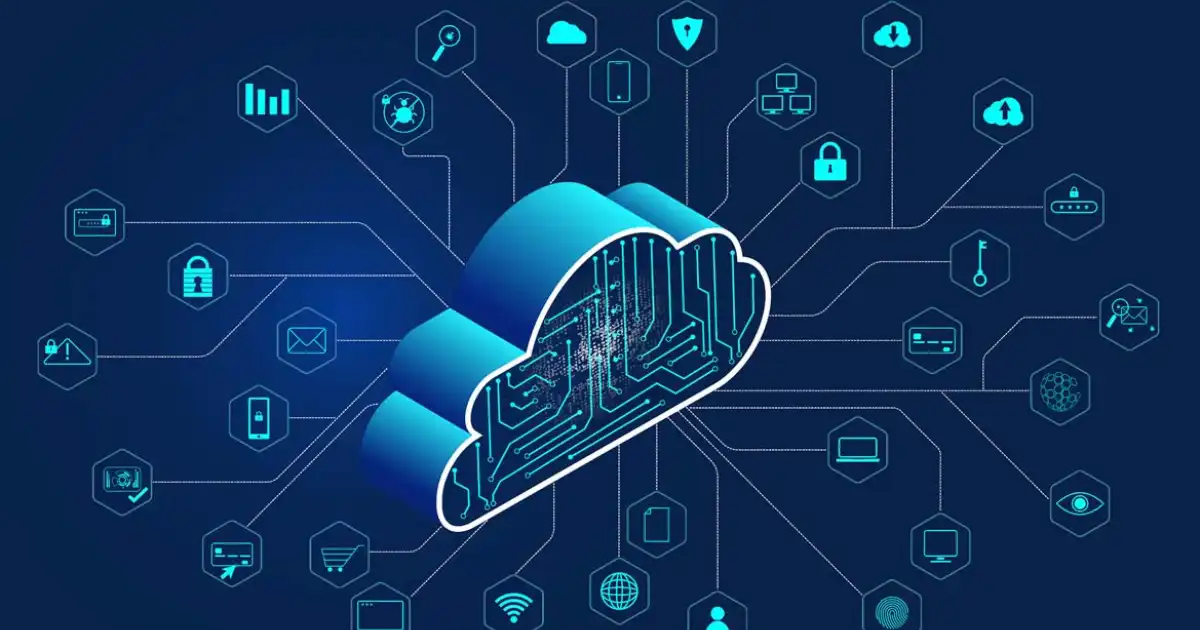
AI cloud architecture is the combination of cloud computing infrastructure and artificial intelligence systems working together.
Think of it as a large digital environment where data is stored, AI models are trained and deployed, and learning applications operate.
Instead of running everything on a single computer or school server, resources are distributed across cloud platforms that can scale up or down depending on demand.
In education, this architecture allows learning platforms to process huge amounts of student data, generate insights, and deliver personalized experiences without requiring schools to manage massive IT systems themselves.
How It Differs From Traditional Cloud Systems
Traditional cloud systems mainly focus on storing data and running applications.
AI cloud architecture goes further.
It includes machine learning models, analytics engines, recommendation systems, prediction algorithms, and automation layers that actively analyze information and make decisions.
For example, a traditional learning platform might simply record quiz scores.
An AI-powered platform can examine those scores, identify learning gaps, predict future difficulties, and recommend targeted content.
The cloud stores and processes the data. The AI adds intelligence.
Both pieces are necessary.
Why Education Platforms Depend on It
Modern educational platforms generate enormous amounts of information.
Every click, quiz attempt, video view, discussion post, and assignment submission creates data.
Without cloud-based systems, managing that information becomes expensive and difficult.
Without AI, most of that information remains unused.
Educational cloud infrastructure allows platforms to transform raw data into meaningful learning support.
That is why so many AI in education solutions rely heavily on cloud architecture.
Core Components of AI Cloud Architecture for Learning
Cloud Infrastructure
Cloud infrastructure provides the computing resources needed to run learning platforms.
This includes servers, networking systems, processing power, and storage.
In practical terms, it ensures students can access lessons at any time without overwhelming the system.
When thousands of students log in simultaneously before an exam, cloud infrastructure expands automatically to handle the demand.
Without it, platforms would slow down or crash.
Data Storage Systems
Learning platforms collect enormous amounts of information.
Student profiles, assessments, attendance records, learning progress, discussion posts, and engagement metrics all need to be stored securely.
Modern cloud-based storage systems organize this information so it can be accessed quickly and analyzed efficiently.
The better the storage architecture, the better the platform can understand learner behavior.
Machine Learning Models
Machine learning models are the brains of the system.
These models analyze patterns in learner behavior and generate recommendations.
For example, they may identify that students who struggle with fractions often have difficulties with specific prerequisite concepts.
The model can then recommend targeted lessons before the problem grows larger.
This is one of the foundations of adaptive learning.
Learning Analytics Engines
Learning analytics engines transform educational data into actionable insights.
Teachers can see which students need help.
Administrators can identify curriculum weaknesses.
Students can track their own progress.
I’ve seen organizations collect mountains of educational data but gain little value because they lacked effective analytics. Data alone does not improve learning. Interpretation does.
Security and Privacy Layers
Educational systems handle sensitive information.
Student records, assessment data, behavioral patterns, and personal information all require protection.
Security layers include encryption, access controls, monitoring systems, and privacy management tools.
These components are often overlooked until something goes wrong.
In practice, they are among the most important parts of the architecture.
How AI Cloud Architecture Supports Learning
Enables Personalized Learning Paths
Personalized learning is probably the most visible benefit of AI cloud architecture.
Instead of presenting the same content to every learner, the platform adjusts based on individual performance and behavior.
A student who masters algebra quickly may receive more advanced material.
Another student who struggles receives additional explanations and practice opportunities.
The cloud provides access to vast educational resources.
AI determines which resources are most relevant for each learner.
What many people misunderstand is that personalized learning is not magic.
The system is not reading minds.
It is analyzing patterns and making educated recommendations based on available data.
When the data is good, personalization can be very effective.
When the data is poor, recommendations become less useful.
Powers Intelligent Tutoring Systems
Intelligent tutoring systems attempt to replicate some aspects of one-on-one instruction.
They answer questions, provide hints, explain mistakes, and guide learners through problems.
Years ago, these systems were relatively simple.
Today’s cloud-based AI systems can process natural language, recognize common misconceptions, and generate contextual explanations.
The cloud is essential because these interactions often require significant computing resources.
Instead of running locally on a student’s device, the heavy processing happens in the cloud.
A common misconception is that intelligent tutoring systems replace teachers.
In my experience, the most successful implementations support teachers rather than replace them.
Human judgment remains extremely important.
Delivers Real-Time Feedback
One of the biggest advantages of AI-powered learning platforms is speed.
Students no longer need to wait days for feedback.
When a learner completes a quiz, submits an exercise, or practices a skill, AI systems can provide immediate responses.
Real-time feedback helps learners correct mistakes before those mistakes become habits.
Cloud architecture makes this possible by processing information quickly across distributed infrastructure.
The practical impact is significant.
Fast feedback often leads to faster improvement.
Supports Remote and Mobile Learning
Remote learning became a major focus for many institutions in recent years.
Cloud computing in education plays a central role in making remote learning viable.
Students can access materials from laptops, tablets, and smartphones regardless of location.
The cloud synchronizes progress across devices and ensures learning data remains consistent.
AI adds another layer by adapting content based on device usage patterns, connectivity conditions, and learner preferences.
Many people assume remote learning is simply video conferencing.
The reality is much broader.
Effective remote learning depends heavily on cloud architecture working behind the scenes.
Improves Collaboration Between Learners
Learning is often a social activity.
Modern educational platforms support discussion forums, shared projects, collaborative exercises, and peer feedback.
AI systems can help organize groups, recommend collaborators, identify participation patterns, and highlight valuable contributions.
Cloud infrastructure allows these interactions to happen at scale.
I’ve seen collaborative learning environments become much more effective when AI helps surface useful information that would otherwise be buried in thousands of interactions.
The goal is not replacing human collaboration.
It is making collaboration easier to manage.
Uses Learning Analytics to Improve Outcomes
Learning analytics is one of the most powerful but least visible aspects of AI cloud architecture.
The system continuously analyzes learner behavior.
It identifies trends, predicts risks, and highlights opportunities for improvement.
For example, the platform may detect that students who stop engaging for three consecutive days have a high probability of dropping a course.
Educators can intervene early.
Similarly, analytics may reveal that a specific lesson consistently causes confusion.
Course designers can improve the material.
What most people miss is that learning analytics benefits not only students but also teachers, administrators, and instructional designers.
Everyone gains better visibility into what is actually happening.
Benefits of AI Cloud Architecture in Education
Scalability
Educational platforms often experience unpredictable demand.
Enrollment periods, examination seasons, and major assignment deadlines can create sudden traffic spikes.
Cloud systems scale automatically to accommodate these fluctuations.
This flexibility would be difficult and expensive with traditional infrastructure.
Cost Efficiency
Building and maintaining large-scale educational infrastructure is expensive.
Cloud providers spread infrastructure costs across many customers.
Schools and organizations pay for the resources they use rather than investing heavily in hardware.
This lowers barriers to adopting advanced educational technologies.
Better Learning Experiences
Students benefit from faster systems, personalized recommendations, real-time feedback, and seamless access across devices.
The technology becomes largely invisible.
Learners simply experience a smoother educational journey.
That invisibility is often a sign that the architecture is working well.
Faster Innovation
Cloud-based environments allow educational platforms to introduce new features quickly.
AI models can be updated, tested, and improved without requiring users to install new software.
Innovation cycles become shorter and more practical.
Continuous Improvement Through Data
Every interaction generates new information.
AI systems learn from this data and refine recommendations over time.
Platforms become more effective as they accumulate experience.
Of course, this depends on responsible data collection and proper governance.
More data is not automatically better.
Useful data is better.
Real-World Applications
Adaptive Learning Platforms
Adaptive learning systems adjust content difficulty, pacing, and recommendations based on learner performance.
Students follow individualized learning paths rather than identical sequences.
This is one of the clearest examples of AI cloud architecture supporting learning directly.
Learning Management Systems
Modern learning management systems increasingly include AI-driven capabilities.
They automate administrative tasks, track engagement, identify struggling learners, and provide personalized content suggestions.
The cloud serves as the foundation for these capabilities.
AI Teaching Assistants
AI teaching assistants answer common questions, provide explanations, and support learners outside normal instructional hours.
They reduce repetitive workloads while extending support availability.
They are particularly useful in large-scale courses.
Automated Assessment Systems
AI-powered assessment tools evaluate assignments, quizzes, and practical exercises.
Some systems can assess written responses and provide detailed feedback.
Others focus on objective assessments.
The cloud enables rapid processing even when thousands of submissions arrive simultaneously.
Corporate Training Platforms
Corporate learning environments increasingly rely on AI-powered learning platforms.
Employees receive personalized training recommendations, skills assessments, and career development guidance.
Organizations benefit from better visibility into workforce capabilities.
Challenges and Limitations
Data Privacy Concerns
Educational data is sensitive.
Organizations must handle collection, storage, and analysis responsibly.
Poor privacy practices can damage trust and create legal problems.
AI Bias
AI systems learn from historical data.
If that data contains biases, recommendations may become unfair or inaccurate.
This remains a genuine challenge across many educational applications.
Integration Difficulties
Schools often operate with a mixture of old and new technologies.
Integrating AI cloud architecture with existing systems can be surprisingly difficult.
Technical compatibility issues are common.
Internet Dependency
Cloud-based systems require reliable connectivity.
In regions with limited internet access, learning experiences may suffer.
This remains a practical obstacle for many institutions.
Overreliance on Automation
Not every educational decision should be delegated to algorithms.
Human educators provide context, empathy, judgment, and mentorship that AI cannot fully replicate.
The strongest systems typically combine human expertise with machine assistance.
Future Trends
Generative AI Tutors
Generative AI tutors will become more sophisticated and conversational.
They will provide richer explanations, customized examples, and more natural interactions.
The technology is improving rapidly, although reliability remains an important concern.
Agentic Learning Systems
Agentic systems may eventually take a more active role in managing learning journeys.
Instead of merely recommending resources, they could coordinate schedules, track goals, and proactively guide learners.
Some early versions already exist.
Predictive Learning Analytics
Prediction capabilities will continue improving.
Platforms will become better at identifying learning risks before they become serious problems.
The challenge will be balancing prediction accuracy with privacy considerations.
Hyper-Personalized Education
Hyper-personalization is frequently discussed.
Some aspects are realistic.
Systems will likely become better at adapting content, pacing, and support strategies.
However, the idea of perfectly customized education for every learner remains partly aspirational.
Human learning is too complex to be reduced entirely to algorithms.
You Might Be Interested In
- How To Draft Pricing Pages With Ai?
- What Causes Machine Learning Underfitting?
- How Do Ai Learning Cloud Platforms Work?
- Top 5 Ai In E-governance Platforms Today
- What Are The 7 Branches Of Ai?
Conclusion
The answer to “How Does AI Cloud Architecture Support Learning” goes far beyond storing educational content online.
AI cloud architecture provides the foundation that allows modern learning systems to personalize instruction, deliver real-time feedback, support intelligent tutoring, analyze learner behavior, and scale to serve large populations.
The cloud supplies the infrastructure. AI supplies the intelligence.
Together, they enable many of the learning experiences people now expect from modern educational platforms.
At the same time, these systems are not flawless. Privacy concerns, bias, connectivity challenges, and excessive automation remain important issues.
From what I’ve seen, the most successful educational platforms treat AI as a tool that supports learning rather than a replacement for educators.
When implemented thoughtfully, AI cloud architecture helps create learning environments that are more responsive, more flexible, and more capable of meeting learners where they are.
FAQs
What is AI cloud architecture in education?
AI cloud architecture in education refers to the combination of cloud computing systems and artificial intelligence technologies that work together to support digital learning environments. The cloud provides the infrastructure needed to store educational content, manage student data, and deliver learning resources across multiple devices, while AI adds intelligence by analyzing learner behavior, making recommendations, and automating various educational tasks.
In practical terms, this architecture is what allows modern learning platforms to adapt to individual students, provide real-time feedback, and support large numbers of users simultaneously. Instead of relying on local school servers or standalone software, educational institutions can use cloud-based AI systems that continuously improve and scale as learning needs grow.
How does AI improve online learning?
AI improves online learning by making educational experiences more responsive to individual learners. Rather than delivering the same lessons and activities to everyone, AI systems can analyze performance data, identify strengths and weaknesses, and recommend content that matches a learner’s current skill level. This helps students spend more time on areas where they need support and less time on concepts they already understand.
Another major advantage is the ability to provide immediate feedback. AI-powered systems can evaluate quizzes, guide learners through exercises, answer common questions, and even act as virtual tutors. While AI cannot replace the experience and judgment of a good teacher, it can make learning more interactive, personalized, and accessible, especially in online environments where individual instructor attention may be limited.
Why is cloud computing important for AI-powered learning platforms?
Cloud computing is important because AI systems require significant computing power, storage capacity, and processing resources. Educational platforms collect large amounts of data from student interactions, assessments, videos, assignments, and discussions. The cloud provides the infrastructure needed to manage all of this information efficiently without requiring schools or organizations to maintain expensive hardware.
The cloud also makes AI-powered learning platforms more accessible and scalable. Students can log in from different locations and devices while accessing the same learning environment. At the same time, cloud infrastructure allows platforms to handle sudden increases in demand, such as during enrollment periods or exam preparation seasons, without slowing down or becoming unavailable.
What are the benefits of AI cloud architecture for schools and universities?
One of the biggest benefits for schools and universities is the ability to deliver more personalized learning experiences at scale. AI can help identify students who may be struggling, recommend targeted interventions, and provide insights that help educators make informed decisions. This creates opportunities for earlier support and more effective learning outcomes.
From an operational perspective, AI cloud architecture can also reduce infrastructure costs, simplify technology management, and enable faster adoption of new educational tools. Institutions gain access to advanced capabilities such as learning analytics, automated assessment, and intelligent tutoring systems without needing to build and maintain complex technology environments on their own.
Can AI cloud architecture support personalized learning?
Yes, personalized learning is one of the most important applications of AI cloud architecture. AI systems continuously analyze information such as quiz results, learning speed, engagement levels, and content interactions to understand how individual students learn. Based on these insights, the platform can adjust lesson recommendations, difficulty levels, and learning pathways to better match each learner’s needs.
The cloud plays a critical role by providing access to large educational content libraries and the computing resources needed to process learner data in real time. Together, AI and cloud infrastructure make it possible to deliver personalized learning experiences to thousands or even millions of learners simultaneously, something that would be extremely difficult to achieve through traditional educational methods alone.
