


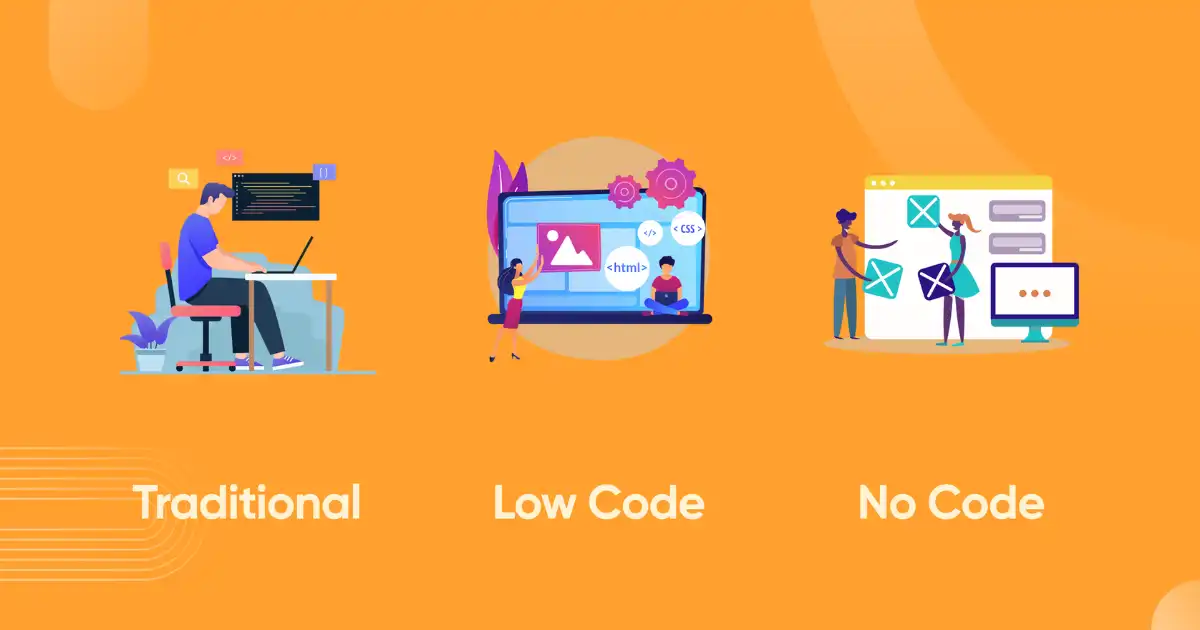
In today’s fast-moving digital world, building apps and software is no longer limited to expert programmers. New tools now allow almost anyone to create applications faster and cheaper than ever before. This is where Low-code Vs No-code platforms and AI-based builders come in. These modern solutions are changing how businesses, students, and entrepreneurs turn ideas into real products.
The debate around Low-code Vs No-code is growing because both options promise speed, simplicity, and lower costs. At the same time, AI-powered builders are adding a new layer of intelligence by automating decisions and designs. Understanding the real difference between these approaches is important before choosing the right one for your needs.
This comprehensive guide explains Low-code Vs No-code and AI builders in simple language. You will learn how they work, who should use them, their advantages, limitations, and how they fit into the future of software development.
Modern Application Development
Traditional software development requires writing thousands of lines of code. This process takes time, skilled developers, and large budgets. Many small businesses and startups simply cannot afford it.
Visual application development changed this model. Instead of writing code from scratch, developers now use visual interfaces, prebuilt components, and automation. This shift opened the door for Low-code Vs No-code solutions and AI-driven platforms.
The goal of these tools is simple. They help people build apps faster while reducing technical barriers. However, each approach works differently and serves different users.
What Is Low-Code Development?
Low-code development platforms are tools that reduce the amount of hand-written code required to build applications. Users still write some code, but most of the work is done through visual interfaces.
Low-code platforms are designed for professional developers as well as advanced business users. They speed up development while keeping flexibility. This balance is the main reason Low-code Vs No-code discussions often start with low-code.
How Low-Code Platforms Work
Low-code development platforms use drag-and-drop app builders, visual workflows, and reusable modules. Developers connect components, set logic rules, and add custom code only when needed.
This approach allows teams to focus on solving problems instead of writing repetitive code. It also helps companies update apps quickly when requirements change.
Key Features of Low-Code Development Platforms
Low-code development platforms usually offer visual modeling tools, database connections, and integration with external systems. Many also include security features and deployment automation.
Because some coding is still involved, low-code platforms offer more control and scalability than no-code tools. This is why large organizations often prefer low-code solutions.
Who Should Use Low-Code?
Low-code is ideal for developers who want to work faster without losing customization. It is also suitable for IT teams building complex internal systems.
In the Low-code Vs No-code comparison, low-code sits closer to traditional development but with much higher efficiency.
What Is No-Code Development?
No-code development tools allow users to build applications without writing any code at all. Everything is done using visual editors and drag-and-drop app builders.
No-code tools are designed for beginners, entrepreneurs, and non-technical users. This simplicity is what makes Low-code Vs No-code such a popular topic.
How No-Code Tools Work
No-code platforms use predefined components like forms, buttons, and workflows. Users select features, connect them visually, and configure settings.
The platform handles all technical details in the background. This allows anyone to create apps in hours instead of months.
Key Features of No-Code Development Tools
No-code development tools focus on ease of use. They often include templates, hosting, and built-in databases. Many also support basic integrations with popular services.
However, customization is limited. Users must work within the platform’s rules, which can be restrictive for complex projects.
Who Should Use No-Code?
No-code is perfect for small businesses, students, and startups testing ideas. It is also useful for internal tools that do not require advanced logic.
In the Low-code Vs No-code debate, no-code represents speed and accessibility over flexibility.
What Are AI-Powered App Builders?
AI-powered app builders take automation one step further. These platforms use artificial intelligence to design, build, and optimize applications.
Unlike traditional Low-code Vs No-code tools, AI builders can suggest layouts, generate workflows, and even write logic automatically.
How AI-Powered App Builders Work
AI-powered app builders analyze user input, data patterns, and goals. Based on this information, they recommend features and create app structures.
Some platforms allow users to describe their app idea in plain language. The AI then generates a working application.
Key Features of AI Builders
AI-powered app builders often include smart recommendations, automated testing, and performance optimization. They can also adapt apps based on user behavior.
These tools reduce decision-making effort and learning curves, especially for beginners.
Who Should Use AI Builders?
AI builders are ideal for users who want the fastest possible results. They are useful for rapid prototyping and early-stage development.
When comparing Low-code Vs No-code, AI builders represent the next evolution by adding intelligence to visual development.
Low-code Vs No-code Vs AI Builders: Core Differences
Understanding the main differences helps clarify the Low-code Vs No-code discussion and where AI builders fit in.
Low-code requires some coding knowledge, while no-code requires none. AI builders may require no coding and minimal design decisions.
Low-code offers high flexibility and scalability. No-code focuses on simplicity and speed. AI builders emphasize automation and smart assistance.
Each approach serves a different purpose. Choosing the right one depends on skills, project size, and long-term goals.
Ease of Use and Learning Curve
Ease of use is a major factor in Low-code Vs No-code decisions. No-code tools are the easiest to learn, often requiring no technical background.
Low-code platforms have a moderate learning curve. Users must understand logic and sometimes write code.
AI-powered app builders are often the easiest because they guide users step by step. However, understanding AI-generated results still requires attention.
Customization and Flexibility
Customization is where Low-code Vs No-code differences become clear. Low-code platforms allow custom logic and integrations.
No-code tools limit customization to predefined options. This makes them faster but less flexible.
AI builders vary widely. Some allow customization after AI generation, while others remain limited.
Scalability and Performance
Scalability is critical for growing applications. Low-code development platforms are built to handle complex systems and high traffic.
No-code development tools may struggle with large-scale applications. They are better suited for smaller projects.
AI-powered app builders can scale well, but performance depends on the platform’s infrastructure.
Security and Compliance
Security is often stronger in low-code platforms because they offer advanced controls and enterprise features.
No-code tools handle security automatically, which is convenient but less customizable.
AI-powered app builders may include automated security checks, but users should understand how data is handled.
In Low-code Vs No-code discussions, security is a key reason businesses choose low-code.
Cost Considerations
Cost plays a big role in choosing between Low-code Vs No-code and AI builders.
No-code tools usually have lower upfront costs. Low-code platforms may cost more but offer better long-term value.
AI-powered app builders can be cost-effective for fast results, but pricing may increase with usage.
Use Cases and Real-World Examples
Low-code is commonly used for enterprise apps, dashboards, and workflow automation.
No-code is popular for landing pages, simple apps, and internal tools.
AI-powered app builders are often used for prototypes, MVPs, and idea validation.
Understanding these use cases helps clarify the Low-code Vs No-code decision.
Benefits of Low-Code Development
Low-code development platforms increase productivity and reduce development time.
They allow collaboration between developers and business teams.
Low-code offers a strong balance between speed and control in the Low-code Vs No-code comparison.
Benefits of No-Code Development
No-code development tools empower non-technical users.
They reduce costs and allow fast experimentation.
No-code makes digital creation accessible, which is a key point in Low-code Vs No-code discussions.
Benefits of AI-Powered App Builders
AI-powered app builders reduce effort and decision fatigue.
They help beginners build apps quickly.
AI adds intelligence beyond traditional Low-code Vs No-code tools.
Limitations to Consider
Low-code still requires technical skills.
No-code lacks flexibility.
AI builders may create black-box systems that are hard to control.
Understanding these limitations is essential when comparing Low-code Vs No-code and AI builders.
How to Choose the Right Option
Choose low-code if you need control and scalability.
Choose no-code if you need speed and simplicity.
Choose AI-powered app builders if you want automation and quick results.
Your choice depends on skills, goals, and resources within the Low-code Vs No-code framework.
The Future of Application Development
The future will likely combine Low-code Vs No-code with AI-driven automation.
Visual application development will continue to grow.
AI-powered app builders will become smarter and more reliable.
These tools will shape how software is built in the coming years.
You Might Be Interested In
- How Does Ai Cloud Architecture Support Learning?
- Best Cloud Providers For Ai Startups
- How Vibe Coding Works: Building Apps with Prompts Instead of Code
- 7 Ai Calendar Assistants To Try
- What Are Database Development Tools Used For?
- What Is A Feature In Machine Learning?
- Prompt Engineering for Developers: Get Better Code from AI
- What Are The Advantages Of Supervised Learning?
- Best 5 Aiot Solutions For Sustainable Energy Management
- How Do I Turn On The Zoom Ai Assistant?
Conclusion
The debate around Low-code Vs No-code is not about which is better, but which is right for a specific need. Low-code offers flexibility and power, making it ideal for complex and scalable applications.
No-code focuses on speed and accessibility, allowing anyone to build functional apps without technical skills. AI-powered app builders add intelligence, automating decisions and accelerating development even further.
As technology evolves, these approaches will continue to overlap and improve. Understanding the strengths and limitations of each option allows individuals and businesses to make smarter choices.
Whether you choose low-code, no-code, or AI builders, the goal remains the same: turning ideas into real solutions faster and more efficiently.
FAQs about Low-code Vs No-code
Is low-code better than no-code for beginners?
Low-code is not always better for beginners, especially for those with no technical background. Low-code platforms still require users to understand basic programming concepts such as logic, workflows, and sometimes scripting. This can feel overwhelming for complete beginners who just want to build something quickly.
No-code tools are usually the better starting point for beginners. They allow users to focus on ideas instead of technical details. However, once beginners gain confidence and want more control, transitioning from no-code to low-code can be a smart next step in the Low-code Vs No-code journey.
Can AI-powered app builders replace software developers?
AI-powered app builders are powerful, but they cannot fully replace professional developers. These tools are excellent for generating basic app structures, automating layouts, and speeding up early development stages. They are especially useful for prototypes and simple applications.
However, complex systems still require human expertise. Developers are needed for advanced logic, security architecture, performance optimization, and custom integrations. In the Low-code Vs No-code discussion, AI builders are best seen as assistants, not replacements for skilled developers.
Are no-code applications secure enough for businesses?
No-code platforms usually include built-in security features such as user authentication, data encryption, and hosting protection. For small businesses and internal tools, these security measures are often more than sufficient. This makes no-code tools attractive for fast deployment.
That said, businesses with strict compliance requirements may face limitations. Large organizations often prefer low-code platforms because they offer more control over security settings. When comparing Low-code Vs No-code, security needs are a major deciding factor for businesses.
How long does it take to build an app using low-code, no-code, or AI builders?
With no-code tools, users can build simple apps in just a few hours or days. These platforms are designed for speed and ease, making them ideal for quick experiments or internal solutions. AI-powered app builders can reduce this time even further by automating design and setup.
Low-code development usually takes more time, but it is still much faster than traditional coding. Depending on complexity, apps can be completed in days or weeks. In the Low-code Vs No-code comparison, speed increases as technical requirements decrease.
Will low-code and no-code replace traditional programming completely?
Low-code and no-code platforms will not fully replace traditional programming. Instead, they will work alongside it. These tools handle repetitive and simpler tasks, allowing developers to focus on complex problems and innovation.
Traditional programming will remain essential for highly customized, large-scale, and performance-critical systems. In the future, Low-code Vs No-code platforms and AI builders will become standard tools that complement traditional development rather than replace it.
