


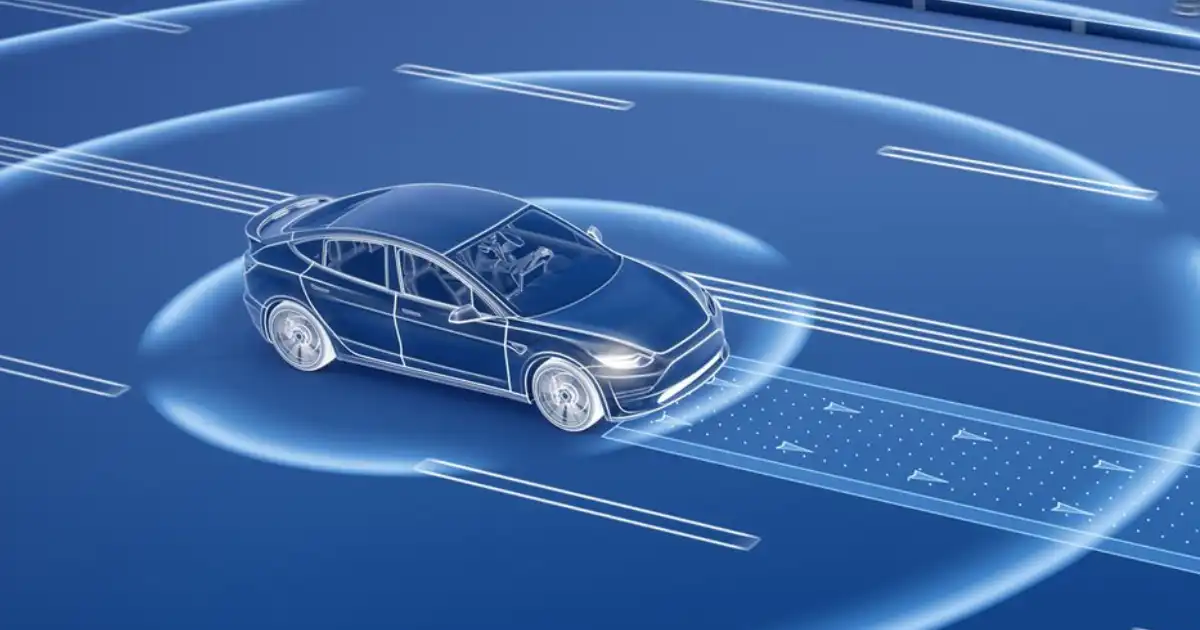
Imagine a world where your car drives you to work, drops your kids at school, and even parks itself—all without you lifting a finger. Sounds like science fiction? Think again. Autonomous vehicles (AVs) are no longer a distant dream; they’re becoming a reality, thanks to the power of artificial intelligence (AI).
But how does AI transform a regular car into a self-driving marvel? In this comprehensive guide, we’ll delve into the intricate relationship between AI and autonomous vehicles, exploring how AI enables AVs to perceive, decide, and act in real-time. Do Autonomous Cars Use Ai?
What Is an Autonomous Vehicle?
Before we dive into the role of AI, let’s define what an autonomous vehicle is. An autonomous vehicle, also known as a self-driving car, is a vehicle capable of sensing its environment and operating without human involvement. These vehicles use a combination of sensors, cameras, and AI algorithms to navigate and control the vehicle’s movements.
The Role of AI in Autonomous Vehicles
1. Perception: Seeing the World
AI enables autonomous vehicles to perceive their surroundings using various sensors:
-
Cameras
Capture visual information to identify objects, traffic signs, and lane markings.
-
Lidar (Light Detection and Ranging)
Uses laser pulses to create a 3D map of the environment, detecting obstacles and measuring distances.
-
Radar
Detects the speed and position of objects, especially useful in adverse weather conditions.
-
Ultrasonic Sensors
Used for close-range detection, such as parking assistance.
AI algorithms process data from these sensors to create a comprehensive understanding of the vehicle’s environment.
2. Decision Making: Navigating the Road
Once the vehicle perceives its surroundings, AI algorithms make real-time decisions:
-
Path Planning
Determining the optimal route to the destination while avoiding obstacles.
-
Behavior Prediction
Anticipating the actions of other road users, such as pedestrians and other vehicles.
-
Control Systems
Managing acceleration, braking, and steering to execute the planned path safely.
These decisions are crucial for safe and efficient autonomous driving.
3. Learning and Adaptation: Improving Over Time
AI enables autonomous vehicles to learn from experience:
-
Machine Learning
Algorithms improve their performance by analyzing vast amounts of data.
-
Reinforcement Learning
The vehicle learns optimal actions through trial and error, receiving feedback from its environment.
This continuous learning process allows AVs to adapt to new situations and improve their driving capabilities.
Key Technologies Behind AI in Autonomous Vehicles
1. Deep Learning
Deep learning, a subset of machine learning, involves neural networks with many layers. These networks can model complex patterns in data, making them ideal for tasks like image and speech recognition. In autonomous vehicles, deep learning helps in object detection, classification, and decision-making.
2. Sensor Fusion
Sensor fusion combines data from multiple sensors to create a more accurate and reliable perception of the environment. By integrating information from cameras, lidar, radar, and other sensors, AI algorithms can make more informed decisions.
3. V2X Communication
Vehicle-to-Everything (V2X) communication allows vehicles to exchange information with each other and with infrastructure like traffic lights and road signs. This connectivity enhances situational awareness and can improve traffic flow and safety.
Real-World Applications of AI in Autonomous Vehicles
1. Waymo
Waymo, a subsidiary of Alphabet Inc., operates a fleet of autonomous vehicles in several U.S. cities. Their vehicles use AI to navigate complex urban environments, handling tasks like merging onto highways, navigating intersections, and responding to pedestrians.
2. Tesla Autopilot
Tesla’s Autopilot system uses AI to assist with driving tasks such as lane centering, adaptive cruise control, and automatic lane changes. While not fully autonomous, Autopilot represents a significant step toward self-driving vehicles.
3. Zoox
Amazon’s Zoox is developing purpose-built autonomous vehicles designed from the ground up for self-driving. Their vehicles utilize AI to navigate and interact with passengers, aiming to revolutionize urban transportation.
Challenges in Implementing AI in Autonomous Vehicles
1. Safety and Reliability
Ensuring that AI systems can handle all driving scenarios safely is a significant challenge. Even minor errors in decision-making can have serious consequences.
2. Ethical Considerations
AI systems may face situations where ethical decisions are required, such as how to act in unavoidable accident scenarios. Programming these ethical considerations into AI is a complex and debated issue.
3. Regulatory and Legal Issues
The deployment of autonomous vehicles involves navigating complex regulatory landscapes. Laws and regulations vary by region, and there is a need for standardized rules to govern the operation of AVs.
4. Public Perception
Public trust in autonomous vehicles is crucial for their widespread adoption. Incidents involving AVs can significantly impact public perception and acceptance.
The Future of AI in Autonomous Vehicles
1. Enhanced AI Capabilities
Advancements in AI, such as improved machine learning algorithms and more powerful computing hardware, will enable autonomous vehicles to handle more complex driving scenarios.
2. Integration with Smart Cities
As cities become smarter, autonomous vehicles will be able to communicate with infrastructure like traffic lights and road sensors, leading to more efficient and coordinated transportation systems.
3. Widespread Adoption
With continued advancements and regulatory support, autonomous vehicles powered by AI could become commonplace, transforming transportation and mobility.
You Might Be Interested In
- How Reliable Are Ai Tools For Everyday Tasks?
- What Is A Cloud Hosting Platform And How Does It Work
- Why Ai For Public Health Monitoring Is Vital?
- Why Is The Software Development Lifecycle Important?
- How To Use Google AI For Free?
- How Does Real Time Data Processing Work In Modern Systems?
- How Can Ransomware Protection Strategies Reduce Risk?
- What Is Cyber Threat Detection And How Does It Work?
- What Is F1 Score In Machine Learning?
- Top Ai Tools For Content Writing and How To Actually Use Them
Conclusion
Artificial intelligence is the backbone of autonomous vehicles, enabling them to perceive their environment, make decisions, and learn from experience. While challenges remain, the integration of AI into self-driving cars holds the promise of safer, more efficient, and more accessible transportation. As technology continues to evolve, the dream of fully autonomous vehicles is becoming an increasingly tangible reality.
FAQs about Autonomous Cars
How is AI used in autonomous cars?
AI plays a big role in helping autonomous cars drive safely and make smart decisions on the road. It allows the car to “see” its surroundings using cameras, radar, and sensors, and then analyze all that information quickly. AI can detect other vehicles, pedestrians, traffic signs, and even road conditions. Based on this data, the AI decides when to accelerate, brake, or turn, making driving more precise and reducing the risk of accidents. Essentially, AI acts as the brain of the car, helping it understand its environment and react in real-time.
AI also helps autonomous cars learn from experience. By collecting data from every trip, AI systems improve over time, recognizing patterns and predicting potential hazards. This learning ability is what makes self-driving cars smarter and safer than traditional vehicles that rely only on human judgment. Without AI, autonomous cars wouldn’t be able to navigate complex traffic situations or respond to sudden changes on the road.
Are driverless cars considered AI?
Driverless cars themselves are not AI, but they rely heavily on AI to operate. AI is the technology that powers the decision-making and control systems inside these cars. Without AI, a car cannot drive itself or understand its surroundings. So, while the vehicle is not AI, it is an AI-powered machine. The distinction is similar to a smartphone—it isn’t AI by itself, but it can run AI applications that do smart tasks.
AI in driverless cars allows them to perform complex functions like lane keeping, object recognition, and traffic prediction. These capabilities are what make the car “self-driving,” as the AI processes data and guides the vehicle safely. Therefore, AI is the core technology behind making driverless cars a reality, even though the car as a whole is still a mechanical object.
Do autonomous systems use AI?
Yes, almost all autonomous systems use AI in some way. Whether it’s a drone, robot, or self-driving car, AI helps these systems make decisions without human intervention. AI enables machines to understand their environment, plan their actions, and learn from experience, which is essential for autonomy. For example, AI allows a delivery drone to navigate obstacles, choose the fastest route, and adjust to changing weather conditions.
Autonomous systems often rely on different types of AI, such as computer vision for “seeing,” machine learning for “learning from experience,” and decision-making algorithms for “choosing the best action.” Without AI, these systems would be limited to following pre-programmed instructions and wouldn’t be able to adapt to unexpected situations, which is crucial for operating safely in the real world.
Is AI used in electric cars?
Yes, AI is increasingly used in electric cars, especially in advanced models. While electric cars are mainly powered by electricity instead of gasoline, AI can improve how these cars perform and how efficient they are. For instance, AI can manage battery use, predict how far the car can travel, and even suggest the best charging times and routes. This makes electric cars smarter, more energy-efficient, and more convenient for drivers.
AI in electric cars also enhances safety and comfort. Many electric vehicles now include AI-powered driver-assist systems, which can help with parking, collision avoidance, and maintaining speed or lane position. Even though not every electric car is fully autonomous, AI makes the driving experience easier and safer, blending both energy efficiency and smart technology.
Does Tesla’s Autopilot use AI?
Yes, Tesla’s Autopilot system relies heavily on AI to operate. It uses cameras, sensors, and radar to monitor the car’s surroundings and make decisions in real-time. The AI processes all this data to control acceleration, braking, steering, and lane changes. This allows Tesla vehicles to drive semi-autonomously on highways and in certain traffic conditions, although a human driver still needs to stay alert.
Tesla’s AI system also improves over time through software updates and data collected from millions of miles driven by Tesla cars. This helps the AI recognize new driving situations, understand traffic patterns, and become safer and more reliable. So, while Autopilot is not fully self-driving yet, it is a clear example of AI actively controlling and assisting a vehicle.
