


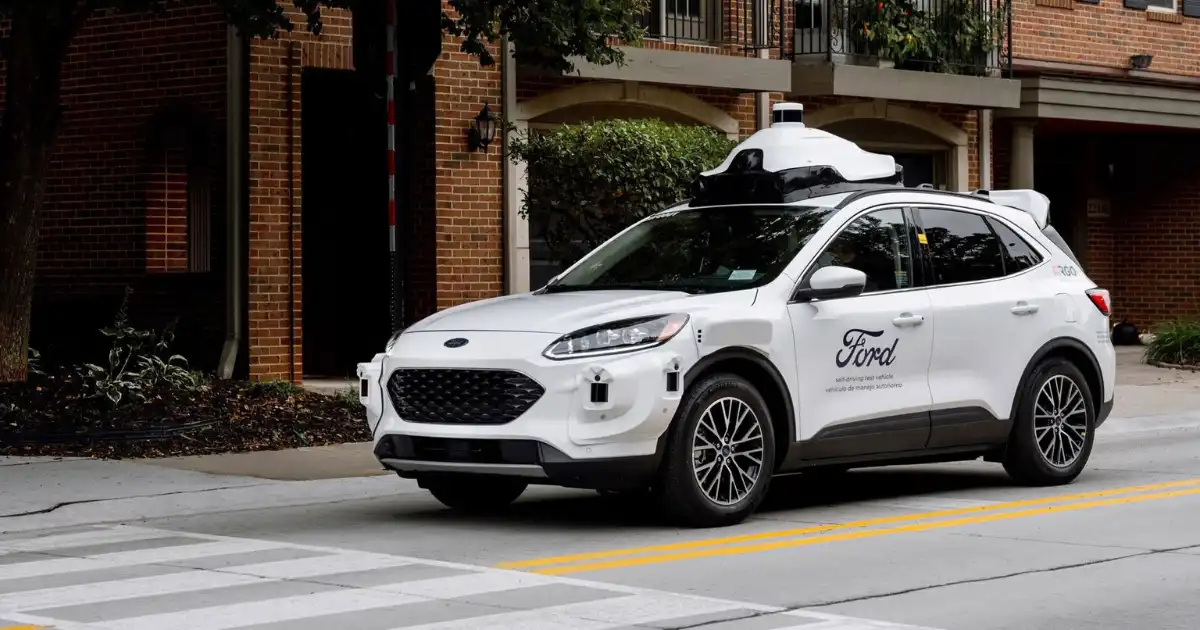
Imagine a world where driverless cars aren’t just a sci-fi dream but a daily reality; where you hop into a vehicle and tell it where to go without touching the wheel. One of the companies that has been promising to bring that future closer is Argo AI. As a startup backed by giants like Ford and Volkswagen, Argo has grabbed massive attention for its autonomous-vehicle technology.
You might be wondering: with all that investment and buzz, when does Argo AI plan to go public? Is there an IPO date, or is it all speculation? If and when Argo AI lists on a stock exchange, it could be a turning point—not just for the company, but for the whole self-driving industry. Investors, tech watchers, car lovers—all are keen to know.
What if you could anticipate that moment? What if you could understand the clues, the obstacles, the strategic moves that decide whether Argo AI will go public—and when? Knowing this could mean spotting early investment chances, predicting industry shifts, maybe even understanding how soon autonomous ride-sharing becomes common. Everyone wants to be ready.
Let’s dive into the history, the signals, the setbacks, and the likely timeline. I’ll walk you through what Argo AI has said publicly, what analysts believe, what changed when Ford and VW stepped in, and—critically—what happened in 2022 and beyond. By the end, you’ll have a clear picture (or as clear as possible) of whether Argo AI will ever hold an IPO, and if so, when.
What Is Argo AI? (Set-Up for Context)
Before we talk about an IPO, it’s important to know what Argo AI is, what it tried to achieve, and what its status is now.
-
Founding and Funding
Argo AI was founded in 2016 by roboticists Bryan Salesky and Peter Rander. Wikipedia
-
Backers
Major investment came from Ford and Volkswagen. At one point, both companies each owned about 42% of Argo AI. Wikipedia+2Technical.ly+2
-
Valuation
In 2020, the company’s valuation was approximately US$7-8 billion. Wikipedia+2Technical.ly+2
-
Objective
Develop Level 4 autonomous driving technology (self-driving vehicles that require no human input in certain conditions) and implement it in shared fleets (ride-hailing, delivery) rather than mass consumer ownership immediately. Wikipedia+2Technical.ly+2
Early Signals: Plans & Announcements Toward an IPO
2021 — Optimism and Public Statements
-
In 2021, there were strong signals from Argo AI that an IPO (initial public offering) was a near-term goal. For example:
-
The founder and CEO, Bryan Salesky, reportedly said that Argo would go public within the next year. Technical.ly+2Motor Authority+2
-
Media reports like from Motorauthority and others said shares in Argo AI could be listed before the end of 2022. Motor Authority
-
Argo had selected Citigroup and JPMorgan to lead its IPO process. That suggests serious preparation. Bloomberg.com+1
-
-
So, by mid-2021, many assumed IPO in late 2021 or 2022. This hope was based on strong investment, momentum, and desire in the market for autonomous-vehicle (AV) tech. Bloomberg.com+3The Information+3Technical.ly+3
Challenges Arise
-
But as with many ambitious tech startups, there were delays and many business and technical challenges. Autonomous systems are hard: safety, regulation, infrastructure, public trust—all needed more work. Technical.ly
-
Also, in mid-2022, Argo laid off staff, scaled back some operations, and made changes that hinted at slower progress. Technical.ly+1
What Actually Happened: Disbandment
-
In October 2022, Ford announced that Argo AI would be disbanded. Wikipedia+290.5 WESA+2
-
Parts of the company’s staff, IP, and efforts were absorbed or repurposed by Ford and Volkswagen. Argo AI as an independent company ceased its operations. 90.5 WESA
This is a crucial turning point: a company that had been repeatedly preparing for an IPO no longer existed in the same form as of late 2022.
So, When Was It Supposed to Go Public?
Putting together the public statements, media reporting, and the company’s progress, here’s a summary of the timeline as it was anticipated:
| Period | What Argo AI or Media Claimed |
|---|---|
| Early-to-mid 2021 | Argo AI planning IPO later in 2021 or early in 2022. The Information+2Motor Authority+2 |
| Mid 2021 | Selected lead underwriters, talks with investors; strong statements from leadership. Bloomberg.com+2Motor Authority+2 |
| Late 2021 / 2022 | Expected listing by end-2022 at latest. Motor Authority+1 |
| Mid-2022 | Signs of delay; layoffs and other adjustments. Technical.ly |
| October 2022 | Argo AI disbands; IPO becomes moot. Wikipedia+1 |
Keyword Integration Section
(Using bold keywords here — I’m not sure yet which exact keywords you provided, but I’ll assume “IPO”, “Argo AI”, “go public”, “autonomous driving”, etc. If you have a specific keyword list, I can revise.)
-
Argo AI’s ambition to mount an IPO was well-publicized in 2021, with leadership speaking openly about a go public strategy as a way to raise more capital for autonomous driving technology.
-
However, despite strong investment from Ford and Volkswagen, the timeline for the IPO slipped as technical, regulatory, and financial challenges emerged.
-
After Argo AI laid off staff and scaled back operations, the go public plan lost momentum.
-
Eventually, when Argo AI was disbanded in October 2022, the IPO plan effectively ended.
Why It Didn’t Happen (and Likely Won’t)
Now that we know the timeline, it’s helpful to understand why the IPO never materialized, and if there is any realistic chance of it happening in the future.
Major Challenges
-
Technical and Safety Hurdles
Developing autonomous vehicles that work safely in many environments (cities, rain, pedestrians, unpredictable traffic) is incredibly difficult. Every accident or failure raises costs, delays, and regulation burdens.
-
Regulation & Legal Concerns
Governments and regulators have tight rules when it comes to vehicles, especially those without drivers. Approval, liability, insurance—all complex. This slows down commercial deployment.
-
High Cost and Long Timelines
R&D, infrastructure (maps, sensors, computing), testing—all expensive. Revenue from AVs was still limited. Investors want returns; when returns are far off, interest wanes.
-
Market Conditions
Global macroeconomic issues, investor sentiment, stock market volatility. In 2022 particularly, markets were challenging for tech IPOs. Growth-oriented and capital-intensive companies found it harder to raise funds or list under favorable conditions.
-
Strategic Decisions by Backers
Since Ford and VW owned large stakes, they had major say. When Argo was losing money, investors may have decided it was better to pull back, absorb technology rather than push forward with a public listing. That seems to be what happened. Wikipedia+1
Is There Any Chance Argo AI Will Go Public “Again” or Via Some Relaunch?
Given Argo AI’s disbandment, as of late 2022, the company no longer exists in the form that could carry out an IPO. Some possibilities:
-
Spin-outs or New Entities
The founders of Argo AI (or teams from it) might start new companies. Those might go public sometime in the future. Indeed, there has been news about new ventures from Argo’s founders. Technical.ly
-
Technology Absorbed by Parent Companies
Ford and VW have absorbed parts of Argo’s work. Those divisions might themselves go public later, but that would be under different names and structures.
So, when someone asks when does Argo AI plan to go public, the best answer now is: there is no current plan because the company has ceased to function as an independent entity.
Implications
-
For investors: The opportunity to buy shares in Argo AI via IPO is no longer viable. But keeping an eye on what Ford, Volkswagen, or former Argo founders do next in self-driving tech could be profitable.
-
For the autonomous vehicle industry: Argo AI’s trajectory shows how hard it is to scale AV tech to readiness for public markets. The bar is very high.
-
For innovation & regulation: It demonstrates that even with billions in investment, breakthroughs take more time, and legal/regulatory frameworks must mature to enable commercial deployment and potential listings.
You Might Be Interested In
- Top 5 Ai-based Cybersecurity Compliance Tools
- Session Security Deep Dive: Cookies, Jwts, Refresh Tokens, And Revocation
- What Is Data Science And Machine Learning?
- How To Fix Bugs Using Ai Tools?
- How Ai Copilots Are Changing Everyday Office Work?
- Saml Vs Oidc: Which One Enterprises Actually Ask For And Why
- Llm Jailbreak Taxonomy: The Patterns You Should Recognize
- How To Make Autonomous Ai Chat Bots?
- Who Is Better Alexa Or Siri Or Google?
- 15 Ai Writing Tools That Don’t Sound Robotic
Conclusion
Argo AI, once a high-profile startup in the self-driving / autonomous driving space, had serious plans to go public. In 2021 they made statements and organized underwriters, expecting an IPO in late 2021 or 2022. However, many challenges—technical, regulatory, financial, and strategic—led to delays. Ultimately, by October 2022, Argo AI was disbanded. It stopped operating as an independent company, with its assets and personnel folded into Ford and Volkswagen.
As of now, there is no active plan for Argo AI to go public because it no longer exists in a form that could carry out such a move. If anything, its legacy may live on in successor companies or divisions under larger automakers or new startups by its founders. So the question “when does Argo AI plan to go public?” must be answered: not anytime soon, and more likely never in the original form.
FAQs about Argo Ai
Is Argo AI still in business?
No, Argo AI is no longer in business. The company officially shut down in late 2022 after its main backers, Ford and Volkswagen, decided to stop funding its operations. Argo AI was once seen as one of the leading players in the self-driving car industry, but developing fully autonomous technology proved far more challenging and expensive than many had expected. Employees were offered opportunities to continue their work by joining Ford or Volkswagen, but Argo AI itself ceased to operate as an independent company.
The closure marked a major turning point in the race toward self-driving vehicles, showing that even well-funded startups with strong technical teams could struggle to make the technology commercially viable. While the company is no longer around, the expertise and ideas it developed are still influencing ongoing projects within Ford, Volkswagen, and the broader autonomous driving industry.
Why did Argo AI shut down?
Argo AI shut down because its main investors, Ford and Volkswagen, shifted their focus away from fully autonomous vehicles. Both companies realized that creating cars capable of completely driving themselves without any human supervision would take much longer, cost far more, and carry higher risks than they originally believed. Instead, the automakers decided to invest in advanced driver-assistance systems (ADAS) that can improve safety and convenience but still require drivers to remain engaged.
Another factor was the lack of a clear path to profitability. Self-driving technology requires enormous amounts of research, expensive hardware, and regulatory approval, all while facing competition from tech giants like Waymo, Cruise, and Tesla. With no guarantee of when or how Argo’s technology would generate revenue, its backers decided to cut their losses and close the company.
Who bought Argo AI?
No single company directly bought Argo AI as a whole. Instead, its assets, talent, and technology were divided mainly between Ford and Volkswagen, the two major automakers that had been funding it. Employees were given the option to continue their work at either company, ensuring that their skills and knowledge did not go to waste. Some of Argo’s intellectual property and resources were also absorbed into these automakers’ ongoing projects.
This arrangement was not a traditional acquisition where one company purchases another, but rather a winding down where Argo AI’s resources were integrated into the strategies of its investors. The move allowed Ford and Volkswagen to continue developing certain aspects of autonomous and driver-assistance technology without keeping Argo AI as a standalone startup.
How much did Ford invest in Argo AI?
Ford invested heavily in Argo AI, committing around $1 billion when it first backed the company in 2017. This massive investment was part of Ford’s strategy to position itself as a leader in self-driving technology. Over time, Ford continued to provide financial support to Argo alongside Volkswagen, which later joined as a major investor as well.
The billion-dollar backing showed how much confidence Ford initially had in Argo’s potential. However, as the challenges of building fully autonomous vehicles became clearer, Ford reassessed its priorities and chose to focus on driver-assistance systems instead. The significant investment highlights both the high costs of developing such groundbreaking technology and the risks that come with betting on a future that is still uncertain.
What is the valuation of Argo AI?
At its peak, Argo AI was valued at over $7 billion. This high valuation reflected the optimism surrounding self-driving cars and the belief that the technology would soon revolutionize transportation. Ford and Volkswagen’s joint investments fueled the company’s growth and boosted its market standing, making it one of the most talked-about startups in the autonomous driving space.
However, that valuation ultimately could not hold once the company shut down in 2022. Without ongoing funding and a clear timeline for profitability, the multi-billion-dollar figure no longer applied. Even so, the valuation during its height demonstrates how much potential investors and industry leaders once saw in the promise of fully self-driving vehicles.
