


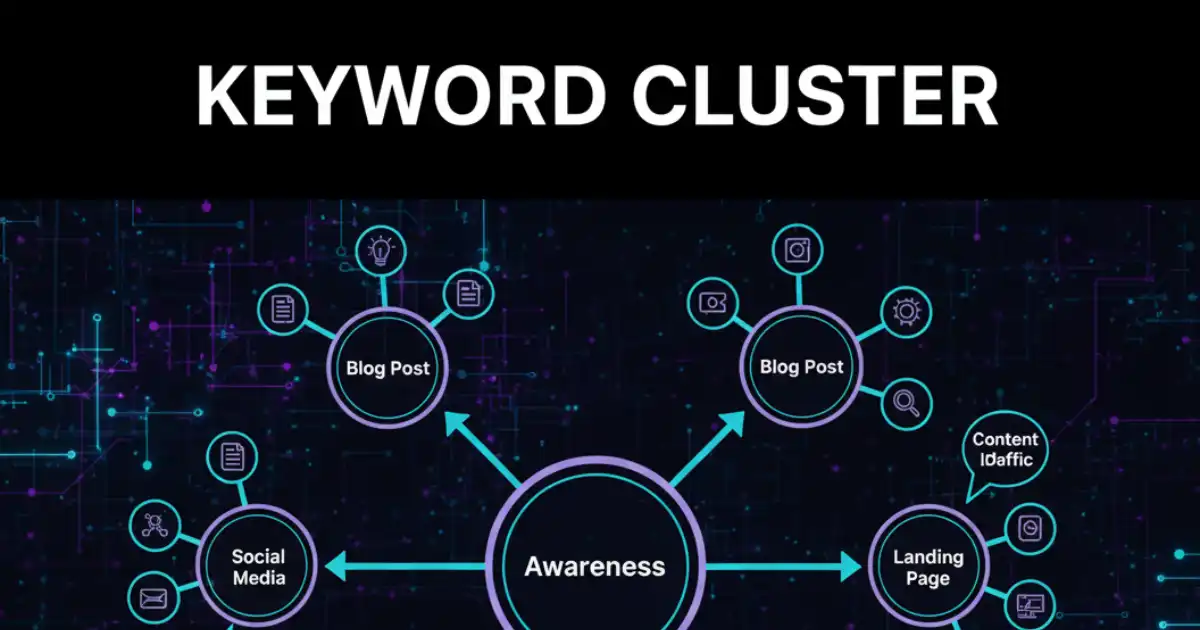
Imagine launching your next blog, website, or marketing campaign — and effortlessly mapping out hundreds of phrases into clean, meaningful groups that guide your SEO strategy. That’s the power of keyword clustering using AI. Whether you’re struggling with a bulky list of keywords, unsure how to structure content clusters, or simply want to step up your search-engine game — this is the moment you unlock a smarter way. The tools are evolving, the algorithms are improving, and you’re about to join the front-row in turning chaos into clarity.
You’ve probably collected lists of keywords like: “best coffee beans”, “coffee bean taste test”, “how to roast coffee beans”, “coffee bean variety single origin”, “coffee bean grinders review”, and more. It’s a lot. You might ask: What do I do with all these keywords?
How do I turn them into pages that rank, instead of separate random posts competing with each other? That’s where keyword clustering using AI comes in. With the latest AI-driven tools and structured workflows, you can group similar keywords into logical clusters, craft content hubs that target those clusters, and let search engines understand your site’s architecture. And yes — you’ll save time, reduce content cannibalisation, and boost your SEO outcome.
Imagine clicking “run” on an AI tool and seeing your entire keyword list sorted into 10–20 clusters like “coffee bean types”, “roasting coffee beans”, “coffee bean grinders”, “coffee bean reviews”, “coffee bean taste”. Each cluster has a strong anchor keyword and supporting keywords. Then you map each cluster to a content page or pillar. You write one guide for each cluster and internal-link the supporting articles. Suddenly, your SEO strategy isn’t random—it’s systematic. You’re not guessing — you’re aligning with search intent, user journey, and AI insights. With keyword clustering using AI, you can do exactly that.
Ready to dive in? This guide will walk you step-by-step through how to cluster keywords using AI—from preparing your list, picking your AI tool, setting parameters, actually clustering, interpreting results, creating content paths, and then measuring success. You’ll gain a replicable workflow that feels like a professional SEO agency is holding your hand. Let’s get started.
1. What is keyword clustering?
Keyword clustering refers to organising a large list of keywords into groups (clusters) that share common intent, topic, or search behavior. Instead of treating each keyword separately, you treat a cluster of keywords as one content opportunity. For example, keywords like “coffee bean varieties”, “coffee bean taste”, and “single origin coffee beans” might go into one cluster. A page written around that cluster targets all of them.
Traditionally, SEO would pick a few priority keywords and write separate pages for each. But that approach can lead to overlap, content cannibalisation, and confusion for both users and search engines. Clustering fixes that.
With AI, we can automate and scale clustering—detecting semantic similarity, search intent patterns, grouping keywords that “belong” together. This is what we call keyword clustering using AI. The AI can help recognise the nuance between “buy coffee beans online” vs “how to roast coffee beans at home” even when the keywords contain similar words.
2. Why cluster keywords at all?
Better alignment with user intent
When you group keywords by intent—informational (how to), transactional (buy), navigational (brand) — you ensure your content meets what the user is really searching for. A cluster might mix “coffee bean grinder review” (transactional) with “what is a coffee bean grinder” (informational). If you place them in the same cluster you risk mismatching intent. That’s why clustering helps.
Reduced content overlap
If you treat each keyword individually, you might write five separate articles that all talk about “coffee bean taste test” or “roasting coffee beans” and they end up fighting each other in search results. With clusters, you write one strong pillar article that covers the cluster well.
Improved internal linking and site structure
Once you have clusters, you can create a pillar-page plus supporting articles strategy. For example, pillar: “The Ultimate Guide to Coffee Bean Varieties”; supporting posts: “Single Origin vs Blend”, “Organic vs Conventional Coffee Beans”, “How Roast Level Affects Taste”. The anchor page is rooted in the cluster, and internal links help pass authority. Search engines like structured clusters.
Scaling content creation
If you have 500 keywords, manual grouping is tedious and error-prone. With AI you can cluster them in minutes. Then you can prioritise clusters for content creation.
Better analytics and performance tracking
Tracking individual keywords is messy. If you track clusters you can ask: “How is cluster X performing?” and measure content pieces that support it. That gives you actionable insights.
So clustering is strategic, not just organisational. And when enhanced by AI, it becomes scalable and smart.
3. How AI changes the game
In the past, clustering keywords was manual: you’d use spreadsheets, look for patterns, maybe manually assign keywords to groups. It worked — but slowly, inconsistently, and with risk of bias.
With AI, we bring several enhancements:
-
Semantic similarity detection
AI models can see that “coffee bean grinder review” and “best grinder for coffee beans 2025” are semantically similar even if they share only “coffee beans” and “grinder”.
-
Intent classification
AI can flag keywords as informational, transactional, navigational, etc., based on context.
-
Large-scale processing
You can feed hundreds or thousands of keywords, and AI clusters them in seconds or minutes.
-
Dynamic updating
If you add new keywords later, AI can slot them into existing clusters or create new ones.
-
Data-driven prioritisation
Some AI tools might also evaluate search volume, competition, or probability of ranking to help you prioritise clusters.
Hence, keyword clustering using AI is not just labelling keywords—it’s understanding them at scale and aligning content strategy accordingly.
4. Preparing your keyword list
Before you run any AI clustering, you need to gather and clean your keyword list. This ensures your clustering process is effective.
Gather keywords
-
Use tools like keyword planners, SEO suites, Google Search Console, competitor analysis.
-
Pull a list of keywords that you’re interested in ranking for. This might include: “coffee bean taste test”, “buy coffee beans online”, “single origin coffee beans”, “coffee bean roasting methods”, “best coffee bean grinders”, etc.
-
Make sure you cover a good variety: high volume, long-tail, informational and transactional.
Clean the list
-
Remove duplicates.
-
Standardise phrasing (e.g., singular vs plural).
-
Remove irrelevant keywords (spam, poor fit).
-
Optionally annotate each keyword with metadata: search volume, CPC, current ranking, difficulty.
Format for AI input
Most AI tools require a simple CSV, spreadsheet, or list. Fields may include: Keyword, Search Volume, CPC, Intent (optional).
Ensure the list is free from extraneous characters, incomplete phrasing, or mistyped terms.
Add context (optional)
Some advanced workflows will ask you to assign each keyword an existing page or content intention. This helps AI when clustering because it can understand where your site currently stands and where growth is possible.
By preparing your list cleanly, you set up the best foundation for keyword clustering using AI.
5. Selecting the right AI tool
There are several AI tools/services that help with keyword clustering. Your choice depends on budget, complexity, volume, and integration.
Key criteria to evaluate
- Scalability: can it handle hundreds or thousands of keywords?
-
Intent detection: does it classify keywords into informational/transactional/navigational?
-
Customisable parameters: can you define thresholds for similarity, cluster size, max keywords per cluster?
-
Output format: can you export clusters to spreadsheet, CSV, or integrate into your content management workflow?
-
Integration: does it integrate with your SEO tools, spreadsheet software, or workflow?
-
Support & documentation: is it easy to get help when you have questions?
Some popular tools (as of now)
-
AI-based SEO platforms (look for “keyword clustering” features)
-
Stand-alone clustering-specific tools
-
Spreadsheet-based workflows with AI plugins or scriptable models
Choose the one that fits your budget and workflow. The goal: the tool should streamline keyword clustering using AI, not introduce another complex task.
How to test a tool
-
Insert a small subset of your keyword list (say 50–100) into the tool.
-
Review the clustering results: are they logical? Do clusters reflect real thematic groupings?
-
Evaluate how easily you can refine clusters, merge/split them, export the result.
-
Check cost vs value. If you’ll process thousands of keywords each month, ensure pricing is sustainable.
Once you’ve selected your AI tool, you’re ready to run your clustering process.
6. Setting up the clustering process
This is where you actually feed your keyword list into the AI and customise your parameters. Follow these steps:
Upload your keyword list
Use the tool’s interface to import your cleaned list (CSV, spreadsheet, etc.). Ensure the columns are mapped properly (keyword, volume, etc.).
Set clustering parameters
Depending on the tool, these may include:
-
Maximum cluster size (how many keywords go into a cluster)
-
Minimum similarity threshold (how close two keywords must be)
-
Intent weighting (how important is intent match vs keyword similarity)
-
Potentially a limit on clusters (e.g., “create no more than 100 clusters”).
Also look for options to flag keywords as “must be anchor keywords” or “should stand alone”.
Choose similarity algorithm / settings
Some tools allow you to choose how similarity is measured (semantic embeddings, cosine similarity, distance metrics). Choose default if you’re new, but know you can refine later.
Run initial clustering
You hit “Go” and wait for the tool to process. Depending on volume, this may take seconds to minutes.
Review raw results
You’ll get clusters, typically with a label/anchor keyword, other keywords in that cluster, maybe a “score” of similarity, maybe search volume aggregated. At this stage, don’t panic — they’re raw.
Manual review & refine
This step is critical:
-
Look at each cluster and ask: “Do these keywords truly belong together?”
-
If a cluster mixes very different intents (e.g., “buy coffee beans online” with “how to roast coffee beans”), you might split.
-
If two clusters are highly similar, you may merge.
-
If a keyword is “stranded” (in a tiny cluster or mismatch), you may reassign it manually.
-
Label each cluster with a meaningful name (e.g., “Coffee Bean Types & Varieties”, “Coffee Bean Roasting Methods”, “Coffee Bean Grinders & Accessories”).
Finalise the cluster list
Once you’re comfortable with cluster composition and naming, export the final result (CSV or spreadsheet) for the next steps.
By following these steps, you’ve executed keyword clustering using AI and laid the foundation for content mapping.
7. Interpreting and refining clusters
After you have your clusters, you need to interpret them and refine your strategy accordingly. This is where you derive actionable insights.
Analyze cluster volumes and difficulty
For each cluster, look at aggregated search volume and difficulty metrics (if your tool provides). Which clusters represent the biggest opportunity? Which ones are too competitive?
Classify cluster priority
Divide clusters into tiers:
-
High priority: high volume, moderate difficulty, high relevance to your brand
-
Medium priority: moderate volume, moderate difficulty
-
Low priority: niche topics, low volume, or misaligned intent
Ranking clusters helps you plan content production accordingly.
Validate intent within each cluster
Check that the keywords in the cluster share the same user intent. Example: If cluster “Coffee Bean Types & Varieties” includes both “coffee bean grinder review” (buying intent) and “what are green coffee beans” (learning intent), you might split the cluster to keep intent aligned.
Map cluster to user journey
Think of where the user is: awareness, consideration, decision. Assign each cluster a stage. For example:
-
Awareness: “What are coffee beans?”
-
Consideration: “Coffee bean varieties vs blends”
-
Decision: “Buy single origin coffee beans”
This ensures your content speaks to the right need.
Remove or archive weak clusters
If a cluster has very low volume and low alignment with your objectives, you may choose to skip it (for now). Focus resources on clusters that bring the most value.
Create a cluster overview document
This document should include: cluster label, anchor keyword, supporting keywords, intent, stage in funnel, priority, target URL/pillar. This overview becomes your blueprint.
8. Mapping clusters to content structure
Now you shift from analysis to structuring your website and content. This is where the real value of keyword clustering using AI shines.
Create a pillar page for each high-priority cluster
Each major cluster should have one strong “pillar page” (or page hub) that targets the anchor keyword and introduces the topic broadly. For example, for cluster “Coffee Bean Types & Varieties”, you might create a page titled: “Ultimate Guide to Coffee Bean Types, Origins & Flavours”.
Create supporting pages/articles
For the supporting keywords in the cluster, create narrower articles linking back to the pillar page, and the pillar linking to them. For example:
-
“Single Origin vs Blend: What’s the Difference?”
-
“How Roast Level Affects Coffee Bean Flavour”
-
“Organic vs Conventional Coffee Beans: Pros & Cons”
This internal linking builds a hub-and-spoke model.
Align with site navigation
Ensure your site’s main navigation or category structure reflects these clusters. If you have clusters like “Coffee Bean Grinders & Accessories”, make sure you have a category or menu item.
Use canonical and internal linking wisely
The pillar page should be canonical for the cluster. Ensure supporting pages use internal links to the pillar. If you accidentally published several pages targeting the same keyword, you may need to consolidate to avoid cannibalisation.
Content calendar & workflow
Schedule content production based on cluster priority. For example: month 1) Pillar page for cluster A, month 2) supporting articles for cluster A, month 3) Pillar page for cluster B, and so on. Keep the internal linking strategy consistent.
Monitor URL structure
E.g., your pillar may be at /coffee-bean-types/, supporting at /coffee-bean-types/roast-levels/. Keep it clean, keyword-aligned, and logical.
By mapping clusters to content structure you turn your keyword list into a searchable, scalable content ecosystem.
9. Creating content for each cluster
With your structure in place, it’s time to write and optimise your content. Here’s how to approach it.
Write the pillar page
-
Title
Include your anchor keyword — e.g., “Ultimate Guide to Coffee Bean Types & Flavours”.
-
Introduction
Explain what the reader will learn.
-
Sectional structure
Use H2/H3 headings, each covering major sub-topics tied to supporting keywords.
-
Depth and breadth
Cover the topic comprehensively — what they are, why they matter, how to choose, and future trends.
-
Internal links
Link to each of your supporting articles (to be created).
-
Visuals and media
Use images, charts, info-graphics, maybe video.
-
Call-to-action (CTA)
Invite readers to explore supporting articles, subscribe, or purchase relevant product/service.
Write supporting pages
For each supporting keyword:
-
Focus narrowly on that sub-topic (e.g., “How Roast Level Affects Coffee Bean Flavour”).
-
Use the supporting keyword in the title and early in the text.
-
Link back to the pillar page and optionally lateral links to other supporting pages.
-
Include internal links that strengthen the cluster’s network.
-
Maintain consistent branding and tone.
On-page SEO best practices
-
Keyword placement: Include the anchor/support keyword in title, H1, first paragraph, some H2s if natural.
-
Meta tags: Create unique meta titles and descriptions that reflect your intent focus.
-
URL slug: Keep it short, readable, keyword-aligned.
-
Images: Use alt text with keywords (but avoid over-stuffing).
-
Schema markup (if relevant): For reviews, products, articles.
-
Mobile-friendly layout, fast load times.
Content quality and user value
Remember: AI clustering helps you plan, but content must still serve humans. Provide clear, engaging, helpful content. Avoid fluff. Use examples, case studies, visuals. Encourage user interaction (comments, shares).
Content update & refresh strategy
Once your cluster’s pages are live, plan to revisit them every 6-12 months (or sooner if topics evolve) to update statistics, visuals, align with new competitor content, and re-optimise. A strong cluster is not “set and forget”.
10. Measuring results and optimizing
After publishing, your work continues with measurement and optimization. Here’s how to track and refine your clusters.
Metrics to track
-
Organic traffic by page and cluster
-
Keyword rankings (anchor keyword + supporting keywords)
-
Click-through rate (CTR) from search results
-
Dwell time and bounce rate (to measure user engagement)
-
Conversion rate (newsletter signup, purchase, lead)
-
Internal link flows (how users move within the cluster)
Measuring on cluster level
Because you’ve grouped keywords into clusters, you can analyse performance at the cluster level. For example: “Cluster A (Coffee Bean Types) has +35% organic traffic in 3 months, average dwell time 4:30.” This gives you aggregated insight rather than choppy short-tail keyword data.
Optimizing weak performing clusters
If a cluster isn’t doing well:
-
Revisit anchor page—Is it truly comprehensive?
-
Check supporting pages—Are they sufficiently linked and aligned?
-
Re-examine intent—Maybe your cluster mixed contradictory intents.
-
Check competition—Perhaps the topic is too saturated.
-
Update content with fresh data or angle.
-
Build external links to your pillar.
A/B test content structure
You can test variations in H2s, images, CTAs, internal link structure. Compare performance before/after improvements. Because you have clearly defined clusters, you’ll be able to isolate the impact of changes more reliably.
Scale by repeating the process
Once one cluster is live, measured, and optimized, you can replicate the workflow for additional clusters. As you build more clusters you’ll create an interconnected content network that strengthens your site’s authority.
11. Common mistakes and how to avoid them
Here are pitfalls that many fall into when attempting keyword clustering using AI, and how you can steer clear.
Mistake: Relying 100% on AI without review
AI tools are powerful, but they’re not perfect. They may mis-group keywords, confuse intent, or miss nuance. Always manually review clusters and refine them.
Mistake: Mixing intents in clusters
If you mix purchase‐intent keywords with purely informational ones in the same cluster, you’ll confuse readers and search engines. Ensure every keyword in a cluster fits a consistent intent and funnel stage.
Mistake: Publishing too many pillar pages too quickly
Quality over quantity. It’s better to publish a few high-quality clusters and optimise them before scaling. Launching dozens of shallow themes dilutes your authority.
Mistake: Poor internal linking structure
If supporting articles aren’t properly linked to the pillar page (and vice-versa), you lose the benefit of clustering. Internal linking is the glue that holds clusters together.
Mistake: Ignoring content updates
Topics evolve. If you leave your content stale, clusters lose value. Schedule regular updates to keep your content relevant.
Mistake: Not measuring on cluster‐level
Focusing only on individual keywords is time-consuming and less strategic. Use the cluster as your unit of measurement so you get the big picture.
Mistake: Choosing irrelevant or low-value keywords
Even with clustering, you must ensure your keyword list has keywords that align with your business goals, brand and audience. Clustering irrelevant keywords just organizes value-less lists.
By being aware of these pitfalls, you can avoid them and execute your workflow more effectively.
You Might Be Interested In
- How To Use Ai Dungeon?
- What Are Database Development Tools Used For?
- How To Code Rock Paper Scissors In Python?
- What Are Hype In Ai Reporting Examples?
- Ai For Resume Writing And Interview Prep: Does It Really Help?
- How To Explain Code Using Ai?
- What Is Generative Ai? Simple Explanation For Non-tech Readers
- Prompt Engineering for Developers: Get Better Code from AI
- How Ai In Traffic Management Reduces Jams?
- Best 5 Strategies For Surviving The Ai Chip Shortage
Conclusion
Congratulations — you’ve walked through a full, detailed guide on how to cluster keywords using AI. From understanding the concept of keyword clustering, to preparing your keyword list, selecting and using an AI tool, interpreting clusters, mapping them to content structure, creating high quality content, measuring results, and avoiding common mistakes — you now have a replicable workflow.
Remember, the core idea is: you no longer treat each keyword in isolation. Instead, you treat clusters of keywords with shared intent as units of strategy. That’s the power of keyword clustering using AI. It transforms a messy list into structured opportunities, aligns your content with user intent, improves site architecture, and sets you up for more sustainable SEO success.
If you implement this system — choose an appropriate AI tool, prepare your list carefully, review the clusters with a human eye, structure your content smartly, and measure with cluster-level insight — you’ll dramatically improve your efficiency and outcome.
So take action now: pick a keyword list you’ve been sitting on, load it into an AI clustering tool, review the clusters, and map out your next 3-6 months of content based on your highest-value clusters. Then write one great pillar page, three supporting articles, link them properly, and monitor the results.
FAQs about Cluster Keyword
How is clustering used in AI?
Clustering in AI is a way to group similar pieces of data together so that patterns and relationships can be easily identified. Instead of labeling data manually, AI uses clustering algorithms to automatically find connections between items based on shared characteristics. For example, in marketing, clustering helps group customers with similar buying behaviors, while in healthcare, it can identify patients with related symptoms or risk factors. This process allows machines to make sense of large, unstructured data and uncover insights that might be too complex for humans to spot on their own.
In simpler terms, clustering helps AI organize information into meaningful categories. It’s like sorting thousands of puzzle pieces by color and shape before assembling them. Once the data is grouped, AI models can make smarter predictions, personalize recommendations, and improve decision-making across fields like business, science, and technology.
How to cluster keywords with ChatGPT?
To cluster keywords with ChatGPT, you can start by gathering a list of your target keywords—these could come from SEO tools or your own research. Then, you can ask ChatGPT to group them based on their meanings, intent, or topic similarity. For example, you could say, “Please cluster these keywords based on search intent” or “Group these keywords into themes for SEO content planning.” ChatGPT uses its language understanding capabilities to recognize which words are closely related and organizes them into clusters that make sense for your goals.
You can refine the process by specifying how you want the keywords grouped—by topic, by buyer intent (like informational, transactional, or navigational), or by industry. This helps you create content around specific themes, making your SEO strategy more focused and organized. With ChatGPT, keyword clustering becomes faster and easier, even if you’re not using complex AI tools or coding skills.
How to use AI to generate keywords?
Using AI to generate keywords involves leveraging smart algorithms that analyze existing content, user searches, and online trends to come up with relevant keyword suggestions. You can use AI tools like ChatGPT, Google’s Gemini, or SEO platforms such as SEMrush and Ahrefs that are powered by machine learning. By giving AI a topic or a seed keyword, it can expand your list with related terms, synonyms, and long-tail keywords that people are searching for online.
AI doesn’t just create random suggestions—it studies how users phrase their queries and identifies gaps you can fill with new content. For example, if you input “healthy smoothies,” AI might suggest related keywords like “low-calorie smoothie recipes,” “detox drinks,” or “protein shake ideas.” This makes it easier to reach your target audience by understanding what they’re actually searching for. In short, AI turns keyword research into an intelligent, time-saving process that improves SEO performance.
How to do keyword clustering?
Keyword clustering means grouping similar or related keywords together to build stronger and more organized SEO content. To do it manually, you can start by collecting all your target keywords from keyword research tools, then analyze them for meaning, intent, and relevance. Look for words that share the same topic or purpose—for example, “best running shoes” and “top sneakers for jogging” belong to the same cluster. Once grouped, you can plan one main article or landing page for each cluster, ensuring your content covers the topic completely.
AI makes this process even simpler. You can use tools like ChatGPT or specialized SEO platforms to automatically group keywords into clusters based on their semantic relationships. This saves time and reduces the risk of overlap or confusion between articles. By organizing keywords this way, you can create better-structured websites, improve search rankings, and make your content strategy more efficient.
Can ChatGPT do SEO?
Yes, ChatGPT can assist with many parts of SEO, though it doesn’t directly optimize websites the way professional SEO software does. You can use ChatGPT to generate keyword ideas, create SEO-optimized titles and meta descriptions, cluster keywords, draft blog posts, or even plan content calendars. It understands natural language, so it can help you write content that sounds human while still being optimized for search engines.
However, ChatGPT works best when combined with SEO data from tools like Google Keyword Planner, Ahrefs, or SEMrush. You can provide it with your keyword lists or analytics data, and it can turn that information into actionable content strategies. Think of ChatGPT as your SEO writing partner—it saves time, sparks creativity, and helps you produce content that ranks higher, attracts readers, and delivers value consistently.
