


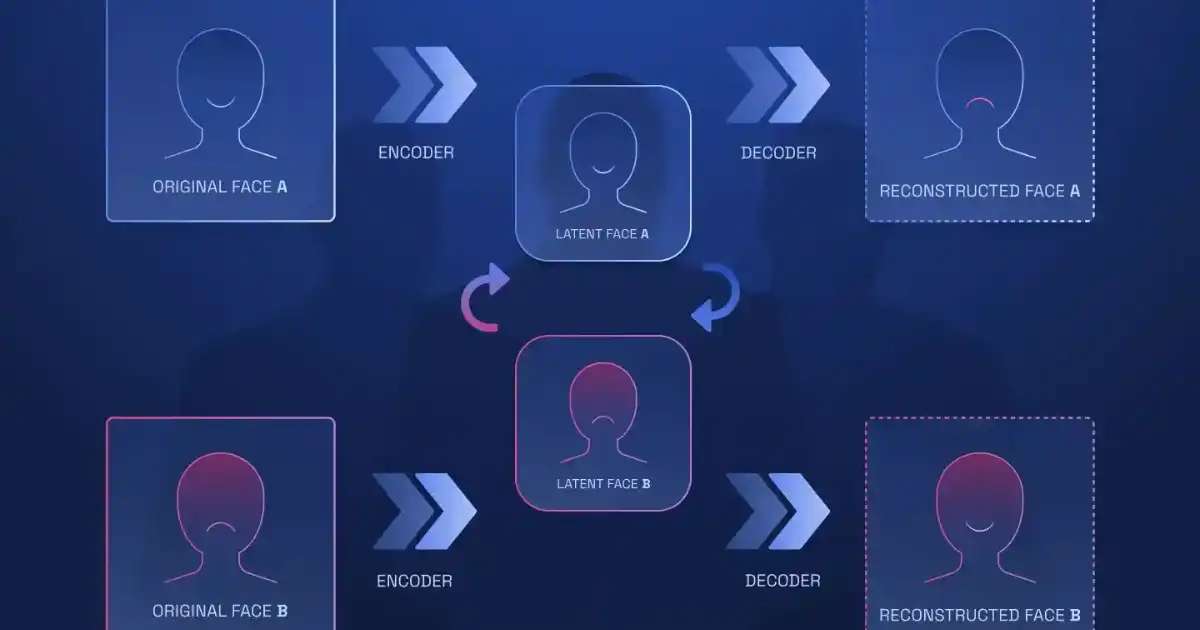
A few years ago, most phishing emails were laughably bad. Broken English. Weird formatting. “Dear customer.” You could spot them from across the room.
Today’s AI phishing campaigns don’t look amateur. They read like your colleague wrote them. They reference your real projects. They mimic your boss’s tone. And sometimes, they even sound like your CFO’s voice on the phone.
I’ve worked in cybersecurity long enough to see the shift firsthand. Attackers aren’t just using AI as a gimmick. They’re using it as a force multiplier. AI cybercrime isn’t about futuristic robots hacking the planet. It’s about automating manipulation at scale and making it believable.
What makes this dangerous isn’t just the tech. It’s how ordinary it feels. The email looks normal. The voice sounds familiar. The LinkedIn message feels authentic. And that’s the point.
Let’s break down how attackers actually use AI in phishing, scams, and deepfake threats not in theory, but in practice.
How Attackers Use AI in Phishing
AI Email Generation
Traditional phishing relied on templates. Attackers would blast out millions of identical emails and hope for a small success rate.
With AI phishing tools, they can now generate personalized emails in seconds. Large language models analyze scraped data LinkedIn profiles, company websites, past data breaches and craft messages tailored to the target.
Instead of:
“Click here to verify your account.”
You get:
“Hi Sarah, I noticed you recently updated the Q4 procurement spreadsheet. There’s a discrepancy in the vendor file can you quickly confirm this?”
That’s spearphishing powered by AI.
And here’s the scary part: attackers don’t need to be good writers anymore. The AI handles tone, grammar, and persuasion.
Spearphishing at Scale
Spearphishing used to require manual research. That limited scale.
Now? AI can scrape public data, summarize it, and auto-generate tailored emails for thousands of employees in a single organization. It’s personalization without human effort.
I’ve seen internal red-team simulations where AI-generated phishing outperformed human-written campaigns in click-through rates. Why? Because it sounded more natural.
Voice Phishing (Vishing) with AI
Voice cloning has changed things dramatically.
Attackers only need a few seconds of audio often pulled from social media videos or corporate webinars. AI models can clone tone, cadence, and accent. Then they generate synthetic speech in real time.
There have been AI fraud examples where finance teams received urgent calls from what sounded like their CEO authorizing wire transfers. The voice matched. The urgency felt real.
When your “boss” calls asking for immediate action, people don’t pause to analyze waveform authenticity.
That’s the psychological layer attackers exploit.
AI-Powered Scam Techniques Beyond Phishing
Deepfake Threats
Deepfake threats go beyond fun internet face swaps. In the scam world, they’re used for impersonation and credibility.
Video deepfakes can simulate executives during video calls. We’re not talking Hollywood-level perfection just good enough to pass a rushed verification.
Imagine a short Zoom call where “the CFO” appears briefly, asks for an urgent transfer, and leaves due to “connectivity issues.” That’s enough.
Attackers rely on time pressure, not cinematic realism.
Synthetic Identities
AI can generate entirely fake people. Not stolen identities invented ones.
Photos from generative models. AI-written backstories. Fabricated employment histories. Automated social media interactions.
These synthetic identities are used to:
-
Build trust slowly
-
Apply for loans
-
Infiltrate organizations
-
Run long-term romance or investment scams
What makes this different is consistency. AI keeps the persona coherent across months of interaction.
Automated Social Engineering
Here’s where it gets industrial:
AI chatbots can now conduct full scam conversations adapting responses based on victim reactions. If you hesitate, it reassures. If you question legitimacy, it provides documents. If you stall, it escalates urgency.
This isn’t just phishing anymore. It’s automated psychological manipulation.
And yes AI can run thousands of these conversations simultaneously.
Why AI Makes Scams More Effective
Three words: scale, realism, adaptability.
Scale
One attacker can target tens of thousands of people with personalized messaging.
Realism
AI removes linguistic errors and cultural mismatches. Messages feel local and natural.
Adaptability
AI models adjust tone and persuasion style depending on context. They can mirror corporate language, casual texting, or formal legal tone.
In traditional scams, human skill was a bottleneck. With AI, the skill ceiling drops but the output quality rises.
That’s a dangerous combination.
Real-World Examples & Case Studies
We’ve already seen serious AI fraud examples in the wild:
In 2019, criminals used AI voice cloning to impersonate a CEO and trick a UK-based energy company into transferring over $200,000. The voice sounded authentic enough to pass internal checks.
More recently, deepfake-enabled financial scams have surfaced where attackers staged fake video calls to approve fraudulent transactions.
Large platforms like YouTube and LinkedIn have also been abused to harvest voice samples and personal information for impersonation campaigns.
And let’s not forget large-scale AI phishing waves targeting users of companies like Microsoft and PayPal where AI-generated emails mimic brand tone almost perfectly.
These incidents aren’t fringe. They’re early indicators of what scalable AI cybercrime looks like.
The AI Arms Race: Attack vs. Defense
AI threat detection tools now analyze behavior rather than just content. Instead of asking, “Does this email look suspicious?” systems ask, “Is this behavior unusual for this user?”
Behavioral monitoring, anomaly detection, biometric verification all AI-powered.
There’s also growing use of deepfake detection models that analyze micro-expressions, audio inconsistencies, and pixel-level artifacts.
But here’s my honest take: detection always lags behind innovation.
Human verification call-back protocols, transaction confirmation procedures still outperform purely technical controls in many cases.
Risks and Future Threats
We’re moving toward multimodal AI attacks.
Imagine this:
-
AI-generated email
-
Followed by AI voice confirmation
-
Backed by AI-generated video deepfake
-
Supported by fake but consistent online identity
Autonomous AI scammers are also emerging systems that identify targets, initiate contact, adapt messaging, and close fraud loops with minimal human involvement.
Identity misuse will become harder to detect. Your voice, face, and writing style are data now.
The uncomfortable truth? Authenticity is becoming programmable.
How Individuals and Organizations Can Protect Themselves
First: assume realism is no longer proof of legitimacy.
Second: build friction into sensitive processes. Wire transfers should require multi-channel verification. A video call alone isn’t enough.
For individuals:
-
Be skeptical of urgency.
-
Verify requests through separate channels.
-
Limit public exposure of high-quality voice/video clips.
-
Use AI scam protection tools and MFA everywhere.
For organizations:
-
Deploy AI threat detection with behavioral analytics.
-
Train employees on AI phishing scenarios not just old-school scams.
-
Establish strict call-back procedures for financial approvals.
Security today is less about spotting bad grammar and more about validating trust.
You Might Be Interested In
- What Is Cyber Threat Detection And How Does It Work?
- How To Extract Tables From Pdfs With Ai?
- What Is The Mobile App Development Process?
- How To Summarize Pdfs With Ai?
- Can I Learn Ai Myself?
Conclusion
AI scams, AI phishing, and deepfake threats aren’t futuristic concepts. They’re operational today.
AI didn’t invent deception. It scaled it.
The best defense isn’t paranoia it’s structured verification. Slow down. Cross-check. Build systems that assume manipulation is possible.
Because in the age of AI cybercrime, “it looked real” is no longer a defense.
FAQs
What is AI phishing and how is it different from regular phishing?
AI phishing is a step beyond traditional phishing because it uses artificial intelligence to craft messages that feel authentic and personalized. Unlike regular phishing emails, which often rely on generic templates or obvious errors, AI phishing can analyze publicly available data such as social media profiles, corporate websites, or past breaches to tailor messages to the individual recipient. In practice, this means the email, text, or message may reference your specific work, projects, or contacts, making it much more convincing.
What most people misunderstand is that AI phishing isn’t just about better grammar or professional tone. It’s about psychological manipulation at scale. AI allows attackers to mimic communication styles, adapt phrasing in real-time, and produce thousands of unique messages that feel human. The result is a highly targeted and efficient attack, far more difficult to spot with the usual “check for typos” approach.
How do attackers use AI to create deepfakes?
Attackers leverage AI to generate highly realistic fake images, videos, and audio of real people. By feeding AI models with just a few seconds of a target’s voice, video clips, or photos, they can produce content that mimics speech patterns, facial expressions, and mannerisms. In scams, these deepfakes are often used to impersonate executives, trusted contacts, or public figures, creating urgency or authority that tricks victims into taking actions they wouldn’t normally take.
The danger comes from how convincing these AI-generated deepfakes can be. Even if the quality isn’t perfect, attackers rely on context, timing, and psychological pressure to succeed. A brief video call that looks “good enough” combined with a real-world action request like approving a wire transfer can fool even cautious individuals.
Can AI really automate scams at scale?
Absolutely. AI automation has transformed what was once labor-intensive social engineering into a high-volume, high-efficiency operation. Modern AI systems can generate personalized emails, handle interactive chat conversations, and even adjust tone based on the victim’s responses. This means a single attacker can manage hundreds or thousands of scam interactions simultaneously, something that would have required a large team in the past.
What makes this particularly insidious is adaptability. AI can respond dynamically to hesitation, skepticism, or questions, often providing convincing documents, fake links, or reassurances in real-time. In practice, the combination of personalization, automation, and adaptability allows AI scams to scale far beyond traditional methods, dramatically increasing both reach and success rates.
How can I tell if a message, video, or call is AI-generated?
Detecting AI-generated content by appearance or sound alone is increasingly unreliable. Many AI outputs are realistic enough to bypass casual inspection. Instead, the key is to focus on behavior and context. Ask yourself: does the message come out of the ordinary? Is there pressure for urgent action? Does it involve sensitive information or financial transactions? If so, it warrants verification through independent channels.
Behavioral inconsistencies are often more revealing than technical flaws. AI-generated messages may mimic style but fail to match prior communication patterns or established processes. For example, an executive asking for a wire transfer outside normal procedures, even in a convincing video or voice clip, should trigger verification steps. The principle is simple: treat suspicious requests as suspicious, regardless of how “real” they appear.
What tools exist to defend against AI-based attacks?
Defending against AI scams requires a layered approach combining technology, processes, and awareness. AI threat detection platforms can analyze user behavior, detect anomalies, and identify potential deepfake artifacts in audio or video. Multi-factor authentication (MFA) and biometric verification add additional hurdles for attackers, making it much harder for AI-generated interactions to succeed.
Equally important are human-centered processes. Structured call-back protocols, transaction verification procedures, and employee training on AI-driven phishing and social engineering significantly reduce risk. In practice, effective defense doesn’t rely solely on detecting AI content; it assumes that attackers can make things look real and builds verification steps into everyday workflows to prevent successful exploitation.
