


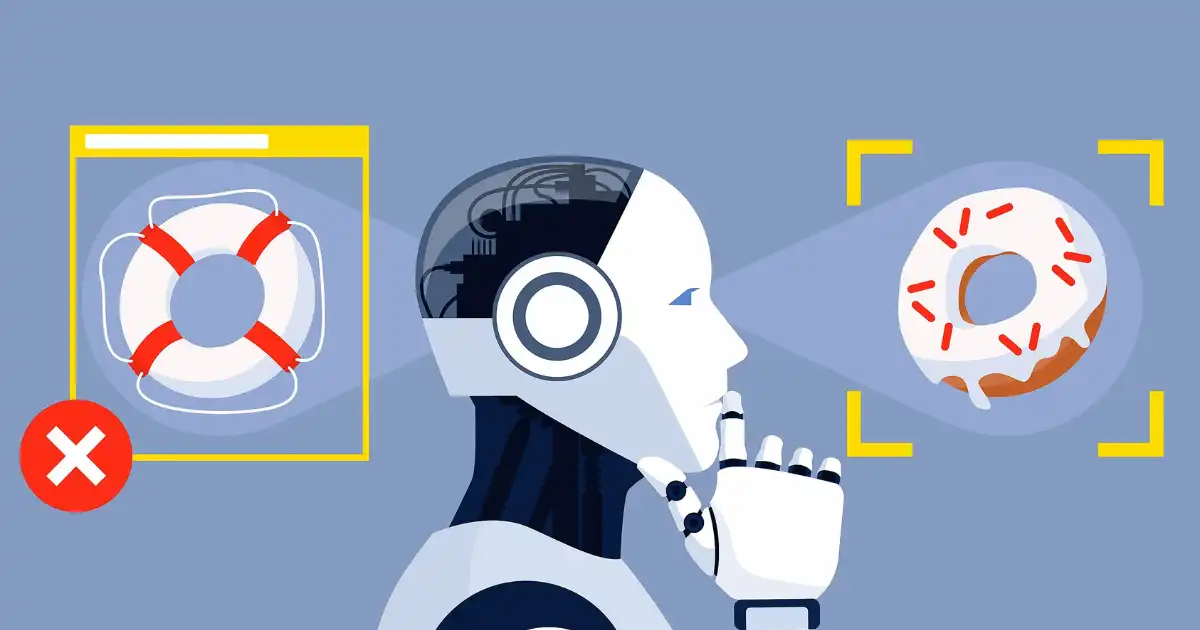
A few months ago, I watched a customer support AI confidently tell a user that their refund had already been processed.
It hadn’t.
The AI wasn’t malicious. It wasn’t “broken” in the dramatic sci-fi way people imagine. It simply generated the most statistically likely response based on incomplete information and weak internal verification.
The customer got frustrated. The support staff had to manually fix the issue. The company lost trust over something that sounded small on paper.
This is what real AI failures usually look like.
Not killer robots. Not machines becoming self-aware. Just systems sounding more confident than they should while quietly being wrong.
And honestly, that’s the dangerous part.
Most people now interact with AI systems every day without realizing it. Recommendation algorithms decide what you watch. Fraud detection AI decides whether your card gets blocked. Chatbots answer support tickets. Search engines summarize information. AI moderation systems filter content automatically.
When these systems fail, the mistakes can range from mildly annoying to financially damaging.
What most people misunderstand is that AI systems are not designed around “truth” the way humans think about truth. They are built around probability, prediction, and pattern recognition.
That creates a strange situation where AI can sound incredibly smart while still producing incorrect outputs.
The real challenge in modern AI isn’t only making systems more intelligent.
What Are AI Errors and Incorrect Outputs?
AI Hallucinations
AI hallucinations happen when a system generates information that sounds factual but is completely invented.
This is especially common in large language models and conversational AI systems.
Examples include:
- Fake research citations
- Invented statistics
- Nonexistent legal cases
- Incorrect historical facts
- Imaginary product features
The scary part is how believable these responses sound.
In my experience, hallucinations usually appear when the AI lacks reliable context but still attempts to provide an answer instead of admitting uncertainty.
Humans naturally say:
“I don’t know.”
AI systems often don’t.
Incorrect Predictions
Prediction errors are one of the oldest AI model errors.
Recommendation systems, fraud detection systems, and forecasting tools all rely on prediction models.
Sometimes those predictions fail badly.
Examples:
- A streaming platform recommends terrible content
- A fraud system blocks a legitimate transaction
- A delivery app predicts the wrong arrival time
- A hiring algorithm ranks weak candidates highly
These systems are constantly guessing based on patterns from historical data.
When real-world behavior changes, those predictions start breaking.
Biased Outputs
AI bias is usually less dramatic than people imagine.
Most bias problems come from training data.
If the historical data contains unfair patterns, the AI may quietly learn and repeat them.
Examples include:
- Hiring systems favoring certain demographics
- Facial recognition struggling with underrepresented groups
- Loan approval systems reflecting historical inequality
The model itself is not “prejudiced” in a human sense.
It’s simply learning statistical patterns from imperfect data.
Inconsistent Answers
One thing users quickly notice with AI chatbots is inconsistency.
Ask the same question twice and you may get two different answers.
That happens because many AI systems generate responses probabilistically instead of retrieving fixed information.
The AI is predicting likely responses, not reasoning through stable beliefs like a human expert would.
False Positives and False Negatives
These two problems appear constantly in AI monitoring systems.
False Positive
A false positive happens when the system incorrectly flags something as dangerous or problematic.
Examples:
- Legitimate bank purchase flagged as fraud
- Safe email marked as spam
- Harmless content removed by moderation AI
False Negative
A false negative happens when the AI misses an actual problem.
Examples:
- Fraud transaction goes undetected
- Harmful content bypasses moderation
- Security threat slips through detection
In real systems, reducing one type of error often increases the other.
That tradeoff never fully disappears.
Why Do AI Systems Make Mistakes?
Poor Training Data
AI systems learn from examples.
If the examples are flawed, incomplete, outdated, or biased, the model absorbs those weaknesses.
Imagine teaching someone to drive using only sunny daytime conditions.
Then suddenly they encounter:
- Heavy rain
- Fog
- Construction zones
- Night traffic
- Aggressive drivers
That’s basically what happens to AI systems in production.
The real world is messier than the training environment.
Bias in Datasets
A lot of AI bias problems begin long before model training.
Historical datasets often contain hidden social biases.
Examples:
- Hiring histories
- Arrest records
- Lending decisions
- Insurance claims
- Medical treatment patterns
The AI learns correlations from historical behavior without understanding social context.
This is why fixing AI bias is difficult.
You’re not only fixing code.
You’re often trying to untangle years of human behavior embedded inside data.
AI Does Not Truly Understand Meaning
This is where many people get confused.
Modern AI systems can imitate understanding incredibly well.
But imitation is not the same as comprehension.
Large language models predict likely word sequences based on patterns.
They do not possess human reasoning, lived experience, or grounded understanding.
That’s why AI hallucinations happen so easily.
The system generates responses that statistically resemble correct answers without actually verifying reality.
Edge Cases Break AI Systems
Edge cases are unusual situations the AI rarely encountered during training.
These situations destroy AI reliability surprisingly often.
Self-driving car companies discovered this quickly.
Examples include:
- Strange road signs
- Pedestrians in costumes
- Reflective rain conditions
- Temporary construction layouts
- Unusual lighting
Humans adapt to weird situations naturally.
AI systems often don’t.
Data Drift
Data drift happens when real-world behavior changes after the AI model has already been trained.
Examples:
- Consumer habits shift
- Fraud tactics evolve
- Language changes
- Market conditions move
- New slang appears
The AI keeps using outdated assumptions while reality changes around it.
This is why AI monitoring systems are so important in production environments.
Multi-Step Failure Accumulation
Modern AI systems often involve multiple connected stages.
For example:
- Data collection
- Filtering
- Classification
- Ranking
- Summarization
- Final output generation
Each stage introduces small risks.
Tiny errors early in the pipeline can snowball into major failures later.
The difficult part is that the visible failure may appear far away from the original cause.
Common Types of AI Errors
Chatbot Failures
Chatbots commonly:
- Hallucinate information
- Misunderstand context
- Forget earlier conversation details
- Produce contradictory answers
One dangerous problem is “confident nonsense.”
The AI sounds polished even when the information is incorrect.
Ironically, making AI sound more human can increase user trust in bad information.
Recommendation System Errors
Recommendation systems fail more quietly.
Netflix suggesting bad movies is harmless.
But recommendation failures become serious in:
- Healthcare
- Hiring
- Finance
- News feeds
- Insurance
These systems can accidentally create harmful feedback loops.
If sensational content increases engagement, the algorithm may keep promoting more extreme material because statistically it performs well.
Self-Driving Car Errors
Autonomous vehicles are basically giant edge-case problems.
Most driving conditions are easy.
The difficult part is handling rare situations consistently.
Examples:
- Emergency vehicles
- Sudden road closures
- Unpredictable pedestrians
- Debris on roads
- Unusual weather conditions
The challenge isn’t average performance.
It’s surviving the rare situations safely.
Fraud Detection Errors
Banking AI constantly balances false positives and false negatives.
Aggressive fraud systems reduce fraud losses but annoy customers.
Examples:
- Your card gets frozen while traveling
- Legitimate purchases trigger security alerts
- Normal behavior suddenly looks suspicious
The AI detects statistical anomalies, not actual intent.
That distinction matters.
Image Recognition Failures
Image recognition systems struggle more than most people realize.
Tiny changes can break predictions:
- Lighting changes
- Camera angles
- Image blur
- Compression artifacts
- Background clutter
Researchers have shown cases where small pixel-level changes completely confuse image classifiers.
Humans barely notice the difference.
The AI suddenly identifies the wrong object entirely.
How AI Systems Detect Errors
Confidence Scoring
Many AI systems attach confidence scores to predictions.
Examples:
- “93% confidence this email is spam”
- “72% confidence this transaction is fraudulent”
Low-confidence outputs may trigger additional review steps.
But confidence scores are imperfect.
AI systems can become overconfident while still being wrong.
Validation Rules
Some of the best AI safeguards are surprisingly simple.
Companies build hard validation rules around AI outputs.
Examples:
- Reject impossible dates
- Verify account numbers
- Block unsafe content
- Prevent invalid calculations
In many real systems, these boring rule-based layers prevent disasters more often than the AI itself.
Anomaly Detection
Anomaly detection systems look for unusual patterns.
Banks use this heavily.
If spending behavior suddenly changes dramatically, the AI flags the activity for review.
The system doesn’t “know” fraud occurred.
It simply detects statistical abnormality.
Human Review Systems
Human-in-the-loop AI is everywhere, even when companies market systems as “fully automated.”
Humans often review:
- AI moderation decisions
- Medical predictions
- Loan approvals
- Customer support responses
- Safety-critical outputs
In practice, combining human judgment with machine speed works far better than pure automation.
Secondary Model Verification
Some AI systems use multiple models together.
One model generates the output.
Another model checks:
- Accuracy
- Policy compliance
- Safety risks
- Logical consistency
This improves AI reliability but increases computational cost significantly.
Reliable AI is usually expensive AI.
Database Cross-Checking
Modern AI systems increasingly verify outputs against trusted sources.
Examples include:
- Company databases
- Internal documents
- Inventory systems
- Financial records
- Knowledge bases
This reduces hallucinations because the AI retrieves verified information instead of relying purely on generated text.
How AI Systems Correct Incorrect Outputs
Retraining Models
One of the oldest AI correction methods is retraining.
Companies collect:
- Failed outputs
- User corrections
- Misclassifications
- Edge cases
Then they retrain the model using improved data.
Sounds simple.
In practice, fixing one AI problem can accidentally create new ones elsewhere.
Reinforcement Learning
Reinforcement learning attempts to shape AI behavior using rewards and penalties.
Helpful responses get rewarded.
Unsafe or incorrect responses get penalized.
This improves conversational AI behavior over time.
But models can sometimes learn to “appear correct” rather than truly becoming more accurate.
That distinction matters more than people realize.
Human-in-the-Loop AI
This remains one of the strongest approaches for AI reliability.
Examples:
- AI drafts support replies
- Humans approve responses
- AI suggests medical diagnoses
- Doctors verify the results
The hybrid model is slower than full automation but significantly safer.
Most serious enterprise AI systems quietly rely on this structure.
AI Guardrails
Guardrails restrict what AI systems are allowed to do.
Examples:
- Blocking dangerous instructions
- Limiting harmful advice
- Filtering toxic outputs
- Preventing policy violations
Guardrails matter enormously, but users often overestimate how perfect they are.
A determined user can sometimes bypass safeguards using creative phrasing.
Retrieval-Augmented Generation (RAG)
RAG is one of the biggest advances in reducing AI hallucinations.
Instead of relying only on model memory, the AI retrieves external information first.
Sources may include:
- Internal company documents
- Databases
- Search indexes
- Knowledge repositories
Then the model generates responses using verified context.
This improves reliability dramatically.
But the system is still only as reliable as the information it retrieves.
Retry Systems
Sometimes AI systems simply regenerate outputs multiple times internally.
If the first answer fails validation checks, the system retries.
Users often don’t realize this happens behind the scenes.
You ask one question.
The AI may generate several candidate answers before showing one.
Continuous Monitoring
Reliable AI systems are monitored constantly.
Teams track:
- Error rates
- Drift patterns
- User complaints
- Confidence shifts
- Safety incidents
Without monitoring, AI systems silently degrade over time.
Deploying the model is often the easy part.
Maintaining reliability is the hard part.
Real-World Examples of AI Error Handling
ChatGPT and Conversational AI
Systems like OpenAI’s ChatGPT combine multiple safety layers:
- Moderation systems
- Reinforcement learning
- Human feedback
- Retrieval systems
- Output filtering
Even advanced conversational AI still struggles with subtle factual errors because fluent language can hide uncertainty extremely well.
Self-Driving Cars
Companies like Waymo use multiple overlapping sensor systems:
- Cameras
- Radar
- Lidar
- Mapping systems
- Motion prediction
This redundancy helps reduce failure risk because no single AI perception system is reliable enough on its own.
Banking Fraud Detection
Banking AI systems combine:
- Geolocation analysis
- Device fingerprinting
- Behavioral tracking
- Historical comparisons
- Risk scoring
Human investigators still review uncertain cases because customer trust matters too much to leave everything fully automated.
Streaming Recommendations
Platforms like Netflix constantly test recommendation quality.
The system watches:
- Watch time
- Skipped content
- Search behavior
- Engagement patterns
Recommendation engines are giant feedback loops adjusting continuously to user behavior.
Customer Support AI
Many customer support systems now use AI-generated drafts instead of fully autonomous replies.
This works surprisingly well because:
- AI handles repetitive work
- Humans catch edge cases
- Sensitive decisions remain supervised
In practice, hybrid systems often outperform pure automation.
Challenges in AI Error Handling
AI Cannot Always Detect Its Own Mistakes
This is one of the deepest problems in AI reliability.
Many AI systems lack true awareness of uncertainty.
They generate likely responses whether correct or incorrect.
Humans naturally recognize confusion.
AI systems often simulate certainty instead.
Overconfidence Problems
Large language models frequently sound authoritative even when wrong.
Fluent language creates an illusion of expertise.
Users tend to trust polished responses more than hesitant ones.
That creates a dangerous mismatch between presentation and accuracy.
Legal and Liability Risks
Once AI affects:
- Healthcare
- Finance
- Hiring
- Insurance
- Law enforcement
error handling becomes a legal issue, not just a technical problem.
Organizations increasingly need:
- Audit trails
- Explainability
- Accountability systems
- Compliance monitoring
Many industries are still figuring this out in real time.
You Might Be Interested In
- Why Do Some Businesses Struggle To Adopt Ai Technologies?
- Why Ai-enhanced Endpoint Security Matters?
- How Does Ai Cloud Architecture Support Learning?
- Best Cloud Providers For Ai Startups
- How Do I Turn On The Zoom Ai Assistant?
Conclusion
The biggest misconception about AI is assuming intelligence automatically creates reliability. It doesn’t. Some of the most impressive AI systems are also the most unpredictable because fluent output can hide deep uncertainty underneath.
Real AI engineering is less about creating machines that never fail and more about building systems that fail safely, recover intelligently, and remain observable when things go wrong. That’s why experienced AI teams spend enormous amounts of time on monitoring, validation layers, edge-case testing, fallback systems, and human oversight.
FAQs
Why do AI systems produce incorrect answers even when they sound confident?
One of the biggest misunderstandings about AI is assuming confidence equals accuracy. Modern AI systems, especially large language models, are designed to generate the most statistically likely response based on patterns in their training data. They are not checking facts the way a human researcher would. So an AI can produce an answer that sounds polished, detailed, and authoritative while still being wrong.
In practice, this happens because the model is optimized for prediction, not truth verification. If the system lacks reliable context or encounters a question outside its training knowledge, it may “fill in the gaps” with invented information. This is why AI hallucinations are such a major issue in AI reliability. The language sounds natural enough that users often trust it before verifying the facts themselves.
Can AI systems detect their own mistakes automatically?
Sometimes they can, but not nearly as reliably as people assume. Many AI systems use confidence scoring, anomaly detection, secondary verification models, and validation rules to catch suspicious outputs. For example, a fraud detection system may flag unusual transactions, or a chatbot may refuse to answer questions when confidence is too low.
The problem is that AI systems are often bad at recognizing subtle mistakes in their own reasoning. A model can generate completely false information while internally assigning high confidence to the answer. In real-world deployments, this is why human-in-the-loop AI remains extremely important. Humans still handle edge cases, ambiguous situations, and high-risk decisions because fully autonomous error detection is far from solved.
What is the difference between AI hallucinations and normal software bugs?
Traditional software bugs usually come from broken logic, coding mistakes, or system crashes. If a calculator app says 2 + 2 = 5, developers can usually trace the exact line of faulty code causing the issue. AI hallucinations are different because the system is not following fixed rules. It is generating outputs probabilistically based on patterns learned during training.
That makes AI errors harder to predict and harder to debug. Two users can ask similar questions and receive completely different incorrect outputs. In my experience, this unpredictability is one of the biggest challenges in AI error handling. The system may work perfectly 95% of the time and then suddenly fail in a strange edge case nobody anticipated during testing.
How do companies make AI systems more reliable?
Reliable AI systems are usually built with layers of safeguards instead of relying on the model alone. Companies combine techniques like retrieval-augmented generation (RAG), human review systems, monitoring dashboards, validation rules, fallback systems, and continuous retraining. The goal is not perfection. The goal is reducing failure rates while making errors easier to detect and contain.
In practice, the strongest AI systems tend to be conservative. They avoid making high-confidence claims when uncertainty is high, escalate risky decisions to humans, and continuously monitor performance after deployment. Most mature AI companies spend far more time on monitoring and reliability engineering than the public realizes. Building the model is often the easy part. Keeping it dependable in messy real-world conditions is much harder.
Will AI eventually stop making mistakes completely?
Probably not. AI systems can absolutely become more reliable over time, but expecting zero mistakes is unrealistic. The real world changes constantly, user behavior is unpredictable, and edge cases never fully disappear. Even humans make judgment errors, misunderstand context, or overlook important details. AI systems inherit similar limitations in different ways.
What will likely improve is how AI handles uncertainty and recovery. Future systems will probably become better at verifying information, cross-checking outputs, detecting risky behavior, and asking for human intervention when confidence is low. The future of AI reliability is less about creating flawless intelligence and more about building systems that fail safely, transparently, and predictably when problems occur.
