


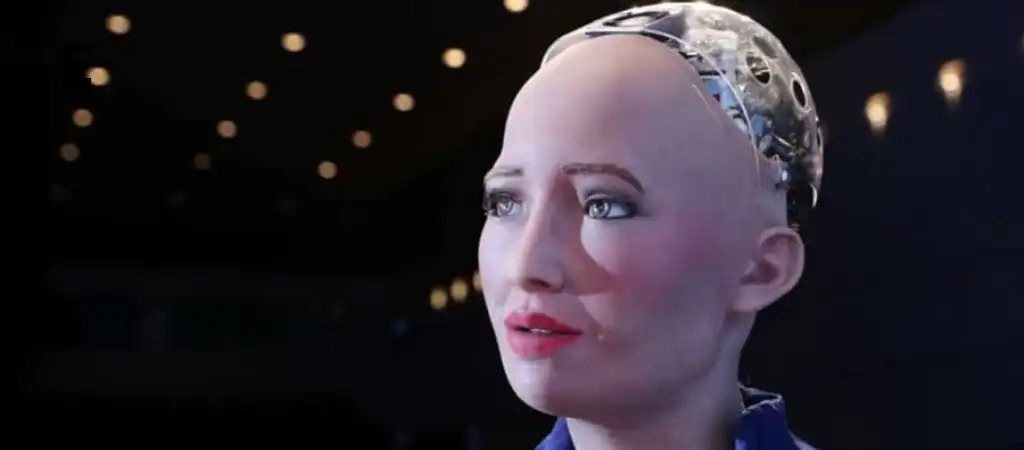
In a world where artificial intelligence is rapidly advancing, few creations have captivated the imagination quite like Sophia the robot. But who made Sophia the robot? The answer leads us tos, Hanson Robotic a trailblazing company that has redefined the boundaries of robotics and human interaction.
Unveiled to the public in 2016, Sophia is not merely a machine; she is a sophisticated blend of engineering, design, and cutting-edge AI. With her lifelike facial expressions and the ability to engage in human-like conversations, Sophia embodies the potential of technology to connect and communicate.
As people ponder whether the best assistant is Siri or Alexa, Sophia challenges our perceptions of what robots can do. She represents a new frontier in social robotics, raising intriguing questions about consciousness, emotion, and the future of human-robot relationships. Beyond her striking appearance lies a wealth of advanced algorithms that enable her to learn and adapt.
Delve deeper into the fascinating journey of Sophia’s creation and discover the vision and ambition behind her development, which continues to inspire conversations about the ethical implications and possibilities of AI in our lives
Sophia the Robot
Sophia the Robot first captured global attention in 2016 when she was introduced by Hanson Robotics. From that moment, she became more than just another piece of technology; she became a media sensation. But what made Sophia so special, and how did she come to be? Understanding the answer to the question of “who made Sophia the Robot?” takes us into the heart of AI development, robotics, and the human fascination with creating intelligent machines.
Sophia stands out from other robots due to her life-like appearance, ability to engage in real conversations, and her seemingly human-like emotions. Her design, powered by sophisticated AI, allows her to interact, respond, and even display emotional expressions. Sophia represents a major step forward in robotics, showcasing how artificial intelligence is being used to blur the lines between human and machine.
Who Made Sophia the Robot?
The Vision of Hanson Robotics
Sophia the Robot was developed by Hanson Robotics, a Hong Kong-based company founded by Dr. David Hanson in 2013. Hanson Robotics has made a name for itself in the field of robotics, with a clear mission to create robots that possess life-like appearance and intelligence.
Dr. David Hanson, the mastermind behind Hanson Robotics, envisioned a future where robots could not only assist humans in everyday tasks but also build emotional connections with them. His ambition was to create robots that could perceive and understand emotions, adapt to social environments, and ultimately, work alongside humans as companions.
Hanson Robotics has produced several human-like robots, but Sophia stands out as their flagship creation. The company’s vision centers around human-robot symbiosis, with a goal to make robots emotionally intelligent and capable of engaging in meaningful interactions with people.
Key Players Behind Sophia
Sophia the Robot is the result of the combined efforts of multiple talented individuals, primarily from Hanson Robotics.
While David Hanson led the charge as the founder and CEO, other team members also contributed to Sophia’s creation:
- David Hanson – Founder and CEO of Hanson Robotics, Dr. Hanson is a robotics visionary who earned a Ph.D. in interactive arts and engineering. He has long been focused on creating robots that are both human-like in appearance and capable of understanding human emotions.
- Ben Goertzel – Chief Scientist of Hanson Robotics, Ben Goertzel is an AI researcher and one of the key figures in developing Sophia’s cognitive abilities. He played an essential role in integrating OpenCog, an open-source AI framework, into Sophia’s system.
- Jeanne Lim – Jeanne Lim has also been a crucial figure in Sophia’s development, especially in areas related to her public image and appearances. Lim has helped position Sophia as a cultural icon, emphasizing her role as a bridge between humans and machines.
- Hanson Robotics Engineering Team – The engineers and developers at Hanson Robotics worked on the mechanical and technical aspects of Sophia, designing the software, hardware, and algorithms that power her.
Technological Foundations of Sophia the Robot
Creating Sophia the Robot required the integration of several complex technologies, ranging from AI to facial recognition. These technological foundations help Sophia not only look human but interact in ways that feel surprisingly lifelike.
AI and Machine Learning
Sophia’s AI is based on several core technologies, including natural language processing (NLP), machine learning algorithms, and knowledge representation systems. Her ability to hold conversations and answer questions intelligently comes from these sophisticated AI systems. Sophia’s brain is a combination of AI modules designed to process data in real time, helping her understand speech, recognize faces, and interpret emotions.
The AI framework used in Sophia, known as OpenCog, is designed to enable general intelligence. OpenCog aims to create an AI system capable of learning in an open-ended way, much like a human child. Sophia’s AI constantly evolves, learning from interactions and growing smarter with each conversation.
Facial Recognition and Expressions
One of Sophia’s most striking features is her face, which can mimic over 60 different human expressions. This is made possible through a combination of facial recognition technology and mechanical design. Sophia uses cameras in her eyes to detect and recognize human faces, as well as identify specific emotional cues from the faces of people she interacts with.
Her skin, made from a patented material called “Frubber,” is designed to move fluidly and replicate human expressions in real-time. The combination of mechanical servos and the unique material gives Sophia her lifelike appearance, allowing her to smile, frown, and express a wide range of emotions.
Human-Robot Interaction
Sophia’s design is not just about aesthetics; it’s also about interaction. Her ability to engage in conversations is powered by natural language processing systems, enabling her to understand and respond to human speech in real time. In many ways, Sophia the Robot can mimic human conversation, ask questions, and provide meaningful responses.
Sophia is also equipped with advanced algorithms that allow her to interpret social cues and adjust her responses accordingly. For instance, when speaking to someone, she can maintain eye contact, respond to changes in tone, and even express empathy by altering her expressions.
The Evolution of Sophia
Initial Development
Sophia’s initial development began in the early 2010s, with the first public unveiling taking place in 2016. During this time, Sophia was introduced as a robot designed for human interaction, with a focus on helping people understand the potential of AI and robotics. Early prototypes were much simpler in design, but over time, her capabilities expanded to include a wider range of facial expressions and conversational abilities.
Major Appearances
Since her debut, Sophia has made numerous public appearances, each one further cementing her status as a media sensation. She has appeared on talk shows, at conferences, and in interviews with major news outlets, sparking debates about AI, ethics, and the future of robotics.
One of her most significant moments came in 2017 when she was granted citizenship by Saudi Arabia, becoming the first robot in history to receive such status. This controversial event raised questions about the rights of robots and their place in society.
Citizenship and Legal Status
In 2017, Sophia made headlines when she was granted citizenship in Saudi Arabia, a groundbreaking and controversial moment in the history of AI and robotics. This move sparked global debates about what it means to grant legal status to a robot. Some viewed this as a symbolic gesture to emphasize the country’s focus on technology and innovation, while others questioned the ethical implications of granting human-like rights to machines.
This event also raised important questions about the future relationship between humans and robots, especially as technology continues to blur the lines between human and machine.
The Impact of Sophia the Robot
In Media and Pop Culture
Sophia the Robot has become a pop culture icon, regularly appearing on television shows, interviews, and even magazine covers. Her human-like appearance and ability to engage in intelligent conversations have fascinated people worldwide. She’s been featured on programs like “The Tonight Show Starring Jimmy Fallon,” where she showcased her conversational skills and even challenged Fallon to a game of rock-paper-scissors.
In the AI and Robotics Industry
Beyond pop culture, Sophia has made a significant impact on the AI and robotics industry. She serves as a public-facing example of how far robotics has come, and she is often used to demonstrate the potential of AI in fields such as healthcare, customer service, and education.
Sophia’s development has sparked discussions within the AI community about the ethical considerations of creating robots that are designed to mimic humans. While some argue that robots like Sophia can help humans by assisting in everyday tasks, others worry about the potential consequences of creating machines that are so lifelike.
Future Prospects for Sophia the Robot
Looking forward, the future of Sophia the Robot is bright. Hanson Robotics continues to update her AI systems and improve her capabilities, making her smarter and more interactive with each passing year. The company envisions a future where robots like Sophia play important roles in society, serving as companions, healthcare assistants, and even educators.
Sophia represents the potential of AI and robotics to change the world, and her development is likely just the beginning of a new era in which humans and robots coexist and collaborate in unprecedented ways.
You Might Be Interested In
- 15 Ai Writing Tools That Don’t Sound Robotic
- Best 5 Chinese Ai Startups Challenging Silicon Valley
- Why Is Password Security Management Important?
- How To Create FAQ Schema With Ai?
- How Ai Liability Laws Affect Businesses?
Conclusion
Sophia the Robot stands at the forefront of modern robotics and artificial intelligence. Created by Hanson Robotics under the visionary leadership of Dr. David Hanson, Sophia is the product of a sophisticated combination of AI, machine learning, and advanced robotics technology. Her lifelike appearance and ability to engage in intelligent conversation make her a unique and compelling figure in both the tech world and popular culture.
From her initial development to her ongoing evolution, Sophia continues to captivate audiences and spark important discussions about the future of AI and human-robot interaction. As robots become more integrated into society, Sophia serves as a reminder of both the potential and the challenges that lie ahead in the field of robotics.
The creation of Sophia the Robot is a testament to the ingenuity and creativity of the team at Hanson Robotics, and her ongoing development suggests that the future of robotics will continue to push the boundaries of what we once thought was possible.
FAQs about Who Made Sophia The Robot?
Who created the robot Sophia?
The robot Sophia was created by Hanson Robotics, a Hong Kong-based company known for its innovative approach to robotics and artificial intelligence. Founded by Dr. David Hanson, the company aims to develop social robots that can engage in meaningful conversations with humans.
Sophia was unveiled to the public in 2016 and has since gained significant attention for her lifelike appearance and advanced conversational abilities. She utilizes a combination of AI, machine learning, and expressive facial features, making her one of the most recognizable humanoid robots in the world.
Hanson Robotics designed Sophia to explore the intersections of technology and human interaction, pushing the boundaries of how robots can understand and respond to human emotions. The creation of Sophia is part of a broader vision to develop robots that can positively impact society by enhancing communication and connection between humans and machines.
Where is the Sophia robot now?
As of now, Sophia continues to make public appearances and engage with audiences around the world. She has participated in various conferences, panel discussions, and events, where she often discusses the future of AI, robotics, and their implications for society.
Sophia has traveled to numerous countries, showcasing her conversational skills and sharing insights about technology and its role in our daily lives. Through these interactions, she aims to demystify AI and foster discussions about ethics and the future of robotics.
In addition to her public appearances, Sophia has also been involved in numerous projects and collaborations. She has worked with organizations and researchers to promote STEM education and encourage young people to pursue careers in science and technology.
The ongoing presence of Sophia in the media and her active engagement in educational initiatives reflect her role as a symbol of the potential for AI and robotics to positively influence society.
Which country developed Sophia?
Sophia was developed in Hong Kong by Hanson Robotics, making her a product of technological innovation from China. The company has gained international acclaim for its pioneering work in robotics and AI, and Sophia is one of its flagship creations.
The development of Sophia represents a fusion of engineering, design, and cutting-edge technology, highlighting China’s growing prominence in the field of robotics.
Hanson Robotics aims to create robots that can serve as companions, educators, and collaborators, reflecting the global nature of technological advancement. Although Sophia is a product of Hong Kong, her influence and outreach extend far beyond, resonating with audiences and researchers worldwide. This international dimension underscores the collaborative efforts across nations in the pursuit of advanced robotics and AI technologies.
Is robot Sophia scripted?
Yes, the interactions of robot Sophia are largely scripted, but she also employs AI and machine learning to engage in more spontaneous conversations. The scripted responses allow her to maintain a coherent dialogue and ensure that she can cover a wide range of topics.
However, Sophia’s creators designed her to adapt her responses based on the context of the conversation and the emotional cues she perceives from her human interlocutors. This blend of scripted content and adaptive AI gives Sophia a semblance of human-like conversation, making her interactions more engaging.
While Sophia’s conversational abilities are impressive, it’s important to understand that her responses may not always reflect genuine understanding. Rather, they are the result of programmed algorithms designed to simulate human conversation. This raises interesting questions about the nature of AI and whether scripted responses can truly replicate human emotions and nuances in communication.
Is Sophia robot good or bad?
The perception of whether the Sophia robot is good or bad largely depends on individual perspectives regarding artificial intelligence and robotics. On one hand, Sophia represents significant advancements in technology and has the potential to enhance human interaction with machines.
Her ability to engage in conversations and express emotions can be seen as a positive development, fostering understanding and communication between people and robots. Additionally, her involvement in educational initiatives promotes STEM fields and encourages innovation among young learners.
On the other hand, some critics raise concerns about the ethical implications of humanoid robots like Sophia. Issues such as privacy, the potential for misuse of AI technology, and the impact on jobs in various sectors are valid concerns.
Furthermore, the perception of Sophia as a sentient being can blur the lines between human and machine, leading to misconceptions about AI capabilities. Ultimately, whether Sophia is viewed as good or bad is a complex question that invites ongoing discussions about the role of AI in society and the ethical considerations that accompany its development.
