


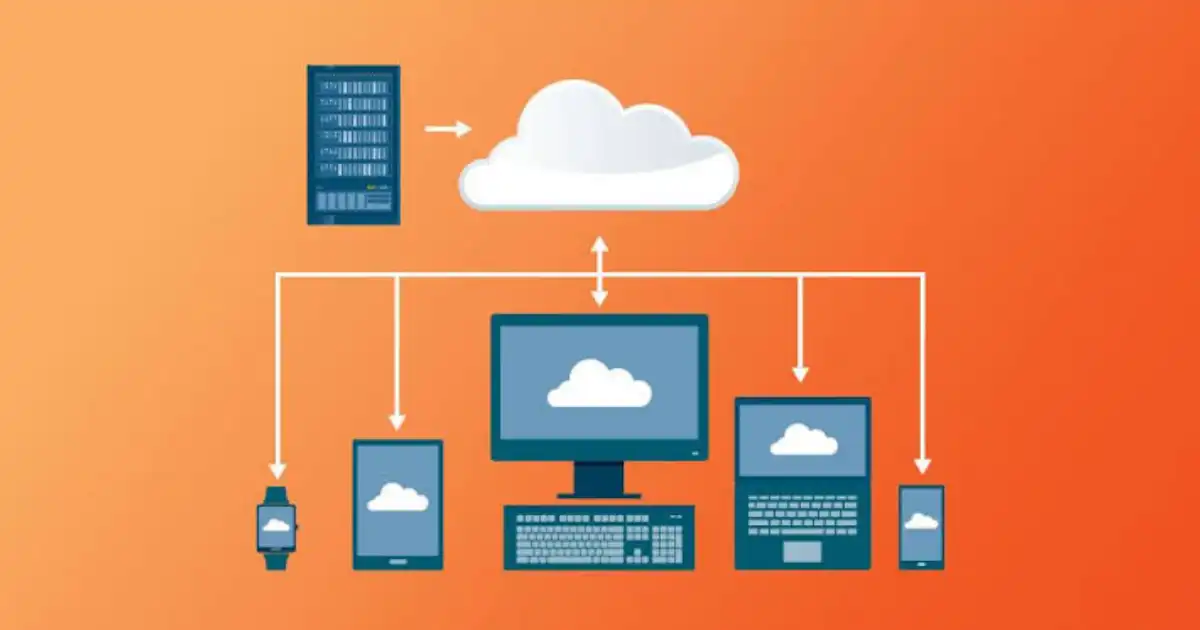
Endpoint security looks straightforward until an organization has hundreds or thousands of devices spread across offices, homes, cloud environments, and different networks. Installing endpoint protection on a laptop is easy. Keeping every laptop, desktop, mobile device, and remote endpoint properly protected, patched, monitored, and supported is a very different job.
This is where endpoint security services become challenging. IT teams have to deal with device sprawl, remote workers, BYOD, outdated systems, security alerts, application compatibility, and an expanding collection of security tools. A security agent may be installed, but that does not automatically mean the endpoint is healthy or protected.
The real challenge is maintaining consistent security while allowing people to work normally. In practice, endpoint security is an ongoing operational process involving technology, people, policies, monitoring, and response.
What Are Endpoint Security Services?
Endpoint security services are the technologies and operational activities used to protect devices that connect to an organization’s systems and data. Depending on the environment, this can include endpoint protection, endpoint detection and response (EDR), malware and ransomware protection, endpoint monitoring, patch management, vulnerability management, device control, threat detection, incident response, and security policy enforcement.
Some organizations manage these capabilities internally, while others use managed endpoint security services for monitoring, investigation, response, or day-to-day administration.
The important point is that endpoint protection is not just about blocking malicious files. A properly managed endpoint security program also needs to identify vulnerable devices, detect suspicious behavior, maintain security configurations, investigate alerts, and respond when something goes wrong.
What Are the Common Endpoint Security Services Challenges?
Managing a Growing Number of Endpoints
The first problem is scale. An organization might start with 50 laptops and a few servers, but eventually have hundreds of laptops, desktops, mobile devices, virtual machines, contractor devices, and remote endpoints.
Those devices rarely look identical. They may use different operating systems, hardware generations, applications, configurations, and security policies. Some employees work from the office, others connect from home, and contractors may only access company systems occasionally.
Keeping security controls consistent becomes harder as the environment expands. One device might have the latest security agent and patches while another has been offline for weeks. The larger the environment becomes, the more difficult manual endpoint security management becomes.
Maintaining Complete Endpoint Visibility
You cannot properly protect an endpoint that you do not know exists.
This sounds obvious, but incomplete device inventories are surprisingly common. A laptop may be purchased outside the normal IT process, an employee may use a personal device, or an old computer may remain connected to the network after everyone assumes it has been retired.
Remote devices create another problem. An endpoint might be legitimate but offline, so security software cannot report its current condition. BYOD and shadow IT make visibility even harder.
Imagine an employee keeps an old laptop at home and occasionally connects it to company resources. The device has not received security updates and does not have the organization’s endpoint agent installed. It may not generate any warning simply because the security team does not know it is there. That missing visibility is itself a security weakness.
Keeping Devices Patched and Updated
Patch management is one of those jobs that sounds simple until you have to do it across a real organization.
Knowing that Microsoft Windows, Chrome, an accounting application, or another business application has a security update available is only the beginning. The update still has to reach the right devices, install successfully, and avoid breaking something employees depend on.
Remote endpoints can miss updates because they are offline. Older systems may not support newer patches. Business-critical applications may have compatibility issues. Some users may postpone restarts repeatedly.
There is also the question of prioritization. Not every vulnerability deserves the same urgency. Security teams have to consider exploitability, affected systems, exposure, business importance, and whether a workaround exists. Good patch management is therefore about successful risk reduction, not simply achieving a high patch count.
Securing Remote and BYOD Endpoints
Remote endpoint security becomes more complicated because IT teams have less physical and technical control over devices.
Employees may connect from home networks, hotels, coworking spaces, or public locations. Personal devices can introduce another layer of uncertainty. IT may not control the operating system, installed applications, browser extensions, or local security configuration.
BYOD security requires a practical balance. Completely controlling a personal device may be unacceptable to employees, while giving that device unrestricted access to corporate resources can create unnecessary exposure.
Organizations often need clear BYOD rules, strong authentication, device management where appropriate, encryption, access restrictions, and controls that limit what company information can be accessed from unmanaged devices.
Managing Security Alerts and False Positives
More alerts do not necessarily mean better security.
An EDR platform can generate alerts for suspicious processes, unusual logins, scripts, applications, or file activity. In a busy environment, thousands of events may appear. Some will be harmless administrative activity, legitimate software behavior, or duplicate detections.
This creates alert fatigue. Analysts begin spending large amounts of time investigating events that do not represent real threats. Eventually, an important alert can get buried among routine notifications.
False positives are therefore more than an inconvenience. They consume security resources and can affect the quality of incident response. Effective endpoint security requires sensible detection rules, alert prioritization, automation, and clear procedures for deciding which events deserve immediate attention.
Dealing With Security Tool Sprawl
Organizations often respond to security problems by buying another tool.
Eventually, the security stack may include antivirus, EDR, MDM, vulnerability scanners, SIEM, encryption software, patch management platforms, identity tools, and several device-management products.
Each tool may perform a useful job. The problem appears when they do not work well together.
Security teams may have to check several dashboards to understand one endpoint incident. Different systems may contain conflicting device information. Alerts can be duplicated, integrations can fail, and licenses can become difficult to manage.
More technology does not automatically produce better security. In some environments, reducing overlapping tools and improving integration can actually make endpoint security management more effective.
Protecting Against Evolving Cyber Threats
Attackers do not wait for security teams to finish configuring their tools.
Ransomware operators, credential thieves, phishing campaigns, and other attackers continually change their techniques. Modern attacks may involve legitimate administrative tools, stolen credentials, malicious scripts, or exploitation of newly discovered vulnerabilities rather than an obvious malware file.
This creates a challenge for endpoint security services because static protection is not enough. Security teams need detection capabilities that can identify suspicious behavior and investigate what happened across the endpoint.
Techniques such as living-off-the-land attacks are particularly difficult because attackers may abuse legitimate operating system utilities. The security question becomes less about “Is this file malicious?” and more about “Why is this activity happening on this device, under this account, at this time?”
Balancing Security With Employee Productivity
Security controls can interfere with normal work when they are configured too aggressively.
Website blocking, application restrictions, authentication requirements, device controls, endpoint scanning, and security agents can affect how employees use their computers. Security software can also consume system resources, particularly on older hardware.
If employees repeatedly encounter unnecessary restrictions, they may look for workarounds. They might install unauthorized applications, use personal devices, disable security controls, or find unofficial ways to move files.
That creates another security problem. The goal is not maximum restriction. It is appropriate control based on actual risk. Security policies should protect important resources without making normal business work unnecessarily painful.
Supporting Legacy Systems and Incompatible Devices
Legacy technology is one of the hardest endpoint security problems because organizations cannot always replace it immediately.
A business may depend on an old application that only works on an outdated operating system. Specialized equipment may require older hardware. A security agent may not support a particular system, or installing modern endpoint protection may affect a critical application.
“Just upgrade everything” sounds good until the system involved controls an essential business process.
In these situations, organizations may need compensating controls, network segmentation, restricted access, additional monitoring, or a phased replacement plan. Legacy systems should not simply be ignored because they are difficult to change.
Addressing Endpoint Security Skills Shortages
Endpoint security technology still needs people who understand how to operate it.
Someone has to configure policies, tune detections, investigate suspicious activity, identify compromised devices, perform threat hunting, manage vulnerabilities, and coordinate incident response.
A powerful EDR platform can underperform if nobody has time to investigate its alerts. Similarly, a vulnerability scanner can produce an impressive report that does little good if nobody prioritizes and fixes the findings.
This is one reason managed endpoint security can be useful for organizations without dedicated endpoint specialists. However, outsourcing the technology does not remove the need for ownership, communication, and sensible security decisions.
Integrating Endpoint Security With Other Systems
An endpoint rarely exists in isolation during a security incident.
An EDR alert may become much more useful when correlated with identity information, network activity, vulnerability data, or cloud logs. Integration with SIEM, IAM, MDM/UEM, network security, cloud security, vulnerability management, and IT service management systems can provide that wider context.
For example, an endpoint alert becomes more concerning if the same user’s account has also experienced unusual authentication activity. Similarly, knowing that the affected laptop has a critical unpatched vulnerability can change how the incident is prioritized.
Integration is not always easy. APIs, data formats, permissions, licensing, and operational ownership can all create problems. Still, connected security data is often much more valuable than isolated alerts.
Meeting Compliance and Security Requirements
Endpoint security may also have to support internal policies and compliance requirements. Organizations may need evidence of encryption, logging, monitoring, access controls, patching, device management, or security procedures.
The challenge is making those requirements work operationally rather than simply producing paperwork for an audit.
For example, having a policy that requires timely patching is not the same as proving that remote endpoints actually received the required updates. Compliance depends heavily on consistent processes and reliable reporting.
Controlling Endpoint Security Costs
The software license is only part of the cost.
An organization may also pay for deployment, endpoint agents, monitoring, integration, staff time, incident response, training, hardware upgrades, and ongoing administration.
A cheap endpoint security platform can become expensive if it requires extensive manual work. Conversely, a more capable service may cost more initially but reduce operational workload and improve response capabilities.
The right question is therefore not simply “What is the cheapest endpoint security service?” It is “What combination of technology, people, and services gives us the protection we actually need at a sustainable cost?”
How Can Organizations Overcome Endpoint Security Services Challenges?
Build Complete Endpoint Visibility
Start with an accurate inventory of company-managed and relevant unmanaged devices. Know which endpoints exist, who uses them, what operating system they run, whether the security agent is active, and when the device last checked in.
Visibility should be continuous rather than a once-a-year inventory exercise.
Automate Patch and Vulnerability Management
Automate routine updates where practical, but keep risk-based prioritization in the process. Critical vulnerabilities on exposed or business-important systems may require faster action than low-risk issues on isolated devices.
Track failed patches instead of assuming deployment means success.
Use Layered Endpoint Protection
EPP and EDR serve different but complementary purposes. Prevention can block known threats, while detection and response help investigate suspicious behavior that gets past preventive controls.
Add monitoring, vulnerability management, identity controls, and incident response processes where they provide meaningful protection.
Reduce Security Tool Sprawl
Review whether multiple tools perform overlapping functions. Consolidation can reduce licensing costs, administration, duplicate alerts, and fragmented visibility.
However, do not remove a tool simply because consolidation sounds attractive. Compare actual capabilities and security gaps first.
Improve Alert Prioritization
Use behavioral detection, automation, threat intelligence, and sensible detection tuning to reduce unnecessary noise. Establish clear response procedures so analysts know what constitutes an urgent incident and what can be investigated later.
Strengthen Remote and BYOD Security
Use MFA, encryption, appropriate device management, access controls, endpoint policies, and clear BYOD rules. Not every personal device needs the same level of access as a company-managed endpoint.
Train Employees
Employees remain part of the endpoint security environment. Practical training around phishing, suspicious attachments, unsafe applications, credential theft, and reporting unusual activity can reduce avoidable incidents.
Consider Managed Endpoint Security Services
Managed services can make sense when an organization lacks 24/7 monitoring, threat-hunting capability, endpoint specialists, or sufficient incident response resources.
They are not automatically the right choice for every company. Organizations with mature internal security teams may prefer direct control. The decision should depend on internal expertise, coverage requirements, endpoint scale, risk, and budget.
Endpoint Security Challenges vs. Endpoint Security Risks
A challenge is an operational difficulty. A risk is the potential security consequence created by that difficulty.
For example, poor device visibility is a challenge. An unmanaged laptop becoming an entry point for an attacker is the resulting risk. Delayed patching is a management problem, while exploitation of a known vulnerability is the security consequence.
The same distinction applies elsewhere:
- Alert overload can result in genuine malicious activity being overlooked.
- BYOD management problems can expose company information through personal devices.
- Security tool sprawl can create inconsistent monitoring and configuration gaps.
- Limited endpoint expertise can lead to slower detection, investigation, and response.
Understanding this difference helps decision-makers focus on fixing the underlying operational problem rather than simply reacting to the resulting incident.
What Should Organizations Look for in an Endpoint Security Service?
When evaluating endpoint security services, start with the actual environment rather than a product checklist.
A useful service should provide strong endpoint visibility and appropriate EPP and EDR capabilities. Look at how it handles threat detection, continuous monitoring, patch management, vulnerability management, threat hunting, and incident response.
Remote endpoint support and BYOD capabilities may matter greatly for distributed organizations. Integration with SIEM, IAM, MDM/UEM, vulnerability management, and IT service management platforms is also worth examining.
Reporting and compliance support should show what is actually happening across the environment, not simply produce attractive dashboards. Scalability matters if the organization expects endpoint growth.
Technical support, response procedures, and service-level agreements deserve the same attention as technical features. A platform can detect a serious threat, but the real question is what happens next.
Ultimately, compare the service against your endpoint environment, internal expertise, risk profile, operational requirements, and budget. The strongest solution on paper is not necessarily the best fit for the organization operating it.
You Might Be Interested In
- How Do Endpoint Security Services Prevent Cyber Attacks?
- How Do Endpoint Security Services Protect Mobile Devices?
- How Do Endpoint Security Services Stop Malware?
- How Do Endpoint Security Services Secure Company Laptops?
- How Do Endpoint Security Services Protect Business Networks?
Conclusion
Endpoint security services are difficult to manage because real organizations are messy. Devices grow, employees work remotely, personal devices appear, patches fail, legacy systems remain, alerts multiply, attackers change their techniques, and security tools do not always integrate neatly.
The biggest challenges are therefore not solved by installing another security product. They require reliable device visibility, sensible patch and vulnerability management, effective monitoring, practical security policies, skilled people, and clear incident response processes.
The practical takeaway is simple: endpoint security is an ongoing operational process, not a product that gets installed once and forgotten. The organizations that manage it well continuously know what they have, understand what is happening, prioritize real risks, and adjust their security approach as the environment changes.
FAQs
What are the biggest endpoint security services challenges?
The biggest endpoint security services challenges usually involve maintaining visibility across a growing number of devices, keeping systems and applications patched, securing remote and BYOD endpoints, managing security alerts, and responding to changing attack techniques. These technical issues are often made harder by legacy systems, inconsistent configurations, limited security staff, multiple security tools, and the need to keep employees productive. An organization may have strong endpoint protection installed, yet still have gaps because a device is offline, a security agent has stopped working, a critical patch was missed, or an alert was not investigated quickly enough.
The human and operational side can be just as challenging as the technology. Security teams need time and expertise to tune EDR policies, investigate suspicious behavior, manage vulnerabilities, respond to incidents, and maintain integrations with other security systems. When those responsibilities become too large for the available team, even capable endpoint security services can struggle to deliver consistent protection.
Why is endpoint visibility important for endpoint security?
Endpoint visibility is important because security teams need to know what devices are connecting to business systems and whether those devices are properly protected. This includes knowing who is using a device, which operating system and applications it runs, whether security controls are active, whether patches are current, and when the endpoint last communicated with management systems. Without accurate device visibility, an organization may unknowingly have unmanaged, outdated, or vulnerable endpoints connected to important resources.
Visibility also becomes extremely valuable during an incident. If an EDR alert identifies suspicious activity, the security team needs context to determine how serious the event is. Knowing the device owner, installed software, vulnerability status, recent activity, and access privileges can help analysts investigate faster and decide whether the endpoint should be isolated, remediated, or monitored more closely.
How does remote work make endpoint security more challenging?
Remote work makes endpoint security more challenging because employees are no longer working within a controlled office network all the time. Devices may connect through home routers, public networks, hotels, or other environments that the IT team does not manage. Remote laptops can also remain offline for extended periods, miss patches, lose contact with security management platforms, or operate with configurations that differ from office-based systems.
BYOD adds another layer of complexity because personal devices may contain company data while remaining outside the organization’s normal management processes. IT teams have to balance security with employee privacy and convenience. Strong authentication, encryption, device management, access controls, and clear BYOD policies can reduce exposure, but remote endpoint security still requires continuous monitoring and sensible controls rather than assuming every device is equally trustworthy.
Why is patch management a common endpoint security challenge?
Patch management becomes difficult because organizations typically have a mixture of operating systems, applications, hardware, and endpoint configurations. A security update may be available, but deploying it successfully across every device can require testing, scheduling, reboots, compatibility checks, and follow-up. Remote endpoints may be offline, employees may postpone restarts, and some business-critical applications may not immediately support a newer operating system or application version.
The challenge is also about deciding what should be patched first. A vulnerability affecting an internet-facing or business-critical system may deserve immediate attention, while a lower-risk issue on an isolated device may have a different priority. Effective endpoint security services therefore need to combine vulnerability assessment, risk-based prioritization, automated patch deployment where appropriate, and verification that updates were actually installed.
How does alert fatigue affect endpoint security?
Alert fatigue occurs when security teams receive more notifications than they can realistically investigate with appropriate attention. Endpoint security platforms can detect suspicious processes, unusual behavior, potentially unwanted applications, scripts, authentication activity, and other events. Many of these alerts may turn out to be legitimate activity or false positives, while others may be duplicates or low-priority events. Over time, analysts can spend too much of their working day separating harmless activity from genuinely dangerous behavior.
The bigger concern is that excessive alert volume can affect response quality. When analysts are overloaded, an important indication of ransomware, credential theft, or unauthorized activity can be overlooked or investigated too late. Effective endpoint security management therefore depends on detection tuning, sensible alert prioritization, automation, behavioral analysis, and clear response procedures. The objective is not to generate the maximum number of alerts, but to make sure the important ones receive the right attention.
