


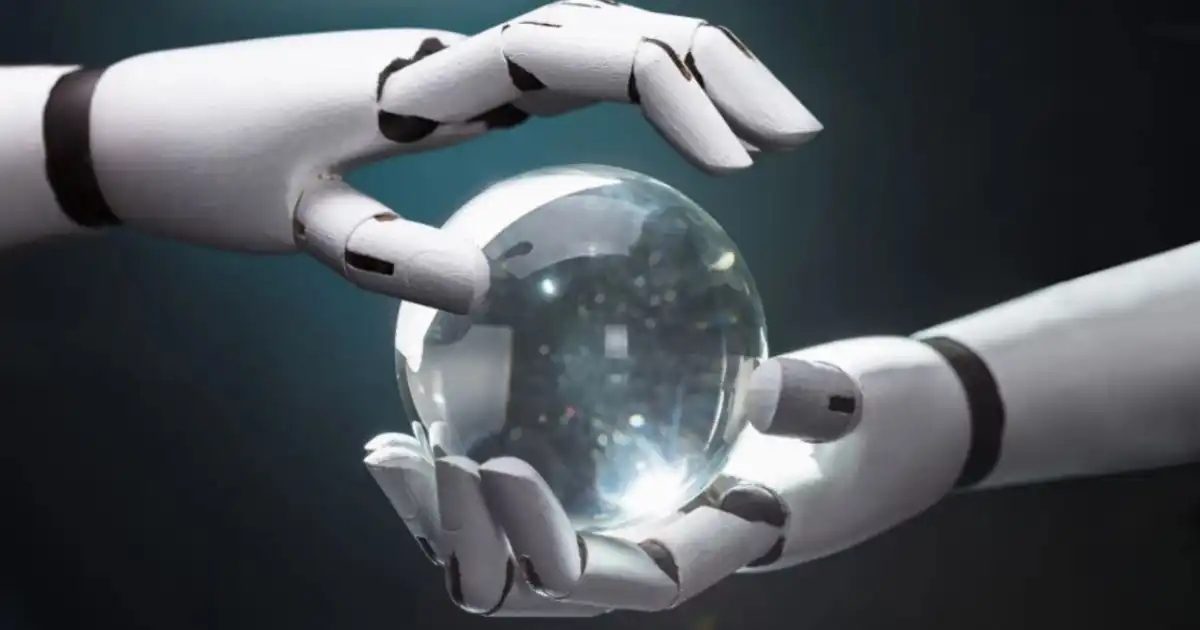
From the Spanish Flu in 1918 to COVID-19, the world has seen the cataclysmic effect of pandemics. Being able to foresee and avert the next global health catastrophe before it spins out of control is possible today with artificial intelligence.
AI is predicting the next pandemic before it occurs and is changing the way the world approaches health issues, disease identification, and outbreak handling.
How AI Is Predicting Pandemics Before They Begin
AI has taken center stage in predicting pandemics, and is now using an array of data sources, machine learning algorithms, and predictive modeling techniques to locate the epicenter of outbreaks. It does so by analyzing huge datasets from many different sources. AI has the ability to identify potentially dangerous regions that might have outbreaks of various infectious diseases, thus helping governments and healthcare organizations to intervene before a crisis develops.
Early Detection Through Big Data
AI systems are capable of analyzing vast amounts of real-time data such as:
- Social media
- News articles
- Hospital records
- Environmental monitoring
- Government health databases
AI can distinguish disease-driven anomalies, and through pattern recognition, it enables authorities to take preemptive measures before an outbreak occurs.
Predictive Modeling for Disease Spread
AI-driven predictive models look into past trends of pandemics and current developments to expect what the future may hold for certain diseases. The following factors are also taken into consideration:
- Population Density
- Climate Conditions
- Social Behavior
- Travel Patterns
With AI, the health officials can now estimate with great precision the possibility of an outbreak occurring in certain regions, thus enabling them to place travel restrictions and other preventive measures in a timely manner.
Genomic Analysis for AI
Viruses need to be understood on the molecular level for effective pandemic control. AI-powered genome sequencing tools can study mutations on a molecular level and predict possible future alterations to the virus. With these capabilities, scientists can:
- Understand how quickly new strains may emerge and their impact
- Develop vaccines more effectively
- Notice genetic markers indicating high rates of transmission
AI-Powered Biosurveillance Systems
The monitoring of biological threats is termed Biosurveillance; these include outbreaks of natural diseases as well as cases of possible bioterrorism. AI-driven biosurveillance systems can identify abnormal biological phenomena by analyzing health records, remote sensor data, and even wastewater.
The Role of AI in Drug Discovery and Vaccine Development
Artificial Intelligence hastens the process of drug development and vaccine creation as soon as the potential pandemic is spotted through:
- Searching for new compounds that can help to stop emerging infectious diseases
- Running computer simulated clinical trials
- Cutting down on resources and time used in conventional pharmaceutical research
AI in Contact Tracing
Automatic contact tracing apps powered with AI have a significant contribution throughout the COVID-19 pandemic. These systems use GPS coordinates, Bluetooth devices, and AI algorithms to:
- Monitor contact with infected patients
- Notify relevant agencies about the infection
- Support people to start practicing self-isolation before collapse or appearance of certain symptoms
The Impact of AI in The Real-World is Predicting Pandemics
There are various AI enabled projects that are increasingly coming into action for pandemic prediction and prevention.
BlueDot: The AI That Predicted COVID-19
The Canadian AI company BlueDot spotted an unaccustomed cluster of pneumonia cases in Wuhan, China on December 30, 2019, which was days earlier than the health experts globally accepted the reality of Covid-19 as a pandemic threat.
The algorithm of BlueDot scrutinized:
- Multilingual news articles
- Airline ticketing orders
- Database of pathogens for animals and insect components.
Such alarming circumstances allowed other governments to prepare in advance, which otherwise wouldn’t have been easy, defining the overwhelming power of AI in predicting pandemic situations.
DeepMind And AlphaFold From Google
Google’s AI subdivision, DeepMind, created AlphaFold, which is an AI system designed to predict the structures of proteins. This development helped vaccine and drug development deeply by understanding the structures of the viruses at a much deeper level, which was a huge advancement.
GIDEON: Global Infectious Disease and Epidemiology Network
An AI-powered database that helps in monitoring infectious disease outbreak is GIDEON. It integrates AI with epidemiological data to forecast potential outbreaks before they reach critical stages.
Challenges And Ethical Concerns Of AI In Predicting Pandemics
Despite all the advancements in technology, there are ethical issues and challenges when accepting that AI would help prevent pandemics.
Privacy Concerns
AI systems utilize massive amounts of data, sometimes personal, like medical history and where one resides. Protecting this data has proven to be a big issue.
AI Models Bias
The problem with AI models is that they can never work better than the data they were built with. If there is an incomplete dataset or a bias dataset, there are going to be problems and people are going to panic when there is no real threat, or pose serious danger when there is real danger due to the neglecting nature.
Policy Issues from the Governments Side
In order for AI to accurately predict pandemics, there has to be a level of cooperation that countries have to join together and AI integration requires one. Unfortunately with political relations, the none connectivity and transparency, and the lack of public health approach hinders the success.
Dependance on Technology
There is a risk of relying on AI systems without the supervision of a human. We should utilize AI as a tool rather than a replacement of an expert in epidemiology and global health.
The Future of AI Is Predicting Pandemic Outbreaks
There has been a clear development in the following fields that points towards a more direct role of AI in predicting pandemics.
AI-Powered Wearables
The integration of AI into watches and fitness belts can be used to monitor people’s health, allowing them to take preventive action as soon as he or she shows any signs of getting sick.
Blockchain for Secure Data Sharing
Health data from AI-powered monitoring systems can be shared securely through Blockchain technology by guaranteeing data security and privacy.
AI Collaboration with Robotics
AI powered robots can assist in the testing and disinfecting of public areas and even giving vaccinations in areas prone to pandemic outbreaks.
You Might Be Interested In
- Best Ai Browser Extensions To Boost Productivity
- What Entity Seo Is And Ai’s Role?
- Best AI Tools for Debugging and Unit Test Generation
- How Do Gpu Compute Clusters Help Ai Learning?
- How Do Ai Systems Handle Errors And Incorrect Outputs?
Conclusion
AI Is Predicting pandemics before they start, transforming global health responses and saving countless lives. From big data analytics and predictive modeling to genomic analysis and biosurveillance, AI provides unparalleled insights into potential outbreaks. While challenges such as data privacy, accuracy, and government cooperation remain, the potential of AI to revolutionize pandemic prevention is undeniable.
As AI continues to evolve, its role in pandemic preparedness will only strengthen, ensuring that the world is better equipped to tackle the next global health crisis before it becomes a catastrophe.
FAQs about Ai Is Predicting
Is it possible for AI to predict the future?
AI does analyze a tremendous quantity of data, recognizes deep-seated connections, and make probabilistic guesses. However, it does not possesses the capability to predict the future with total assurance. It works using past and present data, and it utilizes present machine learning algorithms together with statistical models to make predictions. AI has shown great promise in predicting future occurrences in certain industries like finance, weather forecasting, and emerging market trends. But, as we know, the AI’s predictions is always probabilistic instead of definitive because the future is affected by unmeasurable things and changes such as people’s choices, geopolitical affairs, and even random natural phenomena.
While some may dispute the credibility of AI, it is pivotal in predicting various factors that affect the world we live in. For instance, AI-based financial models can predict trends in the stock market, while AI systems metereologists use can predict the odds of a hurricane or a natural calamity.
AI systems in business can also predict the behavior of typical customers, and assist in picking business strategies. AI is overwhelmingly useful; still, one must realize that predictive power AI holds is directly proportionate to the input data. If data is incomplete, biased, or out of date, AI predictions will be disproportional to reality. As much as AI helps us make more precise decisions, we are still unable to forecast events without the proper data input.
How is Artificial Intelligence being used during the covid pandemic?
AI was a game changer in the pandemic era, helping in tasks such as early disease detection, diagnostics, Agri-technology techniques, as well as public health management. AI systems sifted through scores of medical data to find trends and use them to anticipate the various outbreaks of diseases. To illustrate, CVOID-19 AI models picked up monitoring signals by recurrently scanning significant coverage, social media conversations, and even net abnormality in case files produced. AI-assisted imaging technology made expert diagnostic imaging more accessible and affordable by enabling the rapid and cost-effective detection of infections from CT and X-ray images.
AI enhanced the precise allocation of resources beyond healthcare by improving the supply chain for ventilators and personal protective equipment (PPE). It also was able to assist governments and health agencies in monitoring the spread of the virus and evaluating the effectiveness of different strategies used to contain it. AI powered chatbots and virtual assistants provided the public with answers relating to the pandemic and eased congestion on healthcare hotlines. AI also significantly advanced drug discovery and vaccine research by analyzing protein structures and simulating drug interactions. The pandemic highlighted the role that AI can play in enhancing human effort during a global crisis and displayed its potential in crisis response.
Can AI accurately predict a disease outbreak?
What was most interesting about AI is its ability to accurately predict disease outbreaks with the assistance of massive datasets. By processing data from many different sources, like talk on social media, environmental factors, and even travel patterns, AI is able to flag abnormalities that may indicate the presence of new illnesses. Using machine learning models, AI can identify patterns of infection, demographic data, and epidemiological trends and make predictions about where a disease might spread and which locations are at greater risk.
AI-powered tools such as Health Map and BlueDot identified the onset of COVID-19 before official statements were made using data collected from airline, public health, and news sources. These AI systems predicted the spread of COVID-19 globally. While AI has the potential to enhance outbreak forecasting, it does have limitations. The accuracy of AI depends on the relevancy, completeness and timeliness of the information provided. Besides, there are numerous human actions and policies concerning an outbreak that AI is unable to predict or gauge. Therefore, even though AI improves overall public health, its predictions need to be assessed with a combination of human experience along with classic epidemiological practices.
Do we currently find ourselves within the third wave of AI?
According to many researchers, the answer is yes, we do find ourselves within the third wave of AI in which systems are context aware, explainable and reasoning driven. The first wave focused on rules and automation, whereas the second wave advanced in deep learning and machine learning. Unlike these previous two waves, the current one is aimed towards transparent decision making as well as context comprehension and adaptation. This development is imperative to increasing the reliability of AI in sensitive areas such as health care, law, governance and more, which involve human lives and ethical matters.
At a certain point, AI is evolving from simple pattern detection to embody more complex reasoning processes. This shift now allows for the processing of high-level abstractions and the application of information in multi-contextual settings. Modern AI models, for example, are being built with the ability to self-audit and explain their predictions and recommendations. This change is most crucial in AI applications like medical diagnostics and legal judgments, where it is fundamental that AI systems are able to justify their decisions and actions. As AI technology grows, the third wave will likely stimulate the development of even more advanced systems designed to interact with people in more helpful and dependable manners.
What is the 5th wave of AI?
Machines with humanistic capabilities like self-improvement, autonomous decision-making, and multi-domain knowledge application are set to emerge from The Fifth Wave of AI. This advanced stage AI is expected to solve multi-faceted problems with minimal human assistance. The development of artificial general intelligence (AGI)—AI able to learn and adapt across various domains as humans do—is a significant milestone in this stage.
To achieve this advanced level, significant accomplishments are needed in deep reinforcement learning, quantum AI, and neuromoprhic computing. This level of AI would not only analyze and process data, but also think creatively, feel emotionally, and possess morals. If achieved, nearly all fields like medicine, education, and scientific research would experience unparalleled progress. This raises questions regarding the safety, ethics, and regulation AI powered by immense autonomy possess. Managing these systems leaves an opportunity for undeniable risk. Whether the 5th wave is achievable or not, the impact it would have on society remains daunting and thrilling.
