


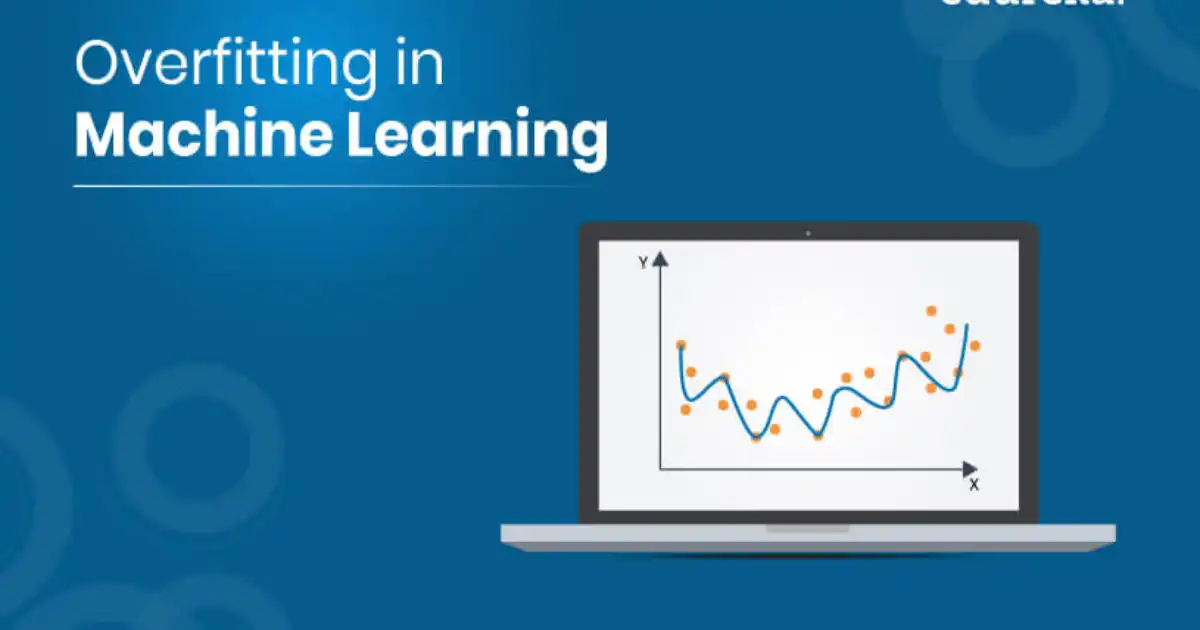
If you’ve ever built a machine learning model and watched it absolutely crush it on your training data but then flop hard on new data you’ve met overfitting. What Is Machine Learning Overfitting Example?
In simple terms, overfitting happens when a model memorizes the quirks of the training data instead of learning the underlying patterns. It’s like memorizing the answers to last year’s exam instead of understanding the subject: sure, you ace the practice test, but you’re toast when things change even slightly.
In practice, overfitting is more than just a theoretical concept. It’s the number one silent killer of ML projects I’ve worked on. I’ve seen startups spend weeks tuning a model, only to discover that it fails miserably when deployed because it “learned the noise” instead of the signal.
Understanding overfitting deeply is crucial because it shapes how you prepare data, choose model complexity, and evaluate performance. In this article, I’ll walk you through overfitting the way it actually appears in real-world machine learning not just in textbooks.
What Is Overfitting in Machine Learning
Overfitting occurs when a machine learning model learns patterns that are too specific to the training data. It performs exceptionally well on data it has seen but poorly on unseen data. The opposite, underfitting, happens when the model is too simple to capture any meaningful patterns, and a “good fit” is somewhere in between.
Think of it this way: if your model is a student, underfitting is like the student not studying enough, overfitting is like memorizing the answers to practice questions word-for-word, and a good fit is genuinely understanding the material so they can tackle any new question.
In practical ML projects, overfitting usually shows up with complex models deep neural networks, ensembles, or trees that grow very deep. But even simple linear models can overfit if the dataset is tiny or noisy. It’s important to recognize that overfitting is really about generalization: a model’s ability to perform well on new, unseen data. Generalization is what separates a model that “works” in the lab from one that actually adds value in the real world.
Overfitting Explained with Simple Example
Let’s make this concrete. Imagine you’re predicting house prices based on square footage. You have 50 data points. If you fit a linear regression, it might capture the general trend: bigger houses tend to cost more. That’s a good fit.
Now, suppose you use a 10th-degree polynomial regression. On your training data, the model predicts prices almost perfectly. Every tiny fluctuation in the dataset is accounted for. But then you try it on new houses and it performs horribly. Why? It learned the noise, the random quirks of your small dataset, not the real relationship. That’s overfitting.
In real life, I once worked on a project predicting sales based on online ad spend. We tried an overly complex model with dozens of features and interaction terms. On our historical data, it looked amazing. But when we deployed it, predictions were all over the place. Turns out, it was picking up patterns unique to specific months or campaigns that would never repeat. The lesson: more complexity isn’t always better.
The takeaway: overfitting is when your model knows the training data too well and loses sight of the bigger picture.
Causes of Overfitting
Overfitting usually stems from a few practical issues:
-
Too complex a model for the dataset
Deep neural networks or large decision trees are hungry for data. If your dataset is small, they will latch onto noise.
-
Insufficient data
Small datasets amplify quirks. A tiny random anomaly can look like a trend to the model.
-
Noisy or irrelevant features
Features with lots of random variation confuse the model, making it learn things that don’t generalize.
-
Excessive training
Training too long without monitoring validation performance can lead the model to memorize the training set.
-
Poor feature engineering
Sometimes the way features are created accidentally embeds patterns that don’t exist in the real world.
From experience, the biggest practical pitfall is ignoring dataset size relative to model complexity. I’ve seen teams throw deep networks at datasets with only a few hundred points basically giving the model permission to memorize everything. Not surprisingly, it failed spectacularly in production.
How to Detect Overfitting
Detecting overfitting isn’t mystical; it’s about comparing performance on training vs. validation (or test) data.
Practical methods I use include:
-
Train-validation split
Track metrics on both sets. If training accuracy is high but validation accuracy lags, that’s a red flag.
-
Cross-validation
Useful for small datasets, it gives a more stable estimate of generalization performance.
-
Learning curves
Plot performance against training set size. If training error is very low and validation error remains high, overfitting is likely.
-
Regular monitoring in deployment
Sometimes overfitting only becomes apparent when the model meets real-world data.
One mistake I’ve seen is relying solely on training accuracy. A model can look perfect in the lab but fail in production. Always test on unseen data.
How to Prevent / Avoid Overfitting
Here’s where practical experience matters. Several hands-on techniques work:
-
Simplify the model
Don’t overcomplicate. Start with a smaller model and scale up only if necessary.
-
Get more data
More training examples dilute noise and allow complex models to learn genuine patterns.
-
Feature selection
Remove irrelevant or noisy features. Sometimes less is more.
-
Regularization
Techniques like L1/L2 penalties discourage the model from over-relying on any single feature.
-
Early stopping
Monitor validation performance during training and stop when it stops improving.
-
Cross-validation
Use k-fold or leave-one-out CV to ensure your model isn’t just memorizing one split.
-
Data augmentation
In domains like images or text, augmenting data can reduce overfitting significantly.
-
Ensemble methods with care
Bagging can help, boosting can sometimes worsen overfitting if not tuned properly.
I once saved a struggling project by simply pruning irrelevant features and adding a modest amount of regularization.
It was far easier than trying to retrain a complex model from scratch. Practical experience shows that elegant simplicity often beats theoretical bells and whistles.
Underfitting vs Overfitting vs Good Fit
It helps to visualize these scenarios:
-
Underfitting
Model too simple, misses obvious trends. Low training and validation accuracy.
-
Overfitting
Model too complex, captures noise. High training accuracy, low validation accuracy.
-
Good fit
Balanced complexity. Model generalizes well. Training and validation performance are both solid and close.
In my work, I’ve found that striving for a “good fit” is often more about managing expectations and constraints than chasing perfect metrics.
You Might Be Interested In
- Why Is Password Security Management Important?
- How To Generate Schema Markup With Ai?
- How To Play Ai Dungeon 2 Offline?
- What Are Common Performance Metrics?
- Does Otter Ai Record Output Audio?
Conclusion
Overfitting in machine learning is one of those problems that almost everyone runs into once they start building real models. On paper, a model may look impressive high training accuracy, beautiful curves, and great metrics. But if it can’t perform well on new, unseen data, it’s not really solving the problem. In practice, the goal of machine learning is generalization, not perfection on historical data.
From experience, the most reliable way to handle overfitting is to stay practical: keep models as simple as possible, validate them properly, and always test them on unseen data. Techniques like cross-validation, regularization, early stopping, and careful feature selection go a long way. Just as importantly, understanding your data often matters more than making the model more complex.
In the end, good machine learning isn’t about squeezing the highest possible score out of training data it’s about building models that continue to work when the real world inevitably throws new data at them.
FAQs about What Is Machine Learning Overfitting Example?
What is overfitting in simple words?
Overfitting in simple words means a machine learning model learns the training data too closely, including the small random details that don’t actually matter. Instead of understanding the real pattern behind the data, the model basically memorizes what it has already seen. Because of that, it performs extremely well on the training dataset but struggles when it encounters new or unseen data.
A helpful way to think about it is like a student memorizing answers from a practice test. They might score perfectly on that exact test, but if the questions change even slightly, they won’t know how to solve them. In machine learning, overfitting works the same way the model remembers specific examples instead of learning the general rules that apply to new situations.
Can overfitting occur in all types of machine learning?
Yes, overfitting can occur in almost every type of machine learning model. It doesn’t matter whether you’re using linear regression, decision trees, random forests, neural networks, or support vector machines. Any model can overfit if it becomes too complex for the amount of data available or if the training process allows it to memorize patterns that are not truly meaningful.
In practice, complex models such as deep neural networks are more prone to overfitting because they have a large number of parameters and can easily capture noise in the dataset. However, even simpler models can overfit when the dataset is very small or contains a lot of noise. That’s why careful validation, proper dataset splitting, and techniques like regularization are important regardless of the algorithm being used.
How do I know if my model is overfitting?
The most common way to detect overfitting is by comparing the model’s performance on training data and validation or test data. If the model performs extremely well on the training set but significantly worse on unseen data, it’s a strong signal that overfitting is happening. This gap between training accuracy and validation accuracy is one of the clearest indicators.
Another useful approach is analyzing learning curves during training. If training error keeps decreasing while validation error starts increasing or stops improving, the model is likely memorizing the training data instead of learning patterns that generalize. Cross-validation and testing on separate datasets can also help confirm whether the model is overfitting.
What are some common examples of overfitting?
One classic example of overfitting is fitting a very complex curve to a small set of data points. For instance, using a high-degree polynomial regression to perfectly match every training point might look impressive, but the model will behave unpredictably when new data points are introduced. Instead of capturing the true trend, the model simply bends itself to match every tiny variation in the dataset.
In real-world applications, overfitting often appears when a model learns patterns that only exist in historical data but won’t repeat in the future. For example, a sales prediction model might learn patterns related to specific promotions, seasonal quirks, or short-term events in the training data. When those exact situations don’t occur again, the model’s predictions become unreliable.
How can I prevent overfitting in machine learning?
Preventing overfitting usually involves controlling model complexity and making sure the model focuses on meaningful patterns rather than noise. One common strategy is using techniques such as regularization, early stopping during training, and feature selection to reduce unnecessary complexity. These methods help the model avoid relying too heavily on specific details in the training data.
Another practical solution is improving the quality and size of the dataset. More data generally helps models learn broader patterns instead of memorizing individual examples. Techniques like cross-validation, data augmentation, and proper train–test splits also play a crucial role in ensuring the model generalizes well to new data rather than simply memorizing the training dataset.
