


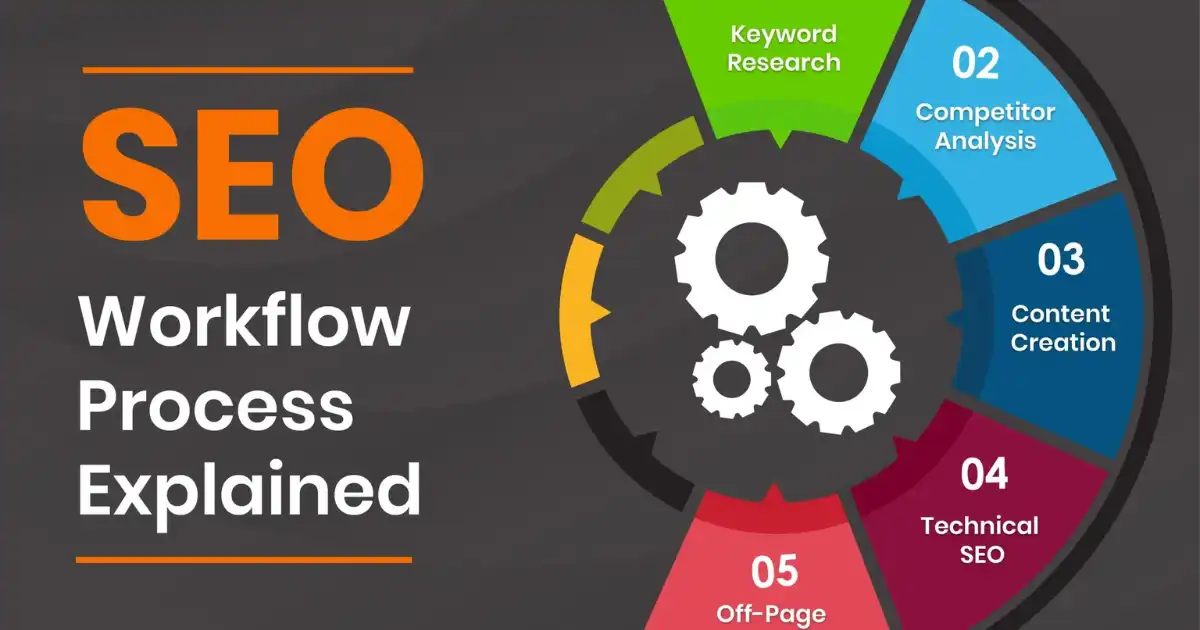
Ai For Seo Content Briefs has completely changed how modern content teams plan, write, and optimize articles for search engines. Instead of relying only on manual research and guesswork, marketers can now use artificial intelligence to create clear, data-driven instructions for writers. These instructions, called content briefs, define what a piece of content should include, how it should be structured, and which keywords matter most.
For beginners and professionals alike, understanding how Ai For Seo Content Briefs work is essential. Search engines are smarter than ever, and competition for rankings is intense. AI helps bridge the gap between SEO strategy and content creation by turning large amounts of data into simple, actionable guidance.
This comprehensive guide explains a step-by-step workflow for using AI for SEO content briefs. It is written in easy language for a 12th-grade audience, with short paragraphs and practical examples. By the end, you will know how to plan, generate, review, and improve AI-powered SEO content briefs with confidence.
AI for SEO Content Briefs
What Are SEO Content Briefs?
SEO content briefs are documents that guide writers on how to create search-optimized content. They usually include target keywords, suggested headings, search intent, internal links, and content length.
When combined with AI for SEO content briefs, these documents become more accurate and consistent. AI analyzes search data, competitor pages, and user intent to suggest what content should cover.
Traditional briefs depend heavily on manual research. AI-generated content briefs automate much of this process, saving time and reducing errors.
Why AI Is Used in Content Briefing
Artificial intelligence for content planning helps teams handle large volumes of data quickly. AI tools can scan top-ranking pages, identify patterns, and highlight gaps.
With AI-powered SEO content briefs, content creators get clear direction. This reduces revisions and ensures every article aligns with SEO goals.
Another benefit is scalability. Automated SEO content briefing allows businesses to create many briefs without sacrificing quality.
Benefits of Ai For Seo Content Briefs
Faster Content Planning
One of the biggest advantages of Ai For Seo Content Briefs is speed. AI reduces hours of keyword research into minutes.
Instead of manually analyzing search results, AI tools instantly provide insights. This helps teams publish content faster.
Speed does not mean low quality. AI-generated content briefs are often more detailed than manual ones.
Improved Search Intent Matching
Search intent is critical for SEO success. AI analyzes user behavior and search queries to understand intent better.
Using AI for SEO content briefs ensures your content matches what users actually want. This improves engagement and rankings.
AI-powered SEO content briefs often categorize intent as informational, navigational, or transactional, making content alignment easier.
Consistency Across Content
Maintaining consistency is difficult when multiple writers are involved. AI solves this issue.
Automated SEO content briefing ensures every brief follows the same structure and standards. This creates a unified content strategy.
Consistency also improves brand voice and trust with readers.
Step-by-Step Workflow for Ai For Seo Content Briefs
Step 1: Define the Content Goal
Every brief should start with a clear goal. Ask what the content is meant to achieve.
Is the article meant to educate, convert, or compare? AI for SEO content briefs works best when goals are defined.
Clear goals help AI tools provide more accurate recommendations.
Step 2: Choose the Primary Keyword
The primary keyword is the foundation of the brief. In this case, Ai For Seo Content Briefs is the main keyword.
AI tools analyze keyword difficulty, search volume, and relevance. This helps select keywords with strong ranking potential.
AI-generated content briefs also suggest related and semantic keywords automatically.
Step 3: Analyze Search Intent with AI
AI tools scan search engine results to understand what type of content ranks well.
This step ensures your brief matches search intent. AI-powered SEO content briefs often include intent explanations.
Matching intent increases the chances of ranking on the first page.
Step 4: Competitor Content Analysis
AI analyzes top-ranking pages to find common elements. These include headings, topics, and word count.
With AI for SEO content briefs, competitor analysis becomes automatic and data-driven.
This helps identify gaps and opportunities to create better content.
Step 5: Generate Suggested Headings
Headings structure the article and guide readers. AI suggests optimized headings based on top-performing content.
AI-generated content briefs often include H2 and H3 suggestions without manual effort.
This ensures logical flow and SEO-friendly structure.
Step 6: Include Semantic Keywords
Semantic keywords help search engines understand context. AI identifies these keywords naturally.
Using Artificial intelligence for content planning, briefs include related terms without keyword stuffing.
This improves topical authority and relevance.
Step 7: Define Content Length and Depth
AI recommends content length based on competitor analysis.
Automated SEO content briefing ensures your article is neither too short nor unnecessarily long.
Proper length improves user satisfaction and SEO performance.
Step 8: Add Internal and External Link Suggestions
Links improve site structure and authority. AI suggests relevant internal links automatically.
AI-powered SEO content briefs may also recommend authoritative external topics without referencing specific sites.
This enhances credibility and user experience.
Step 9: Outline Writing Style and Tone
AI can suggest tone based on audience and topic. For example, simple language for beginners.
With Ai For Seo Content Briefs, tone consistency becomes easier.
This step ensures content is easy to read and engaging.
Step 10: Review and Customize the Brief
AI provides a strong foundation, but human review is essential.
Edit the brief to match brand voice and goals. AI-generated content briefs work best with human oversight.
This final step ensures quality and accuracy.
Best Practices for Using AI-Powered SEO Content Briefs
Balance AI and Human Expertise
AI is powerful, but it is not perfect. Human insight adds creativity and judgment.
Use AI for SEO content briefs as a guide, not a replacement for thinking.
This balance leads to better content outcomes.
Avoid Keyword Stuffing
AI suggests many keywords, but not all need to be used.
Focus on natural usage of Ai For Seo Content Briefs and semantic keywords.
Search engines prefer readability over repetition.
Keep Updating Briefs
Search trends change over time. AI tools update data frequently.
Revisiting AI-powered SEO content briefs keeps content relevant.
This is important for long-term SEO success.
Common Mistakes to Avoid
Relying Fully on Automation
Automated SEO content briefing saves time, but blind trust can cause issues.
Always review AI-generated content briefs carefully.
Human judgment ensures accuracy and relevance.
Ignoring Audience Needs
SEO is not only about search engines. Readers matter too.
AI for SEO content briefs should always prioritize user experience.
Easy language and clear explanations improve engagement.
Skipping Performance Tracking
After publishing, track performance metrics.
Use insights to improve future AI-powered SEO content briefs.
Continuous improvement leads to better rankings.
How Ai For Seo Content Briefs Improve Team Collaboration
Clear Communication
AI-generated content briefs provide clear instructions for writers.
This reduces confusion and revisions.
Teams work more efficiently with shared understanding.
Faster Onboarding
New writers can quickly understand expectations.
Ai For Seo Content Briefs act as training tools.
This speeds up onboarding and improves quality.
Scalable Content Production
As content needs grow, AI helps scale operations.
Automated SEO content briefing supports large content strategies.
This is ideal for growing businesses.
The Future of AI for SEO Content Briefs
AI technology continues to evolve. Future tools will become even more accurate.
Artificial intelligence for content planning will likely include predictive insights.
This means briefs will not only reflect current trends but future ones too.
AI for SEO content briefs will remain a core part of digital marketing strategies.
You Might Be Interested In
- 7 Free Ai Resume Builders Compared
- How Do Collaborative Software Tools Improve Teamwork?
- How To Turn Videos Into Text With Ai?
- Best 5 Robo-advisors Outperforming Human Analysts
- What Is The Future Of Robotics?
- How Is Ai Automation Expected To Evolve In Coming Years?
- Can I Play Ai Dungeon On Pc?
- How To Summarize Pdfs With Ai?
- What Are Popular No Code Automation Tools?
- What Ai Contract Analyzers Can Catch?
Conclusion
Ai For Seo Content Briefs provide a structured, efficient, and data-driven way to plan SEO content. They simplify research, clarify expectations, and align writers with search intent. By using AI-powered SEO content briefs, teams can save time while improving content quality and consistency.
The step-by-step workflow shows that AI works best when combined with human expertise. From defining goals to reviewing final briefs, each step plays a vital role. Automated SEO content briefing is not about replacing creativity but supporting it with insights.
As search engines evolve, artificial intelligence for content planning will become even more important. Businesses that adopt AI-generated content briefs today will be better prepared for future SEO challenges.
FAQs about Ai For Seo Content
Why AI for SEO content briefs are better than manual briefs ?
AI for SEO content briefs are better than manual briefs because they rely on real data instead of assumptions. Artificial intelligence scans search engine results, analyzes top-ranking pages, and identifies patterns such as common topics, keyword usage, and content depth. This ensures the brief is based on what actually works in search results, not just personal judgment.
Another major advantage is efficiency. Manual briefs can take hours of research, while AI-powered SEO content briefs can be created in minutes. This saves time for SEO teams and writers, allowing them to focus more on creativity and quality. At the same time, automated SEO content briefing reduces human errors and missed opportunities, making the entire content creation process more reliable.
Can beginners use AI-powered SEO content briefs effectively?
Yes, beginners can use AI-powered SEO content briefs very effectively. These briefs are designed to be clear and structured, making them easy to understand even for people with limited SEO knowledge. AI-generated content briefs explain what topics to cover, which keywords to use, and how to structure the content step by step.
For students, junior writers, or new marketers, AI for SEO content briefs act like a learning tool. Over time, users naturally start understanding SEO concepts such as search intent, semantic keywords, and content hierarchy. This makes AI-powered SEO content briefs not only useful for production but also for skill development.
Do AI-generated content briefs replace SEO experts or content strategists?
AI-generated content briefs do not replace SEO experts or content strategists. Instead, they support them by handling time-consuming tasks like data analysis and competitor research. Artificial intelligence for content planning provides insights, but it does not understand brand voice, emotions, or business goals as deeply as humans do.
SEO experts play a critical role in reviewing and refining AI-generated content briefs. They decide what to keep, what to modify, and what to remove. The best results come from combining AI efficiency with human creativity and strategic thinking. AI for SEO content briefs should be seen as a powerful assistant, not a replacement.
How often should AI for SEO content briefs be updated?
AI for SEO content briefs should be updated regularly, especially for competitive or fast-changing topics. Search trends, user behavior, and ranking factors change over time, and AI tools continuously collect new data. Updating briefs every few months helps ensure content remains relevant and optimized.
For evergreen content, reviewing AI-powered SEO content briefs once or twice a year is usually enough. However, for trending topics, frequent updates are recommended. Automated SEO content briefing makes updates easier because AI can quickly reanalyze the latest search results and suggest improvements.
Are AI for SEO content briefs suitable for all industries and niches?
Yes, AI for SEO content briefs can be used across almost all industries and niches. Whether the topic is education, technology, healthcare, finance, or e-commerce, AI-generated content briefs adapt based on search data and audience behavior. This flexibility makes them valuable for both small blogs and large enterprises.
However, customization is important. Artificial intelligence for content planning provides a strong base, but industry-specific knowledge should always be added by humans. When combined with expert input, AI-powered SEO content briefs work effectively in any niche while maintaining accuracy, clarity, and relevance
