


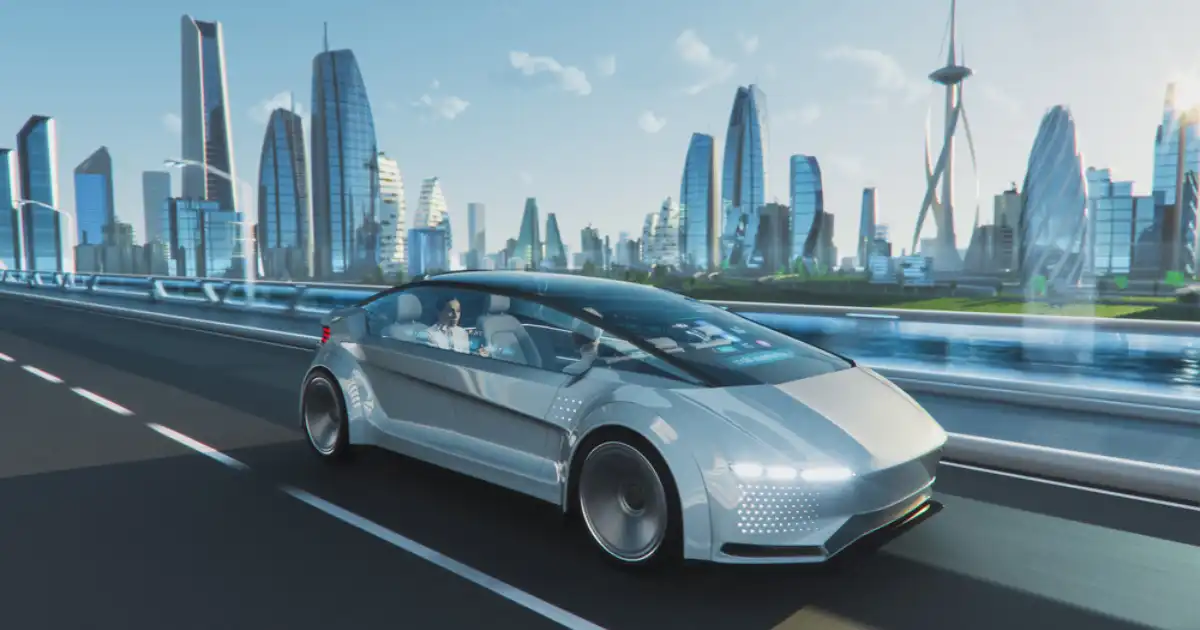
Imagine a world where traffic accidents are nearly eliminated, commutes become productive downtime, and transportation is safer, faster, and smarter. This vision is not science fiction—it is becoming reality, thanks to AI in autonomous vehicles. In recent years, artificial intelligence has transformed how cars think, react, and even anticipate potential risks on the road. But the story is bigger than just cars that can drive themselves; it’s about reshaping mobility, reducing fatalities, and creating an entirely new transportation ecosystem.
The idea of a self-driving car once sparked curiosity and skepticism. Today, it inspires confidence and excitement. Why? Because AI has shown its ability to improve in autonomous vehicles by making them more reliable, efficient, and intelligent with every passing year. From machine learning algorithms to computer vision and sensor fusion, the technology behind these systems is constantly evolving, learning from billions of miles driven in both real-world and simulated environments.
If you’ve ever wondered how AI improves in autonomous vehicles, this comprehensive guide will walk you through everything—from the core technologies powering these cars to the future possibilities they unlock. By the end, you’ll see why AI is not just an upgrade to driving—it’s a revolution.
The Evolution of AI in Driving
From Human Drivers to Digital Chauffeurs
Cars have always depended on human intelligence for decision-making. But the transition from human-driven vehicles to AI-driven autonomous vehicles marks one of the greatest shifts in transportation history. Early automation started with features like cruise control and parking sensors, but AI has expanded the horizon to full autonomy.
The Society of Automotive Engineers (SAE) defines six levels of vehicle automation, ranging from Level 0 (no automation) to Level 5 (full self-driving in all conditions). AI plays an increasing role at each level—whether it’s adaptive cruise control, lane-keeping assistance, or fully autonomous decision-making.
AI as the Brain Behind Autonomy
At the heart of every self-driving system is artificial intelligence. AI doesn’t just follow rules—it learns, adapts, and predicts. Unlike traditional computer programs, AI systems use data from millions of scenarios to improve their performance over time. This means that every obstacle avoided, every turn taken, and every successful navigation through traffic helps AI become a better driver.
Core Technologies Driving AI in Autonomous Vehicles
1. Machine Learning and Deep Learning
The backbone of autonomy lies in machine learning and deep learning algorithms. These models allow vehicles to recognize patterns, such as identifying pedestrians, cyclists, or traffic lights. By training on massive datasets, AI learns to make instant decisions, whether that’s slowing down for a crossing child or merging into high-speed traffic.
Deep neural networks, inspired by the human brain, allow cars to process complex visual information. For example, a self-driving car doesn’t just see a red light—it understands the meaning behind it and reacts accordingly.
2. Computer Vision
Computer vision enables autonomous vehicles to interpret the world around them. Cameras capture high-definition images, and AI analyzes them in real-time. This technology detects road signs, lane markings, and unexpected obstacles like fallen branches or debris.
When combined with other sensors, computer vision creates a 360-degree awareness for the vehicle, giving it a superhuman ability to perceive its surroundings.
3. Sensor Fusion
Self-driving cars rely on multiple sensors—LiDAR, radar, ultrasonic sensors, and cameras. AI integrates these inputs through sensor fusion, ensuring accuracy and redundancy. For example, while a camera may struggle in foggy conditions, LiDAR can still map the environment with precision.
This multi-layered approach gives autonomous vehicles an unparalleled ability to function safely in diverse driving environments.
4. Natural Language Processing (NLP)
Modern autonomous cars are not just drivers—they’re companions. Through natural language processing, AI allows passengers to interact with vehicles conversationally. You can ask your car to reroute, play music, or explain why it took a particular turn.
NLP enhances user trust and improves the overall driving experience by making cars feel more intuitive and human-like.
5. Edge Computing and Real-Time Processing
A delay of even a millisecond can make the difference between safety and disaster. That’s why edge computing is critical. Instead of relying on distant servers, autonomous vehicles process vast amounts of data instantly on the car itself. This ensures immediate responses to unpredictable road conditions.
How AI Improves Safety in Autonomous Vehicles
Reducing Human Error
Over 90% of traffic accidents are caused by human error—fatigue, distraction, or impaired judgment. AI eliminates these vulnerabilities. Autonomous vehicles remain alert 24/7, never texting, drinking, or falling asleep at the wheel.
Predictive Risk Analysis
AI doesn’t just react; it anticipates. By analyzing traffic flow, pedestrian movement, and vehicle behavior, AI predicts potential risks before they become threats. For instance, if a pedestrian looks like they might step into the road, the car slows preemptively.
Enhanced Decision-Making
Unlike humans, AI can process hundreds of variables in real-time. From calculating safe stopping distances to choosing optimal lanes, decision-making is based on logic and data, not emotions or instincts.
AI and the Passenger Experience
Personalized Rides
AI doesn’t just drive; it personalizes. Autonomous vehicles learn passenger preferences—climate control, seat position, or preferred routes—making every ride unique.
Accessibility and Inclusivity
For individuals with disabilities, elderly populations, or those unable to drive, AI-driven autonomous vehicles provide newfound freedom and independence. This is one of the most profound societal impacts of AI in mobility.
Stress-Free Commuting
Traffic jams and long commutes are no longer wasted hours. With AI behind the wheel, passengers can work, relax, or even sleep while traveling safely to their destinations.
Economic and Environmental Impacts
Lower Costs and Greater Efficiency
AI optimizes routes, reduces fuel consumption, and minimizes wear and tear on vehicles. This translates into cost savings for individuals and businesses alike. Logistics companies, for example, can cut delivery times and fuel expenses significantly with AI-driven fleets.
Reduced Emissions
Smarter driving means cleaner driving. By optimizing acceleration, braking, and routing, autonomous vehicles reduce fuel usage and lower greenhouse gas emissions, aligning with global sustainability goals.
Challenges and Ethical Considerations
The Morality of Machines
One of the biggest debates in AI-driven cars is the ethical dilemma—how should a vehicle react in a no-win scenario? Should it prioritize passenger safety or pedestrian safety? These questions spark intense discussions around programming morality into machines.
Data Privacy
Autonomous vehicles collect massive amounts of data—from routes to passenger behavior. Protecting this data from misuse is a crucial challenge.
Regulatory Hurdles
While technology races ahead, regulations struggle to keep up. Governments must balance innovation with safety, ensuring AI improves in autonomous vehicles responsibly.
The Future of AI in Autonomous Vehicles
Continuous Learning
Every mile driven is a lesson. AI continuously updates its models with new data, making each vehicle smarter than the last. Over time, this creates a self-improving ecosystem of intelligent cars.
Integration with Smart Cities
Future autonomous vehicles won’t just communicate with each other—they’ll connect with entire cities. Imagine cars that sync with traffic lights, weather systems, and public transportation to create seamless urban mobility.
Towards Level 5 Autonomy
While most current systems operate at Level 2 or 3, the future points toward Level 5 full autonomy, where AI handles all driving tasks under any condition, making human intervention unnecessary.
You Might Be Interested In
- Ai Incident Response: What To Do When Your Model Outputs Something Harmful
- How Does Wombo Ai Work?
- How Does Cybersecurity Incident Response Minimize Damage?
- How To Get Youtube Summaries With Ai?
- How To Make Autonomous Ai Chat Bots?
- 7 Ai Calendar Assistants To Try
- Is Autonomous Same As Ai?
- 7 Ai-powered Dating Apps Redefining Modern Romance
- Ai Image Generators: What You Can and Can’t Do Legally
- What Are Best Ai Newsletters To Follow?
Conclusion
AI in autonomous vehicles is not just about replacing human drivers—it’s about creating a safer, smarter, and more efficient transportation system. From machine learning to sensor fusion, AI technologies are revolutionizing how vehicles perceive and interact with the world. They reduce accidents, enhance passenger comfort, lower environmental impacts, and unlock new possibilities for accessibility and independence.
Challenges remain—ethics, privacy, and regulation—but the trajectory is clear. With every breakthrough, AI improves in autonomous vehicles, bringing us closer to a world where traffic fatalities are rare, commutes are stress-free, and mobility is universally accessible.
The road ahead is not about man versus machine; it’s about man and machine moving forward together, creating a future where transportation is no longer a burden but a seamless experience.
