


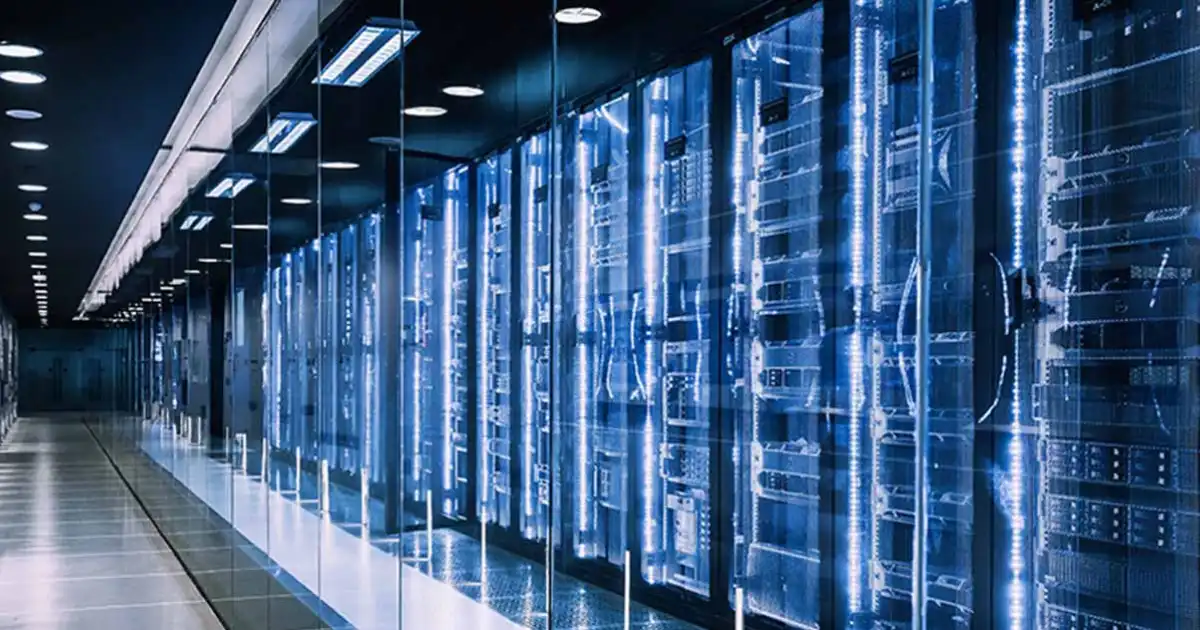
Healthcare, e-commerce, and entertainment industries can all be impacted by the availability of data for different services. Because of that, there’s always a need for further data management, processing, and storage. This need in turn gives rise to another essential part of modern infrastructure, the data center. However, some centers are much better than others.
A number of nations have taken the lead in the competition for global data center dominance by marketing advanced technology, robust infrastructure, and huge investments. In this guide, we will showcase the five countries that are leading the global data center race and the reasons that make them frontrunners in this competitive field.
Starting with the Global Data Centre Overview
To gain insight on the global data center race, it is first necessary to explain what a data center is and why it is so important. A data center is essentially a central repository where you can store vast amounts of data. Along with data, a data center holistically possesses servers, storage devices, and other essential infrastructure. Different cloud service providers, websites, and online resources rely heavily on data centers for their functionality.
Internationally, nations are racing to build state-of-the-art data centers in response to the increasing need for data. These components enable firms to optimize their business processes along with the requisite computing capabilities to sustain contemporary world requirements. Countries that prevail in this competition are those that have invested in infrastructure, qualified manpower, favorable regulatory frameworks, and strategic location within the country.
United States: The Powerhouse of Data Centres
For the past decades, the United States has been among the leading contenders in the data center race. A host of industry players, coupled with a strong infrastructural development and increased adoption of cloud services has made the US the most dominant player in the data center industry.
Key Factors Driving U.S. Data Center Dominance
The existence of an established technology ecosystem is the foremost defining characteristic that elevates the United States at the top of the data center race. Key stakeholders in the sector like Amazon Web Services (AWS), Google, Microsoft Azure, and IBM have a consolidated network of data centers throughout the country. The growth and expansion of these companies is accompanied by the development of new facilities that are strategically located to capture the customer’s ever-increasing needs in cloud computing, artificial intelligence, and big data.
UThe SA possesses cutting-edge infrastructure, including high-speed internet, access to advanced technology, and a reliable power grid. Northern Virginia, Dallas, and Silicon Valley have some of the most prominent data center clusters in the world, ensuring that the country remains at the top of the global data centre race.
Data Centre Innovation in The U.S.
American data centers also lead in innovation, not just in size. Energy-efficient designs combined with advanced cooling systems make the operational efficiency and sustainability of US data centers unmatched around the globe. Companies moving towards sustainable business practices are increasingly relying on renewable energy sources to power their data centers and reduce carbon emissions.
Moreover, the Us still stands as the leader in the digital economy, continuing to draw foreign and home investment on data infrastructure. With more and more businesses shifting to cloud-based models and needing evermore sophisticated computing power, the United States remains the preferred location for data center operations.
China: The Rising Star in the Global Data Centre Landscape
Traditionally, the US has been the key player in the data center industry, however, China is quickly emerging as a crucial competitor. Positioned as the world’s second-largest digital economy, China anticipates significant data production from its population of over 1.4 billion. The China government’s active policies and initiatives have prepared to further propel China into a serious contender in the data center segment.
Imperial and Commercial Engagements
The government of China has put enormous resources towards constructing new data centers to attend to the needs of the growing digital economy. Moreover, domestic industry leaders such as Alibaba Cloud, Tencent, and Huawei are increasing their data center investments on an international scale. These companies have already become significant players in the cloud services market, and their expenditure on data center construction is contributing to China’s leadership development in this industry.
As a matter of fact, under current trends, China’s digital economy will surpass $16 trillion by the year 2030. Such a shift will sustainably enhance the demand for data storage, processing, and cloud services. China is positioning itself to agriculture stiff competition from other leading nations for the global data center industry alongside other economic factors.
Data Centres In China: A Strategic Edge
China’s positioning has played a critical part in granting it an advantage in the insatiable global race for data centers. The country is also very big geographically which enables China to develop huge data centers at a lower operational cost in certain regions. Lower operational costs combined with China’s already advanced technology ecosystem and a plethora of skilled professionals make China an appealing business expansion target for the rest of the world.
This is not all, As China continuously modernizes its tech sector and builds out its data infrastructure, the country is likely to become one of the dominating players in the global data center race for decades to come.
United Kingdom: A Hotspot for Data Centre Research and Development
The United Kingdom has proven to be yet another central competition in the globally distributed data center system. With its strategic location in Europe, combined with advanced infrastructure and a growing technology sector, the UK has become a favorable destination for data centers and other digital services.
A Favorable Policy
The absence of tax burden when setting up storage and processing servers in the United Kingdom drives up competition in the market. Another crucial factor enabling the rapid growth of data centers in the UK is its friendly business environment which eases regulatory restrictions. The government has implemented measures to support the growth of digital economies such as policies centered around data protection, cloud computing, and technologies innovation.
Moreover, the UK is in a very advantageous position as it sits at the center of Europe’s financial and technological hubs, including data center cities London, Manchester, and Reading. The UK is attractive for data center development because of the high-speed internet, availability of skilled labor, and the presence of big technology companies.
Sustainability and Green Initiatives
With the expansion in the number and size of data centers, their sustainability has become a major focus for UK-based facilities. UK clients are becoming much more focused on energy-efficient designs, renewable energy approaches, and new cooling techniques. This significant focus on green initiatives enables UK businesses and clients to be more environmentally friendly and helps them reduce their carbon footprint.
The United Kingdom continues to be a fundamental competitor in the global data center competition due to its established infrastructure, regulatory assistance, and heightened focus on sustainability.
Germany: The Leading Nation in Data Centers in Europe
Germany is among Europe’s biggest players in data centers. Its strong and stable economy, innovative technological developments, and focus on data protection have made Germany one of the best locations for data centers, especially for corporations needing dependable data storage facilities.
Germany’s Investment in Data Centres
Germany has been investing in the infrastructure of data centers. The country enjoys the presence of a skilled workforce, dependable energy sources, and a developed technology environment, which makes it suitable for data centers. Frankfurt, Berlin, and Munich are cities that house some of the most sophisticated data centers not only in Germany but in Europe, serving both international and local firms.
In addition, Germany’s data protection and privacy policies make Germany one of the European countries for businesses operating in regulated sectors like finance and healthcare. Germany’s expertise in technology alongside the country’s data protection policies has established the country as one of the leading data center locations in Europe.
Germany And Cloud Computing
Germany has also been known as a frontrunner in cloud computing, and its data centers continue to be an asset for the growth of the digital economy in the country. German data centers are recognized for their advanced technology and have developed a reputation for high standards when it comes to security, performance, and reliability. As European cloud usage continues to increase, the importance of Germany’s data centers has grown for companies all over Europe.
With Germany’s mix of data security, strong economy, and technological innovation, the country has positioned itself as a key competitor in the global data center market.
Singapore- The New Entrant In The Data Centre Sector Of Asia
Reputable global firms are now able to expand their digital infrastructure in Asia because of Singapore’s developed technological infrastructure, ease of doing business, and its location in Southeast Asia. These factors have earned Singapore the title of being the most attractive country for data centers in Asia, solidifying its position as a frontrunner in the global data center competition.
Singapore’s Strategic Location and Infrastructure
Singapore is an attractive location for data centers. The country has a pro-active telecommunications infrastructure and is close to key markets in Asia and the Asia-Pacific region. Additionally, data-driven businesses and cloud service providers requiring real-time data processing are aligned to Singapore’s low latency and high-speed connectivity.
Moreover, Singapore is at the forefront of developing sustainable data centers that utilize energy-efficient designs, renewable energy sources, and advanced cooling technologies. These efforts increase Singapore’s appeal for businesses looking to reduce their carbon footprint while maintaining world-class data storage and processing capabilities.
The Future of Data Centres in Singapore
Forecasts suggest that Singapore’s digital hub status for Asia is going to increase its data center market. With the ever-increasing demand in Cloud services, Big data analytics, and AI, Singapore’s data centers would be imperative in enabling the region’s next-generation digital infrastructure.
You Might Be Interested In
- Which Cybersecurity Certification Is Best?
- Which Is Better Data Science Or Analytics?
- What Are The Main Types Of Augmented Reality?
- What Is The Difference Between Crypto and Cryptocurrency?
- What Are The 2 Main Types Of Biotechnology?
Conclusion
The data center race is on and these five countries are not only leaders but innovators in the field of data sustainability and technology. From the massive infrustructure in the US, to the rapid growth in China, the supportive regulation of the UK, Germany’s focus on protection, and Singapore’s hub, these countries are at the forefront in defining the future of data storage, processing ,and cloud computing.
It is not hard to foresee that competition in global data centers is going to escalate. With humanoid robotics and artificial intelligence technology getting better, the need for data centers to be more sophisticated will rise. Nations that push digital innovation and infrastructure spending are going to take the lead in this rapidly changing industry.
FAQs about Global Data Centre Race
Who is the best data center operator in the world?
Equinix, the most famous data center supplier in the world with over 200 data centers strategically located in all metropolitan areas of North America, Europe, Asia, and other regions, is at the forefront, followed by Digital Realty, which services a variety of industries, particularly Cloud Computing and Business Continuity. NTT Communications also provides colocation and data center services through their highly protected cloud data center network, ensuring their customers the best uptime and security.
China Telecom continues to be of global import as a competitor because of its extensive data center infrastructure situated in China and other Asia Pacific countries. Following the history of technology companies, IBM has data centers across the globe which form part of their integrated hybrid cloud solutions. Other players are Microsoft Azure, Amazon Web Services (AWS), Google Cloud, Oracle Cloud, and Alibaba Cloud, which operate and manage a multitude of their data centers and provide a wide range of cloud and digital services.
These companies serve various purposes such as cloud services, storage, hosting, managed services, and data protection. Because of their monumental infrastructures, these companies enable other businesses to expand internationally at a high speed and low cost while achieving great service level continuity, system security, and performance, thus further fueling the digital economy.
Which county has the most data centers?
Data centers are located all over the world, but the US has the most. The state controlling the most data centers is Virginia, specifically northern Virginia, which even has a couple of cloud service providers and tech companies. The area is well connected with high speed fiber optic cables and has access to a strong power supply, making it the ideal location for data centers. Other states like Texas and California also have a lot of data centers due to the rising need for cloud services and data storage offered by technology companies.
In addition to the U.S., countries like China, Germany, and the United Kingdom also possess considerable data center markets. Nonetheless, the U.S. still outdoes them in terms of infrastructure assets and the number of data centers. The nation’s capacity to maintain such infrastructure stems from technological innovation, robust investment, and favorable regulation, which cultivates an optimal environment for data center development. Considering the U.S. has, and will, continue to lead the world in the demand for data, it is safe to assume the nation will permanently emerge on top in this sector.
Which country has the highest number of data centers?
Leading the world with the highest number of data centers is the United States. The U.S. take the lead on data center infrastructure for the reason of having a developed digital economy, potent investment in technology, and the existence of top global tech firms in the country. A significant number of data centers are located in central cities and states such as Northern Virginia, California, Texas are home to hundreds of data centers serving the growing needs of businesses for dependable data storage, cloud computing, and networking. Northern Virginia is known as the ‘data center capital of the world’, due to the impressive concentration of data facilities found there.
Although allied countries such as China, Germany, and the United Kingdom are making strides to develop their own data center markets, the United States is still crushing the competition in the number of facilities available. This is a direct result of the United States’ dominance and pioneering of new technologies as well as its agility to accept the global need for data processing and cloud-based storage. With new data centers emerging, the United States continues to advance the infrastructure needed to cement its position as the leader in digital services around the world.
What is a Tier 5 data center?
According to the Uptime Institute’s tier standards, a Tier 5 data center is rated as the highest level due to the expected design for both performance and operational reliability. Businesses can depend on Tier 5 data centers to deliver outstanding performance, redundancy, and fault tolerance for the most critical of applications. Unlike lower-tiered centers that have single points of failure or need more persistent maintenance, Tier 5 centers require virtually no downtime as these facilities deliver 99.999% uptime. Advanced engineering, robust backup systems, and redundant components at every level are what make these facilities so reliable.
Every data center has a different power, generator, and cooling system to cover every possible scenario. To minimize risks, they also provide different physical attendance barriers, biometric readers, and video surveillance systems that operate around the clock. A Level 5 Facility is commonly employed by companies in highly regulated industries such as finance, government, and healthcare, among other sectors where service deliverability and data integrity is of utmost importance. The construction and operational costs of such a facility are extremely high but the quality of service it offers makes it indispensable for organizations that process massive amounts of sensitive or critical information and data.
What is level 5 data?
Level 5 data classification is synonymous with the most sensitive and controlled data a particular entity can have, housed within sophisticated and secure facilities. This term is more commonly used in sectors that have specific data security requirements, like the Government, Finance, and Healthcare. Data at this level is highly encrypted, multi-authenticated, and has strong controls around the ability to access the data in order to secure it from unauthorized access or theft. Such data is usually stored in environments that become too vulnerable to breaches or data loss and as such there needs to be minimal risk.
Level 5 data is included in data centers that meet the most advanced requirements, such as Tier 5 class centers. This type of data center works with confidential information and ensures that the information is kept private, intact, and only available to the right users. Moreover, with these level 5 datas comes extreme auditing, monitoring, and compliance with regulation standards which makes the data useful for very sensitive industries. These advanced sets of data require high protection since they can contain PII, government data, or sensitive financial information.
