


NASA, the United States’ National Aeronautics and Space Administration, has been at the forefront of space exploration and technological innovation for decades. One of the key elements of NASA’s success in exploring the vast and often inhospitable expanses of space is its extensive use of robots. How Does NASA Use Robots?
From the early days of space exploration to the present, robots have played a crucial role in NASA’s missions, performing tasks that would be too dangerous, costly, or impossible for human astronauts.
This comprehensive guide will delve into the various ways in which NASA use robots, highlighting their contributions to space exploration, scientific research, and the development of new technologies.
The Role of Robots in NASA’s Missions
Early Use of Robots
The use of robots by NASA dates back to the early days of space exploration. One of the first significant robotic missions was the launch of the Mariner probes in the 1960s. These robotic spacecraft were designed to fly by and study other planets, providing invaluable data about the conditions and characteristics of our neighboring worlds. The Mariner 2 mission, launched in 1962, was the first successful interplanetary probe, conducting a flyby of Venus and sending back data about its atmosphere and surface.
The Viking Program
In the 1970s, NASA’s Viking program marked a significant milestone in the use of robots for space exploration. The Viking 1 and Viking 2 missions included orbiters and landers that were sent to Mars to search for signs of life and study the planet’s geology and atmosphere.
The Viking landers were equipped with robotic arms, cameras, and scientific instruments, allowing them to perform experiments and send back detailed images and data from the Martian surface. These missions laid the groundwork for future robotic exploration of Mars and other planets.
Mars Rovers: Exploring the Red Planet
Sojourner Rover
One of the most iconic examples of NASA’s use of robots is the series of Mars rovers that have explored the Red Planet. The Sojourner rover, part of the Mars Pathfinder mission, was the first successful rover to operate on Mars. It landed in 1997 and conducted experiments on the Martian soil and atmosphere. Sojourner’s success demonstrated the feasibility of using rovers for planetary exploration, paving the way for more advanced missions.
Spirit and Opportunity
Following the success of Sojourner, NASA launched the twin rovers Spirit and Opportunity in 2003. These rovers were designed to explore different regions of Mars, searching for signs of past water activity and studying the planet’s geology. Both rovers far exceeded their expected lifespans, with Opportunity operating for nearly 15 years. They provided a wealth of data about Mars, including evidence of ancient water flows and the presence of minerals that form in liquid water.
Curiosity Rover
Launched in 2011, the Curiosity rover is one of NASA’s most advanced robotic explorers. Equipped with a suite of scientific instruments, cameras, and a robotic arm, Curiosity has been exploring Gale Crater on Mars, searching for signs of past habitability and studying the planet’s climate and geology. One of Curiosity’s significant discoveries was finding evidence of ancient freshwater lakes, which could have supported microbial life. The rover’s success has been instrumental in shaping our understanding of Mars and guiding future exploration missions.
Perseverance Rover
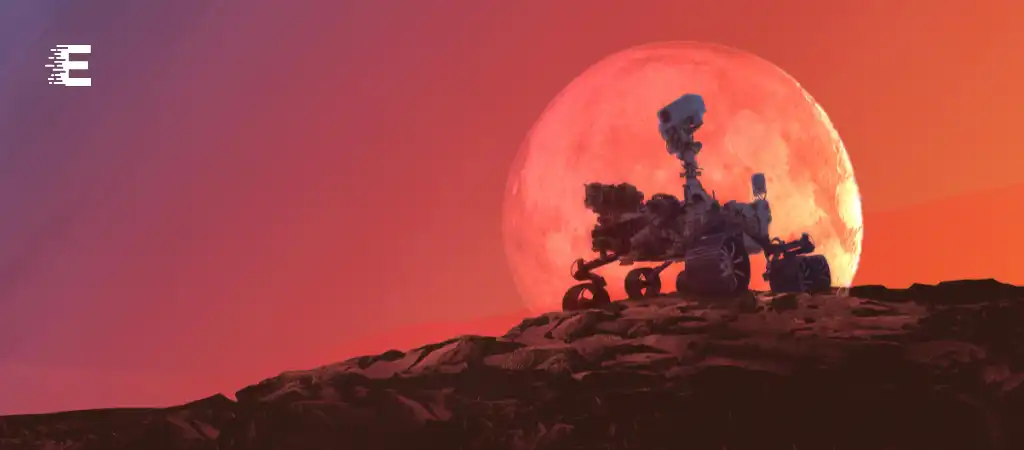
The latest addition to NASA’s fleet of Mars rovers is Perseverance, which landed on Mars in February 2021. Perseverance is equipped with cutting-edge technology, including a drill to collect rock and soil samples, a helicopter named Ingenuity to perform aerial reconnaissance, and instruments to search for signs of past microbial life. The mission’s primary goal is to collect samples that can be returned to Earth by future missions, providing unprecedented insights into Mars’ history and potential for life.
Robotic Spacecraft and Probes
Voyager Probes
In addition to rovers, NASA has used robotic spacecraft and probes to explore the outer reaches of our solar system. The Voyager 1 and Voyager 2 missions, launched in 1977, are among the most famous examples. These spacecraft have traveled beyond the outer planets, providing detailed images and data about Jupiter, Saturn, Uranus, and Neptune. Voyager 1 is now in interstellar space, continuing to send back data about the environment beyond our solar system.
Cassini-Huygens Mission
The Cassini-Huygens mission, a collaboration between NASA, the European Space Agency (ESA), and the Italian Space Agency (ASI), was launched in 1997 to study Saturn and its moons. The Cassini orbiter spent 13 years exploring Saturn’s system, sending back stunning images and data about the planet’s rings, atmosphere, and moons. The Huygens probe, which detached from Cassini, landed on Titan, Saturn’s largest moon, and provided the first direct observations of its surface and atmosphere.
New Horizons
The New Horizons mission, launched in 2006, is another remarkable example of NASA’s use of robotic spacecraft. New Horizons conducted a historic flyby of Pluto in 2015, providing the first close-up images and data of the dwarf planet and its moons. The mission continued its journey into the Kuiper Belt, where it performed a flyby of the distant object Arrokoth in 2019, offering new insights into the early solar system.
Robotic Arms and Manipulators
Canadarm and Canadarm2
Robotic arms and manipulators have been vital tools for NASA’s space missions, particularly for activities involving the International Space Station (ISS). The Canadarm, developed by the Canadian Space Agency, was first used on the Space Shuttle missions to deploy and repair satellites, as well as assist with the construction of the ISS. The Canadarm2, an upgraded version, is currently used on the ISS for tasks such as capturing visiting spacecraft, performing maintenance, and assisting astronauts during spacewalks.
Robonaut
NASA’s Robonaut project aims to develop humanoid robots that can work alongside astronauts in space. Robonaut 2 (R2) was sent to the ISS in 2011, becoming the first humanoid robot to operate in space. R2 is designed to perform tasks that are too dangerous or repetitive for humans, such as cleaning, maintenance, and assisting with scientific experiments. The development of Robonaut technology has the potential to enhance the capabilities of astronauts and improve the efficiency of space missions.
Autonomous Systems and AI
Autonomous Navigation
Autonomous systems and artificial intelligence (AI) are playing an increasingly important role in NASA’s robotic missions. One of the key challenges of exploring distant planets and moons is the time delay in communication between Earth and the spacecraft.
To overcome this, NASA has developed autonomous navigation systems that allow robots to make real-time decisions and navigate complex terrains without direct human intervention. The Mars rovers, for example, use autonomous navigation to traverse the Martian surface, avoiding obstacles and selecting the most efficient paths.
AI for Scientific Analysis
AI is also being used to enhance the scientific capabilities of NASA’s robots. Machine learning algorithms can analyze vast amounts of data collected by spacecraft and rovers, identifying patterns and anomalies that might be missed by human scientists. This technology has been used to detect potential landing sites for future missions, analyze geological features on Mars, and search for signs of past life. The integration of AI into NASA’s robotic missions is revolutionizing the way we explore and understand the cosmos.
Challenges and Future Directions
Technical Challenges
Despite the remarkable success of NASA’s robotic missions, there are still significant technical challenges to overcome. Building robots that can withstand the harsh conditions of space, operate autonomously for extended periods, and perform complex tasks with precision is a formidable task. Engineers must continuously innovate and improve the design, materials, and software used in robotic systems to meet these challenges.
Future Missions
Looking ahead, NASA has ambitious plans for future robotic missions. The Artemis program aims to return humans to the Moon by 2024, with the help of robotic systems that will prepare the lunar surface for human exploration. NASA is also planning the Europa Clipper mission to explore Jupiter’s moon Europa, which is believed to have a subsurface ocean that could potentially harbor life. Additionally, the Mars Sample Return mission, a collaboration with ESA, aims to bring samples collected by the Perseverance rover back to Earth for detailed analysis.
You Might Be Interested In
- How Does Cloud Security Monitoring Protect Data?
- How To Build Content Briefs With Ai?
- Session Security Deep Dive: Cookies, Jwts, Refresh Tokens, And Revocation
- How Do Cybersecurity Risk Assessment Strategies Improve Protection?
- What Is Ai Hardware Learning?
Conclusion
NASA’s use of robots has been instrumental in advancing our understanding of the universe and achieving milestones in space exploration. From early probes and landers to sophisticated rovers and autonomous spacecraft, robots have enabled NASA to explore distant worlds, conduct scientific research, and develop new technologies.
The ongoing development of robotic systems, combined with advances in AI and autonomous navigation, promises to further enhance NASA’s capabilities and open up new frontiers in space exploration. As we look to the future, the continued collaboration between human astronauts and robotic systems will be essential for the success of NASA’s missions and the exploration of the cosmos.
FAQs about Does NASA Use Robots
How do robots help NASA explore distant planets like Mars?
Robots, particularly rovers like Curiosity and Perseverance, are equipped with scientific instruments, cameras, and tools that allow them to study the terrain, atmosphere, and geological composition of planets like Mars. They can traverse difficult landscapes, collect samples, and transmit valuable data back to Earth, providing insights that help scientists understand planetary history and potential for life.
What are the advantages of using robots instead of humans for space exploration?
Robots can withstand extreme conditions, operate autonomously for long periods, and perform tasks that might be too risky or impractical for human astronauts. They are also more cost-effective and can be designed to withstand the harsh environments of space, making them ideal for missions to distant planets and moons where human presence is not feasible.
How does NASA ensure robots can operate autonomously in space?
NASA’s robots are equipped with advanced autonomous navigation systems and artificial intelligence (AI) algorithms. These systems allow robots to make decisions in real-time, navigate complex terrains, and avoid obstacles without constant human intervention. This capability is crucial due to the communication delay between Earth and spacecraft operating in deep space.
What are some examples of NASA’s robotic missions beyond Mars?
In addition to Mars, NASA has conducted robotic missions to other planets and celestial bodies. For instance, the Voyager probes explored the outer planets and continue to send data from interstellar space. The Cassini-Huygens mission studied Saturn and its moons, while the New Horizons mission provided the first close-up images of Pluto and ventured into the Kuiper Belt to study objects like Arrokoth.
How do robots assist astronauts on the International Space Station (ISS)?
Robotic arms like Canadarm and Canadarm2 are used on the ISS for a variety of tasks, including capturing visiting spacecraft, conducting maintenance, and assisting astronauts during spacewalks. Robots like Robonaut 2 (R2) are also designed to work alongside astronauts, performing tasks that enhance efficiency and safety on the station.
